
Officiating controversies stick in your memory because they trigger strong emotions and tap into your deep desire for fairness and justice. When calls go against your team, you feel personally affronted, and these emotional reactions linger long after the game ends. Human bias and perception distort what’s seen, making mistakes seem intentional. Vibrant memories of controversial decisions often overshadow correct calls, shaping perceptions and lasting impressions. Keep exploring to understand how these biases influence your perceptions even more.

Get sports gear delivered free — and shop member deals
- Fast, free delivery on millions of items
- Access to Prime Big Deal Days deals on October 6–7
- Prime Video, Amazon Music and more included
Key Takeaways
- Controversial calls evoke strong emotional reactions, making them more memorable than routine decisions.
- Human biases and perception distort memory, emphasizing disputed moments over correct calls.
- Media coverage amplifies controversy, reinforcing vivid, lasting impressions in collective memory.
- Mistakes threaten perceptions of fairness, leading to heightened attention and emotional investment.
- The desire for justice and fairness in sports causes controversies to stand out in collective memory.
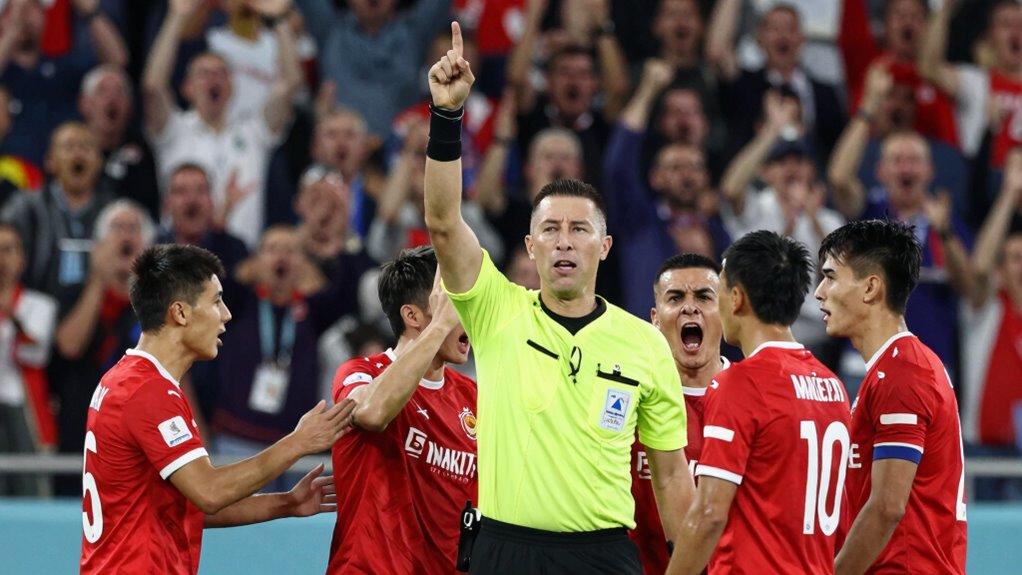
Officiating controversies tend to dominate our collective memory because they tap into our deep-seated desire for fairness and justice in sports. When a call goes against your team or a pivotal play is overturned, it feels like a personal affront, fueling emotional reactions that linger long after the game ends. These moments highlight how human bias can distort perceptions, making it seem like the officiating was intentionally unfair instead of a simple mistake. Our minds tend to remember the most controversial decisions vividly, often amplifying their significance and overshadowing countless correct calls. This tendency underscores the importance of decision accuracy in sports officiating, as even small errors can spark widespread debate and frustration. Additionally, these biases are often reinforced by media coverage, which tends to focus more on controversial decisions rather than the many correct calls made during a game. You might notice that when a referee makes a controversial call, it’s rarely just about the decision itself. Instead, it’s about how your biases influence your perception of that call. If you’re a fan of the team that benefits from a questionable ruling, you’re more likely to see the decision as justified or even correct. Conversely, if your team is on the receiving end, you’re inclined to believe the call was biased or flawed. This phenomenon reveals how human bias can skew our judgment, making us less objective and more emotionally driven. It also demonstrates how confirmation bias can reinforce skewed perceptions, especially in emotionally charged situations. It’s not just about the accuracy of the decision but also about how we interpret and remember it based on our allegiance and expectations. Recognizing these cognitive biases is crucial for understanding why disputes about officiating decisions persist and how they influence our collective sports culture. Moreover, understanding the psychology of perception can help fans and officials better navigate these emotionally charged moments and foster a more balanced view. The quest for decision accuracy is a constant challenge for sports officials, who operate under intense pressure to get every call right. Despite technological advancements like instant replay, human judgment still plays a critical role. Even with tools designed to reduce errors, biases can creep in—whether through visual misinterpretation or cognitive biases like confirmation bias. These biases influence how officials interpret ambiguous situations, often leading to controversial decisions that fans and players scrutinize intensely. When mistakes happen, they become etched in memory because they challenge our sense of fairness and justice. The controversy isn’t just about the mistake itself but about the broader implications of bias and accuracy in maintaining the integrity of the game. Recognizing the role of human bias is crucial in understanding why these debates persist. This understanding can help improve officiating processes and foster a more objective perspective among fans and analysts alike. Moreover, ongoing research into sports officiating aims to develop better training and technological solutions that mitigate these biases and promote fairness. By addressing these underlying cognitive processes, sports organizations can work towards reducing officiating errors and restoring trust in the officiating system. In the end, officiating controversies resonate because they tap into our core desire for fairness. They remind us how human bias can distort decision accuracy, making us question the integrity of the game and fueling debates that last long after the final whistle. These moments become part of sports history because they evoke strong emotions and reveal the imperfect nature of human judgment, keeping them alive in our collective memory.
sports officiating review microphone
As an affiliate, we earn on qualifying purchases.
As an affiliate, we earn on qualifying purchases.
Frequently Asked Questions
How Do Officiating Errors Affect Player Statistics Long-Term?
Officiating errors can considerably impact your long-term player statistics by affecting your morale and career longevity. When mistakes happen, they may lead to unfair penalties or missed opportunities, which can lower your confidence and motivation. Over time, repeated officiating errors might hinder your performance, causing you to play cautiously or even shorten your career. Staying resilient and focusing on your skills helps mitigate these effects, preserving your stats and mental well-being.
Are There Psychological Impacts on Referees Involved in Controversial Calls?
You’re likely to experience psychological impacts like referee burnout and decision fatigue after controversial calls. These pressures can lead to increased stress, diminished confidence, and emotional exhaustion. When you face intense scrutiny, it’s harder to maintain focus and make clear decisions. Over time, this can affect your mental well-being and performance, making you more prone to errors and less resilient in high-pressure situations.
How Do Media Portrayals Influence Public Perception of Officiating Mistakes?
You might think media bias would give officiating mistakes a fair shake, but instead, it fuels public outrage, often blowing minor errors into epic controversies. Media portrayals tend to sensationalize, shaping your perception that referees are either villains or heroes. This skewed coverage keeps controversies alive in your memory, making you forget the countless correct calls, and instead, focus on the rare, dramatic officiating mistakes that stir the most debate.
What Reforms Have Been Proposed to Reduce Officiating Controversies?
You can expect reforms like video analysis and technology implementation to guarantee officiating controversies are reduced. These measures allow referees to review plays more accurately, minimizing human error. By integrating instant replay systems and advanced technology, officials make better decisions, leading to fairer outcomes. These reforms aim to boost confidence in officiating, lessen controversy, and assure the integrity of the game, making matches more enjoyable and trustworthy for players and fans alike.
How Does Officiating Controversy Impact League Revenue and Attendance?
Think of officiating controversies as cracks in a stadium’s foundation; they weaken fan engagement and shake sponsorship impact. When disputes occur, attendance drops and viewers lose trust, leading to lower league revenue. These controversies distract from the game’s excitement, making fans less likely to invest time and money. As a result, sponsors might reconsider their support, further diminishing league earnings and threatening the sport’s overall financial health.
Conclusion
You remember the controversial calls, you dwell on the missed fouls, and you debate the questionable decisions. These officiating controversies stick in your mind because they evoke strong emotions and challenge your sense of fairness. They dominate your memory because they’re dramatic, they’re polarizing, and they’re hard to forget. In the end, it’s not just about the game — it’s about the moments that make you question, that make you argue, and that keep the controversy alive.
NFL season / tailgating Picks
team gear
As an affiliate, we earn on qualifying purchases.