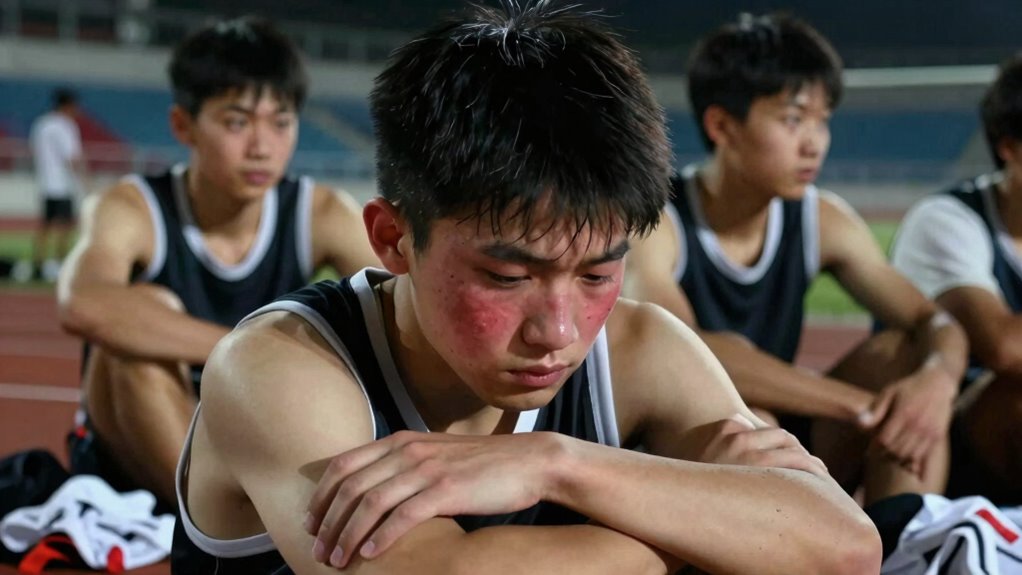

When you experience a bad loss, it feels social because it threatens your reputation and exposes your vulnerabilities in front of others. You worry about being judged, teased, or rejected, which amplifies feelings of embarrassment. Your desire to be accepted and respected makes the social stakes feel higher. This discomfort is rooted in the fear of losing face and feeling socially vulnerable. If you want to understand how your feelings connect to your team and resilience, there’s more beneath the surface.

Get sports gear delivered free — and shop member deals
- Fast, free delivery on millions of items
- Access to Prime Big Deal Days deals on October 6–7
- Prime Video, Amazon Music and more included
Key Takeaways
- Embarrassment arises from fear of judgment and loss of social acceptance after a visible failure.
- Social scrutiny amplifies feelings of exposure, making the loss feel more personal and shameful.
- Personal identity tied to team performance heightens the emotional impact of a bad loss.
- The desire to maintain face and avoid teasing increases social pressure and vulnerability.
- Supportive social bonds can mitigate embarrassment by reinforcing belonging despite setbacks.

Experiencing embarrassment after a bad loss can be a tough pill to swallow, especially when you’ve invested so much effort and expectation into the game. You might feel exposed, as if everyone is scrutinizing your performance and judging your worth based on that single moment. This feeling of social embarrassment runs deeper than just personal disappointment; it taps into your desire to be accepted and respected by your teammates, friends, and spectators. When you lose, especially badly, it can seem like your social standing is at stake, making the pain more intense and personal.
Part of why this feels so social is rooted in team psychology. In team sports, your identity is often intertwined with the group. Your teammates rely on you, and you rely on them. When things go wrong, it’s not just about the game — it’s about the shared experience and how others perceive your role within that team. If you’re used to being seen as a reliable player, a bad loss can threaten that image, leading to feelings of shame and embarrassment. You might worry about losing respect or being judged as weak or inadequate, which amplifies the social pressure you feel. Recognizing that team dynamics influence how we experience setbacks can help you understand your reactions better.
This is where emotional resilience becomes crucial. Resilience is what allows you to bounce back from setbacks, to process your feelings without letting embarrassment take over. If you’re able to maintain perspective, you can see a bad loss as just a moment in a larger journey rather than a final verdict on your abilities. Developing emotional resilience helps you detach your self-worth from immediate results and external opinions, reducing the social sting of failure. It’s about recognizing that everyone experiences setbacks and that they don’t define you. Cultivating a growth mindset can also help you view setbacks as opportunities for learning and improvement rather than permanent failures. Building resilience also involves understanding that failures are often part of the growth process, which can lessen the social anxiety associated with losing.
The social aspect of embarrassment also comes from the fear of losing face in front of others. When you’re in the spotlight after a loss, you become vulnerable. You might anticipate teasing, criticism, or pity, which heightens your embarrassment. This fear feeds into your desire to save face and regain respect quickly. But understanding that everyone faces lows and that your teammates and friends are likely supportive can help ease this pressure. Building emotional resilience involves trusting that these social bonds are stronger than any single loss, and that your value isn’t determined by one mistake. Recognizing that social acceptance plays a vital role in how we process failure can empower you to handle setbacks more effectively.
Additionally, understanding the psychology of failure can help you normalize setbacks as a natural part of growth, reducing the social anxiety that comes with losing. When you do this, you’re better equipped to handle the social discomfort, learn from the experience, and move forward with confidence. Fostering a supportive environment where mistakes are seen as opportunities rather than threats can also help lessen the social repercussions of a bad loss.
sports team resilience training book
As an affiliate, we earn on qualifying purchases.
As an affiliate, we earn on qualifying purchases.
Frequently Asked Questions
How Does Cultural Background Influence Embarrassment After a Loss?
Your cultural background shapes how you experience embarrassment after a loss by influencing your cultural norms and shame dynamics. If your culture values collective success, you might feel more shame and social pressure after a loss. Conversely, cultures emphasizing individual effort may help you feel less embarrassed. These norms and shame dynamics determine whether you see the loss as a personal failure or a shared experience, affecting your emotional response.
Can Personality Traits Predict Sensitivity to Social Embarrassment?
About 60% of people with high empathy levels are more sensitive to social embarrassment. Your personality traits, like resilience and empathy levels, definitely predict how you handle embarrassment after a loss. If you’re highly empathetic, you might feel more social embarrassment because you’re more aware of others’ perceptions. Conversely, high resilience helps you bounce back quickly, reducing feelings of shame. Your traits shape how intensely you experience and recover from embarrassment.
What Role Does Social Media Play in Post-Loss Embarrassment?
Social media amplifies your post-loss embarrassment by exposing you to public shame and online judgment. When you share or see others’ reactions, it heightens your awareness of how your failure is perceived, making you feel more vulnerable. The instant feedback loop of comments and likes can intensify shame and anxiety, making the embarrassment feel more personal and widespread than it would be in face-to-face situations.
How Long Does Typical Embarrassment From a Bad Loss Last?
Embarrassment from a bad loss usually lasts a few days to a week, but it varies depending on your emotional resilience. Some theories suggest that public shame triggers intense feelings initially, but these diminish as you process the event. You might find that social support and self-compassion help you recover faster. Remember, your emotional resilience can considerably influence how long you feel embarrassed, so practice kindness toward yourself during this recovery period.
Are There Specific Strategies to Reduce Social Embarrassment After Failure?
To reduce social embarrassment after failure, you can use strategies like offering a genuine public apology, which shows accountability and maturity. Seeking peer support helps you gain perspective and reassurance, easing your feelings of shame. Additionally, embracing your mistake as a learning opportunity shifts your focus from embarrassment to growth, making it easier to bounce back socially and regain confidence after a setback.
Conclusion
So, next time you face a tough loss, remember that your embarrassment is part of being human—like the ancient Greeks feeling shame after a defeat. It’s a moment that reminds you of your vulnerability, but also your resilience. Embrace it, learn from it, and keep moving forward. Just as the phoenix rises from ashes, your dignity can be reborn, stronger than ever, proving that even in defeat, there’s a spark of growth waiting to ignite.
NFL season / tailgating Picks
team gear
As an affiliate, we earn on qualifying purchases.