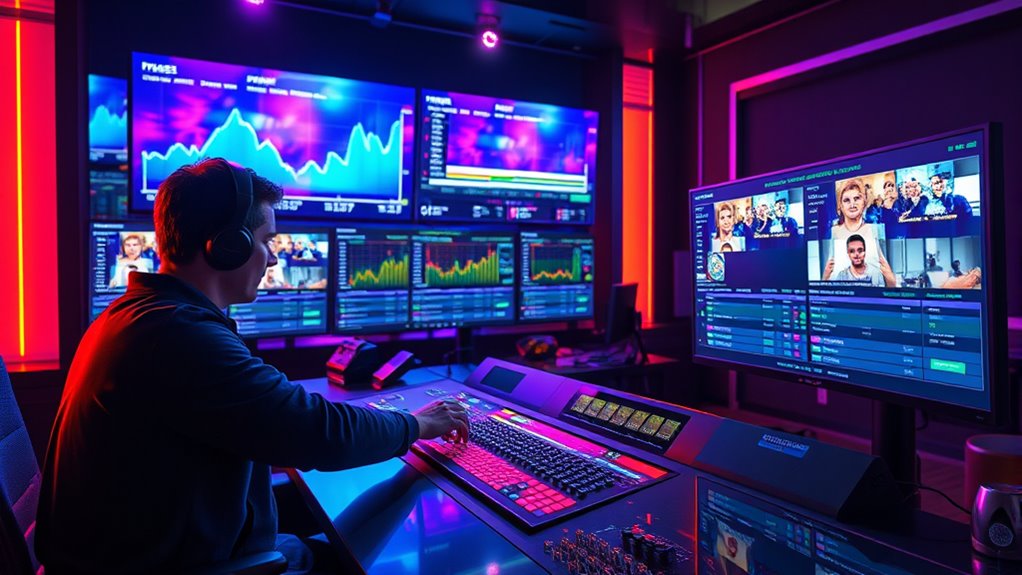

A/B testing in sports broadcasts uses real-time metrics to measure audience reactions to different content elements like camera angles, graphics, or commentary styles. By monitoring viewer retention, social media engagement, and interaction rates, broadcasters can instantly adjust their content to better suit viewer preferences. This approach turns static broadcasts into personalized experiences, increasing engagement and satisfaction. Keep exploring how these dynamic adjustments are shaping the future of sports viewing.

Get sports gear delivered free — and shop member deals
- Fast, free delivery on millions of items
- Access to Prime Big Deal Days deals on October 6–7
- Prime Video, Amazon Music and more included
Key Takeaways
- Real-time metrics like viewer retention and social media engagement guide immediate broadcast adjustments.
- Click-through rates on interactive graphics indicate viewer interest and help optimize content in real time.
- Audience interaction data during specific elements reveal which features increase engagement instantly.
- Monitoring social reactions enables broadcasters to assess emotional responses and adapt commentary or visuals.
- Continuous analysis of live data enhances personalization, ensuring content resonates with audience preferences during the event.

Have you ever wondered how sports broadcasters decide which camera angles, graphics, or commentaries resonate most with viewers? The answer lies in the power of A/B testing combined with real-time metrics. As a viewer, you’re not just passively consuming content; broadcasters are actively analyzing your engagement to tailor the experience. They use A/B testing to compare different broadcast elements simultaneously, measuring how each variation impacts your audience engagement. For instance, they might test two different camera angles during a pivotal play—one close-up and one wide shot—to see which keeps viewers more captivated. By monitoring live data, they quickly determine which approach garners a stronger emotional response or higher interaction, enabling them to optimize content personalization on the fly.
Broadcasters use A/B testing and real-time data to personalize sports coverage and boost viewer engagement.
This process hinges on collecting and interpreting real-time metrics, such as viewer retention rates, click-throughs on interactive graphics, or social media reactions. When they deploy two versions of a graphic overlay—say, one with player stats versus a more minimalist design—they observe which version sustains your attention longer or prompts more discussion. This immediate feedback loop allows broadcasters to make data-driven decisions, refining their presentation to maximize engagement for different segments of their audience. It’s about understanding that your preferences aren’t static; they evolve during the game, and broadcasters need to adapt instantaneously to keep you invested. Additionally, integrating digital literacy concepts can help broadcasters better understand viewer data and improve their content strategies.
Using A/B testing for content personalization means tailoring the broadcast experience to your specific interests. If they notice that viewers in certain regions respond better to specific commentary styles or graphics highlighting local players, they can emphasize those elements in real time. This ensures that you’re receiving content that resonates with your preferences, increasing your overall satisfaction. The beauty of this approach is its responsiveness—broadcasters don’t rely on guesses but on immediate, actionable insights. As a result, you’re more likely to stay engaged, because the broadcast feels relevant and tailored to your viewing habits.
Ultimately, A/B testing with real-time metrics transforms sports broadcasting from a one-size-fits-all approach to a highly personalized, engaging experience. It empowers broadcasters to optimize every element—from camera angles to commentary—based on how viewers respond in the moment. By continuously analyzing data and adjusting accordingly, they enhance your engagement and create a more immersive experience. So, next time you’re captivated by a broadcast that feels just right, know that behind the scenes, A/B testing and real-time metrics are working tirelessly to make your viewing experience as engaging and personalized as possible.
sports broadcast camera angle switcher
As an affiliate, we earn on qualifying purchases.
As an affiliate, we earn on qualifying purchases.
Frequently Asked Questions
How Do Broadcasters Select Variables for A/B Testing During Live Games?
You select variables for A/B testing during live games by focusing on factors like camera angles and player engagement. You analyze past viewer data to identify what enhances the experience, then choose variables that are easy to implement and measure in real time. By testing different camera angles or engagement prompts, you can quickly see what boosts viewer retention and interaction, optimizing the broadcast for maximum audience satisfaction.
What Are Common Challenges Faced When Implementing Real-Time A/B Tests?
You face challenges like data latency, which slows down decision-making, and limited sample size, making it hard to draw reliable conclusions quickly. You have to guarantee your system processes data fast enough for real-time insights without sacrificing accuracy. Balancing these factors is tough, and often you must make quick adjustments, knowing that small sample sizes or delays in data can skew results and impact broadcast decisions.
How Is Viewer Privacy Maintained During Live Data Collection?
You maintain viewer privacy during live data collection by using data encryption to protect personal information and guarantee secure transmission. Additionally, you implement robust consent management, making sure viewers are informed and give permission before their data is collected. These practices help build trust, comply with privacy laws, and keep viewer data safe while enabling effective real-time A/B testing.
What Tools Are Most Effective for Analyzing A/B Test Results in Real Time?
Imagine standing in front of a dynamic dashboard, where vibrant data visualizations pulse with live performance metrics. You find that tools like Tableau and Power BI are most effective, transforming raw data into clear visuals. These platforms allow you to analyze A/B test results in real time, helping you quickly identify trends, optimize content, and make data-driven decisions during the broadcast. Their intuitive interfaces keep you connected to the game’s pulse.
How Do Teams Interpret Conflicting Data From Multiple Simultaneous Tests?
When you encounter conflicting data from multiple tests, prioritize data reconciliation by cross-checking results to identify common patterns. Set clear decision thresholds to determine when differences are significant enough to act on. If data still conflicts, consider additional metrics or run further tests. Trust your thresholds to guide decisions, and remember that sometimes, more data or refined analysis is needed to clarify which insights are most reliable.
Conclusion
By now, you can see how A/B testing transforms sports broadcasts with real-time metrics, enhancing viewer engagement and experience. Isn’t it enthralling how data-driven decisions can elevate the excitement of live sports? As technology advances, you’ll find even more innovative ways to personalize and optimize broadcasts. Ultimately, embracing these methods isn’t just a trend—it’s the future of sports entertainment, making every game more mesmerizing for you.
NFL season / tailgating Picks
team gear
As an affiliate, we earn on qualifying purchases.