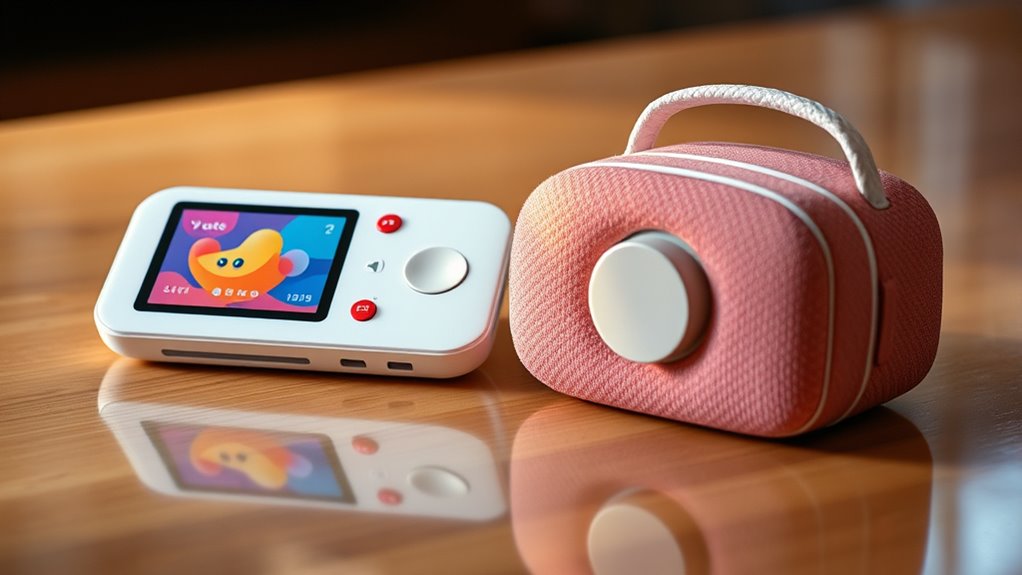

Choosing between the Yoto Player and Toniebox often comes down to how children interact with the devices and what features matter most to parents. The Yoto Player (3rd Gen.) stands out for its screen-free design combined with a vivid pixel display and versatile functions like room temperature monitoring. Meanwhile, the Toniebox (not covered here but often compared) offers a more tactile, speaker-based experience with physical figurines for content. For this review, I’ll focus on the top Yoto options—highlighting their strengths and weaknesses—and how they compare with the Toniebox’s approach. Expect tradeoffs between content management, portability, and user experience, depending on your child’s age and your priorities.

Get sports gear delivered free with Prime
- Fast, free delivery on millions of items
- Prime Video, Amazon Music and more included
- Member-only deals all year
Complete the kit


Key Takeaways
- The Yoto Player (3rd Gen.) offers extensive offline content and a large display, making it ideal for independent, creative play at home.
- The Yoto Mini (2024 Edition) excels in portability, perfect for travel and busy days, but relies heavily on physical cards for content.
- Both Yoto devices require physical cards, which can be lost, but they provide safer, screen-free entertainment compared to digital-only options.
- The Yoto Player with a starter pack provides a more comprehensive home solution, while the Mini bundles are better for on-the-go use.
- Content variety and ease of use heavily influence which Yoto model fits best, especially when considering parental controls and content management.
| YOTO Player (3rd Gen.) – Kids Audio Player, Screen-Free, Ages 3-12 |  | Best Overall for Home Use | Audio Output Mode: Stereo | Mounting Type: Tabletop | Internal Memory: 32GB | VIEW ON AMAZON | See Our Full Breakdown |
| Yoto Mini (2024 Edition) – Kids Travel Audio Player, Screen-Free, Ages 3-12 |  | Best for Portability and Travel | Model: 2024 Edition | Battery Life: Up to 14 hours | Content Type: Audiobooks, music, educational activities | VIEW ON AMAZON | See Our Full Breakdown |
| YOTO Marvel: Spidey & His Amazing Friends – Audio Card, Ages 3+ |  | Best Themed Content for Superhero Fans | Brand: YOTO | Series: Marvel: Spidey & His Amazing Friends | Content: Superhero stories, soundscapes, podcasts | VIEW ON AMAZON | See Our Full Breakdown |
| YOTO Player (3rd Gen.) + Starter Pack for Little Kids Bundle |  | Best for Beginners and Home Use | Model: 3rd Gen. | Content Included: YOTO Player, Starter Pack | Display: Pixel display | VIEW ON AMAZON | See Our Full Breakdown |
| Yoto Mini (2024 Edition) + Starter Pack for Little Kids Bundle, Ages 3+ |  | Best for Simplicity and Content Variety | Device: Yoto Mini (2024 Edition) | Age Range: 3+ | Content: Songs, stories, activities, podcasts | VIEW ON AMAZON | See Our Full Breakdown |
| yoto player vs toniebox review | Battery Life | Connectivity | Display |
|---|---|---|---|
| YOTO Player | 24 hours | Wireless (Bluetooth, Wi-Fi) | — |
| Yoto Mini | Up to 14 hours | — | Pixel display |
| YOTO Marvel: Spidey & His Amaz | — | — | — |
| YOTO Player | Up to 16 hours | Bluetooth | Pixel display |
| Yoto Mini | Up to 14 hours | Bluetooth, app control | Pixel display |
More Details on Our Top Picks
YOTO Player (3rd Gen.) – Kids Audio Player, Screen-Free, Ages 3-12
The YOTO Player (3rd Gen.) is a versatile, screen-free device that balances entertainment and independence. Its vivid pixel display enhances storytelling without a screen, making it engaging for children. Compared with the Mini, it offers longer battery life, more extensive offline content, and additional features like room temperature monitoring and night light. However, it’s less portable and depends on physical cards, which can be misplaced. This model is better suited to families who prioritize long-term content access and a richer feature set at home.
Pros:- Large internal storage supports over 600 hours of offline content
- Multi-functionality including bedtime stories and room temperature
- Long battery life with fast USB-C charging
- Screen-free, promotes creative play
Cons:- Requires physical cards for content, which can be lost
- Plastic enclosure may be less durable
- Limited wired connectivity options
Best for: Parents seeking a durable, all-in-one device for home use with extensive offline content.
Not ideal for: Parents who need a highly portable device for frequent travel or children prone to losing small cards.
- Audio Output Mode:Stereo
- Mounting Type:Tabletop
- Internal Memory:32GB
- Battery Life:24 hours
- Connectivity:Wireless (Bluetooth, Wi-Fi)
- Additional Features:Night light, Room temperature monitoring, USB-C fast charge
Our verdict“The YOTO Player (3rd Gen.) offers a comprehensive, home-centered experience for families who value extensive offline content and multiple functionalities.”
Yoto Mini (2024 Edition) – Kids Travel Audio Player, Screen-Free, Ages 3-12
The Yoto Mini (2024 Edition) prioritizes portability, making it a prime choice for busy families or travel. Its compact size and 14-hour battery life allow children to enjoy stories and music on the go. The device’s pixel display and physical controls are simple to operate, but content is entirely dependent on physical cards or the app, limiting visual interaction beyond the basic display. Compared with the larger Yoto Player, the Mini sacrifices some features for portability but still offers a safe, screen-free experience. It’s perfect for families who want to keep children entertained during long trips or outings.
Pros:- Highly portable with a compact design
- Long battery life ideal for travel
- Supports a broad library of content via physical cards and app control
- Safe, screen-free entertainment
Cons:- Dependent on physical cards which can be lost
- Limited visual or interactive features beyond pixel display
- Setup may be complex for very young children
Best for: Traveling families or parents looking for a lightweight, portable audio device.
Not ideal for: Home-centric users who want extensive features or higher storage capacity.
- Model:2024 Edition
- Battery Life:Up to 14 hours
- Content Type:Audiobooks, music, educational activities
- Display:Pixel display
- Control:Physical dials, app control
- Age Range:3-12+
Our verdict“The Yoto Mini (2024) excels in portability, making it ideal for travel, though it offers fewer home features compared to the larger Yoto Player.”
YOTO Marvel: Spidey & His Amazing Friends – Audio Card, Ages 3+
This Marvel-themed audio card offers fun superhero stories, perfect for young fans of Spidey and friends. It’s compatible with both the Yoto Player and Mini, providing a screen-free way to enjoy themed stories. Compared with other cards, this one adds a layer of engagement with its superhero theme, but it’s limited to a single story set, requiring additional cards for variety. It’s best suited for fans or collectors who want themed content that sparks imagination without screen time.
Pros:- Engaging superhero stories for young children
- Easy to use with simple card insertion
- Screen-free entertainment promoting imagination
- Compatible with multiple Yoto devices
Cons:- Limited content on a single card
- Requires separate Yoto device (sold separately)
- Additional cards needed for variety
Best for: Parents of superhero-loving children who want themed stories and easy setup.
Not ideal for: Families seeking a broad library or non-themed content; those who prefer digital-only options.
- Brand:YOTO
- Series:Marvel: Spidey & His Amazing Friends
- Content:Superhero stories, soundscapes, podcasts
- Running Time:35 min
- Ages:3+
- Connectivity Technology:Bluetooth
Our verdict“This Marvel card is a fun, themed addition for young superhero fans, but it’s limited in content without additional cards or a larger library.”
YOTO Player (3rd Gen.) + Starter Pack for Little Kids Bundle
This YOTO Player (3rd Gen.) bundle offers a comprehensive setup for families new to screen-free devices. It includes a variety of audio cards suitable for preschoolers, with the device’s vivid pixel display adding visual interest. The bundle’s multiple functions—storytelling, music, nightlight, alarm clock—make it an all-in-one entertainment hub. Compared to standalone models, this bundle provides more pre-loaded content, but it still relies on physical cards, which could be lost. It’s ideal for parents wanting a straightforward, safe, and expandable device for younger children at home.
Pros:- Includes starter pack with various audio cards
- Vivid display and multiple functionalities
- Parental controls for safe content
- Long battery life for extended use
Cons:- Requires physical cards for content, risking misplacement
- Limited to audio content, no visual media
- Setup and app controls may be complex for some users
Best for: New users seeking a complete, easy-to-use, and safe entertainment solution for young children.
Not ideal for: Travelers or families wanting a portable device with minimal setup or physical content dependency.
- Model:3rd Gen.
- Content Included:YOTO Player, Starter Pack
- Display:Pixel display
- Battery Life:Up to 16 hours
- Features:Parental controls, nightlight, alarm clock
- Connectivity:Bluetooth
Our verdict“This bundle provides a well-rounded, safe, and easy-to-expand option for parents wanting a versatile device at home for preschoolers.”
Yoto Mini (2024 Edition) + Starter Pack for Little Kids Bundle, Ages 3+
The Yoto Mini (2024 Edition) bundle offers a streamlined, portable experience with over 1000 available cards for stories, songs, and activities. Its simple interface and physical cards make it perfect for young children learning to navigate technology independently. While the device’s small size and 14-hour battery life excel in portability, the reliance on physical cards means parents need to manage and store multiple items. Compared to the larger Yoto Player, it’s less feature-rich but more manageable for travel and busy days. This makes it a strong choice for families emphasizing ease of use and variety on the go.
Pros:- Lightweight and portable design
- Supports over 1000 cards including stories, songs, and activities
- Easy to set up with simple card insertion
- Multiple functions including alarm and Bluetooth speaker
Cons:- Dependent on physical cards, which can be misplaced
- Limited to content available via cards or app
- Battery life may vary with usage
Best for: Parents seeking a lightweight, easy-to-use device with a broad content library for travel or daily outings.
Not ideal for: Those wanting extensive home features or digital streaming without physical cards.
- Device:Yoto Mini (2024 Edition)
- Age Range:3+
- Content:Songs, stories, activities, podcasts
- Display:Pixel display
- Battery Life:Up to 14 hours
- Connectivity:Bluetooth, app control
Our verdict“The Yoto Mini (2024) is a practical, portable choice for families who want variety and ease of use during outings, with some content management tradeoffs.”

How We Picked
My selections are based on a combination of device features, content flexibility, user interface simplicity, portability, and value for money. I compared the core functionalities like offline content support, parental controls, and durability, along with user reviews and feature sets that match different child age groups and parent priorities. Devices with long battery life, safe content management, and expandability scored higher, while those with limited content or complex controls were rated lower. This approach ensures I highlight options that truly serve different needs rather than just listing features.
| yoto player vs toniebox review | Connectivity |
|---|---|
| YOTO Player | Wireless (Bluetooth, Wi-Fi) |
| Yoto Mini | — |
| YOTO Marvel: Spidey & His Amaz | — |
| YOTO Player | Bluetooth |
| Yoto Mini | Bluetooth, app control |
Factors to Consider When Choosing Yoto Player Vs Toniebox Review
When choosing between Yoto players and Tonieboxes, the decision primarily hinges on how your child interacts with media and your preference for content management. Yoto offers more digital control, extensive offline content, and a screen-free experience with a visual display, making it ideal for independent, creative play at home or on the go. In contrast, Tonieboxes use physical figurines to trigger stories, emphasizing tactile, physical play and a simple, durable design that appeals to younger children or those less comfortable with technology. Understanding your child’s age, learning style, and your content preferences will help narrow down the best fit.
Device Type and Content Access
Yoto devices rely on physical cards and digital content stored locally, allowing extensive offline access and customization. They’re ideal for parents who want control over content and a device that grows with their child. Conversely, Tonieboxes use figurines that each contain a story or song, simplifying content selection and reducing the risk of lost digital files. Choose Yoto if you prefer more variety and control; opt for Toniebox if you want a more durable, straightforward, and tactile experience.
Portability and Use Cases
The Yoto Mini excels in portability, making it perfect for travel, daycare, or outings, thanks to its small size and long battery life. The Yoto Player is better suited for home use, offering a larger screen and more features. Tonieboxes tend to be bulkier but are built for rough handling, making them suitable for active kids who need a sturdy device for everyday use. Consider where you’ll use the device most—at home or on the move—and choose accordingly.
Content Management and Parental Controls
Both Yoto and Toniebox prioritize safe, ad-free content. Yoto’s system allows parents to preload content, set controls via an app, and monitor usage easily. Tonieboxes rely on physical figurines, limiting accidental purchases or inappropriate content. If content variety and customization are priorities, Yoto offers more flexibility. For simplicity and minimal setup, Toniebox’s physical figurines are often more appealing, especially for very young children or less tech-savvy parents.
Price and Expandability
Yoto devices tend to be more expensive initially but offer extensive content libraries and expandability through additional cards and features. The Mini bundles are more affordable and travel-friendly, while the full-sized Player provides more functions for a higher price. Tonieboxes often have a higher upfront cost but include some content and are more durable without needing accessory purchases for basic storytelling. Assess your budget and whether you value expandability or durability more highly.
Frequently Asked Questions
What is the main difference between Yoto and Toniebox?
The primary difference lies in how children access content: Yoto uses physical cards and digital storage, offering more variety and control, while Toniebox employs physical figurines that trigger stories, emphasizing tactile, physical play. Yoto is more customizable, whereas Toniebox is simpler and more durable for younger children.
Are Yoto devices suitable for travel?
Yes, especially the Yoto Mini, which is designed for portability with a compact size and long battery life. It’s perfect for trips, daycare, or outings. The larger Yoto Player is less portable but still manageable for home use or car trips.
Do Yoto devices require Wi-Fi to function?
The Yoto Player can operate offline for a large portion of its content once loaded, but initial setup and content updates do require Wi-Fi. The Mini relies on Wi-Fi for app control and content updates but can be used offline with preloaded content, making it flexible for different environments.
Can children use these devices independently?
Yes, both Yoto and Toniebox are designed for independent use. Yoto’s physical controls and visual display support self-navigation, while Toniebox’s simple figurine system is very intuitive for young children to operate without assistance.
Which device offers better value?
It depends on your priorities. The Yoto Player offers more features and content control at a higher price point but with greater expandability. The Mini is more affordable and portable but has fewer features. Toniebox provides a durable, simple experience often at a similar or higher initial cost, with less emphasis on content customization but more durability for active kids.
Conclusion
For parents prioritizing extensive content, customization, and a rich visual experience, the Yoto Player (3rd Gen.) makes a strong case. It’s ideal for older children or families who want to encourage independent, creative play at home. If portability, durability, and tactile interaction are more important, the Yoto Mini or Toniebox may be better suited—especially for travel or younger children. Ultimately, your choice should align with where and how your child will use the device most, along with your content preferences and budget.
Halloween Picks
halloween
As an affiliate, we earn on qualifying purchases.