
Fan-driven rule changes in sports have a long history, starting with fans petitioning for rule adjustments and pushing for reforms. From debates over the designated hitter in baseball to soccer fans advocating for VAR, fan activism has influenced major shifts. Modern social media amplifies these efforts, enabling quick mobilization and policy influence. If you want to explore how fan voices continue shaping sports, uncover more of these impactful moments below.
Key Takeaways
- Fan petitions and protests historically prompted significant rule reinterpretations, influencing sports organizations’ decisions.
- The 1970s baseball designated hitter debate exemplifies fan influence on traditional rule changes.
- Social media campaigns have accelerated fan activism, impacting safety policies and technological integrations like VAR.
- Organized fan efforts have led to modifications in league policies through petitions, hashtags, and online mobilization.
- Real-time fan feedback via social media fosters transparency and responsiveness in sports rule adjustments.
The Origins of Fan Influence in Sports Rules
Fans have long played a role in shaping sports rules, often driven by their passion and desire for fairness. Early on, fan petitioning became a way for supporters to voice concerns and push for change. When they believed rules were unfair or outdated, fans organized petitions to request rule reinterpretation from officials and governing bodies. These efforts sometimes led to significant adjustments, as leagues recognized the importance of maintaining credibility and fan trust. The power of passionate fans to influence rules grew over time, especially when their voices resonated across the sport’s community. This collective push for fairness and clarity laid the foundation for more formalized channels of fan input, demonstrating that passionate supporters could impact the evolution of sports regulations. Additionally, the introduction of eye patches as part of some athletes’ routines showcases how innovations and personal choices can influence perceptions of performance and fairness in sports.
The 1970s Baseball and the Designated Hitter Debate

During the 1970s, the debate over the designated hitter (DH) rule ignited widespread controversy in Major League Baseball, challenging traditional notions of the game’s purity. Fans voiced their opinions through player protests and heated discussions, while teams debated whether adding a DH would boost attendance and justify rising ticket prices. Some fans felt that changing the rules compromised the sport’s integrity, leading to vocal opposition. Others believed the DH could increase offensive excitement and attract newer audiences. The controversy reflected deeper tensions between tradition and innovation, with fans actively influencing league decisions. Ultimately, the push for the DH gained momentum, driven by both fan enthusiasm and financial considerations, shaping the sport’s evolution and sparking ongoing debates about preserving baseball’s historic identity. Additionally, understanding the Best Anime Movies of the era can provide insight into how entertainment trends influenced sports fans’ cultural preferences.
Soccer Fans and the Adoption of the Video Assistant Referee (VAR)

As sports evolve with new technology, soccer fans have played a significant role in shaping the acceptance of the Video Assistant Referee (VAR). Your digital activism on social media sparked debates, showing strong fan loyalty to fair play. Fans’ online campaigns and discussions prompted leagues to reconsider VAR implementation. Here’s how you contributed:
Soccer fans’ online activism drives acceptance and rule changes for VAR technology.
- Sharing real-time reactions that highlighted missed or incorrect calls.
- Organizing online petitions demanding transparent reviews.
- Engaging with officials and clubs to voice support or concerns.
This active engagement created pressure for rule changes, emphasizing fairness and accuracy. Your digital activism helped sway opinions, making VAR a welcomed addition in many leagues. It exemplifies how fan loyalty can influence technology adoption and rule evolution in sports.
The Impact of Fan Campaigns on NFL Rule Changes
You can see how fan campaigns shape NFL rule changes through their strategies and persistence. When supporters organize petitions or social media efforts, league officials often take notice and reconsider policies. These campaigns demonstrate that passionate fans truly influence league decisions. Additionally, the power of collective fan influence can lead to significant changes in home stadium policies and game-day experiences.
Fan Campaign Strategies
Fan campaigns have become a powerful force in influencing NFL rule changes, demonstrating that passionate supporters can shape the game beyond the stands. You can leverage various strategies to make your voice heard, such as:
- Organizing online petitions or social media campaigns to rally support for rule changes, often gaining momentum through hashtags or viral posts.
- Participating in merchandise protests to send a clear message when unpopular decisions are made, showing the league that fans are united.
- Using fantasy leagues as platforms to discuss rule impacts, encouraging fellow fans to voice their opinions and push for meaningful change.
- Understanding the importance of fan engagement and its role in motivating league officials to consider rule modifications.
Influence on League Decisions
Fan campaigns have increasingly influenced league decisions by demonstrating clear public support for rule changes. When fans rally behind an issue, their collective voice can pressure NFL officials to consider modifications, especially when player influence is evident. Players often support or oppose changes, amplifying fan campaigns’ impact, as their endorsements lend credibility and urgency. Additionally, sponsorship impact plays an essential role; sponsors eager to align with popular fan sentiments can sway league decisions to adopt new rules. This dynamic creates a feedback loop where fan-driven campaigns, backed by player influence and reinforced by sponsorship interests, shape the league’s actions. Moreover, the influence of public opinion on policymaking underscores how active fan participation can push the NFL to reevaluate and implement rule changes that reflect the broader community’s preferences.
Fan-led Movements in College Sports Safety Regulations

Have fans played a significant role in shaping safety regulations in college sports? Absolutely. Fan-led movements have pushed for change through various actions. For example:
- During tailgate traditions, fans raised concerns about alcohol-related incidents, prompting tighter security measures.
- In mascot controversies, passionate supporters demanded safer mascot handling and crowd control, leading to stricter guidelines.
- Fans organized petitions and protests after injuries linked to rowdy celebrations, influencing policy revisions.
- Their involvement often highlights the importance of community engagement in implementing safety measures that protect participants and spectators alike. These efforts show how dedicated supporters can sway safety rules beyond official channels. Their voices matter, especially when traditions like tailgating threaten safety or mascot disputes escalate into safety hazards. Fan activism keeps safety at the forefront, ensuring regulations evolve with the community’s concerns.
Modern Social Media and Its Role in Shaping Sports Policies
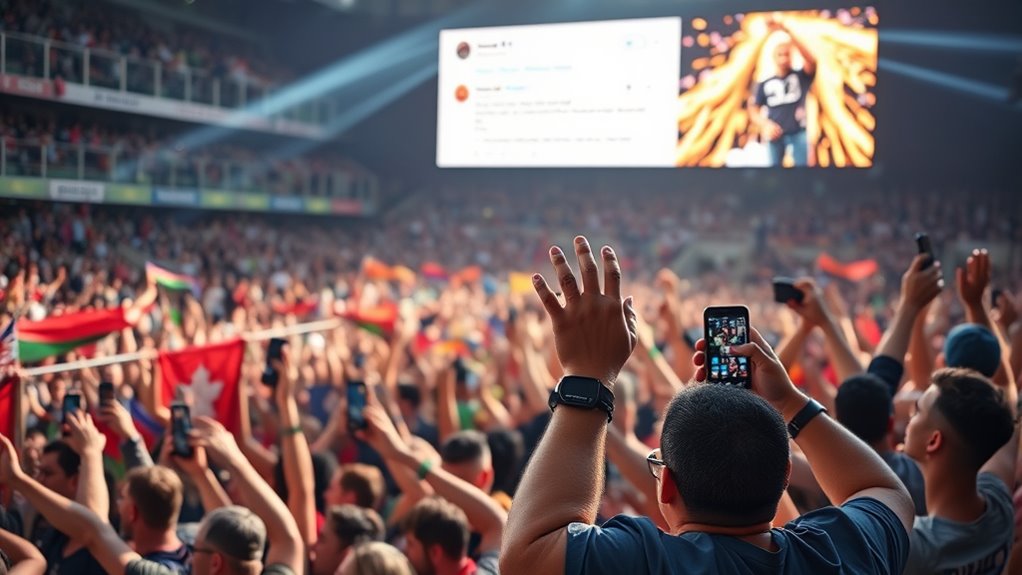
Modern social media has transformed how sports communities influence policy changes, allowing fans and stakeholders to voice their concerns instantly. Through fandom activism, passionate supporters can organize campaigns and draw widespread attention to issues that need addressing. Social media mobilization enables quick, coordinated efforts that pressure leagues and governing bodies to reconsider rules or policies. Platforms like Twitter, Instagram, and TikTok give fans a direct line to decision-makers, amplifying their voices beyond traditional channels. This immediacy means policies can shift faster in response to public sentiment. Your active participation in social media discussions can spark real change, demonstrating that fan influence now extends far beyond stadiums and forums. Additionally, the ability to monitor and analyze public reactions helps organizations understand relationship dynamics that influence policy decisions. Ultimately, modern social media empowers you to shape sports policies more directly than ever before.
Frequently Asked Questions
How Do Sports Leagues Officially Incorporate Fan Input Into Rule Changes?
You can see sports leagues incorporating fan input into rule changes through fan polls and social media. League officials often run polls online to gather opinions, then consider these results when debating new rules. Social media also offers a platform for fans to share feedback directly with decision-makers. By actively engaging with fans this way, leagues guarantee that the voices of the supporters influence the evolution of the game.
Have Fan-Driven Rule Changes Ever Faced Significant Opposition From Players or Officials?
You might wonder if fan-driven rule changes have faced opposition from players or officials. Yes, they often do, especially when players dissent or officiating disputes arise. Sometimes, players argue that changes compromise fairness or safety, while officials worry about maintaining authority and consistency. These disagreements can lead to heated debates, highlighting the challenge of balancing fan influence with the integrity of the game and the perspectives of those directly involved.
What Are Some Notable Examples of Fan Influence in Non-Mainstream Sports?
Imagine a quiet village square transforming into a bustling arena—that’s how fan influence shapes non-mainstream sports. Your fan activism fuels community competitions, turning spectators into participants. For example, local skateboarding contests often evolve based on passionate crowd input, fostering creativity and inclusion. These grassroots movements demonstrate how fans act as catalysts, using their voices and energy to inspire growth, innovation, and stronger bonds within lesser-known sports communities.
How Do Sports Organizations Balance Fan Preferences With Fairness and Safety?
You see, sports organizations aim to boost fan engagement while ensuring fairness and safety. They often gather feedback through surveys or social media, but ultimately, they prioritize safety considerations to protect players and spectators. Balancing these aspects means making informed decisions that respect fan preferences without compromising the integrity of the game. This approach maintains excitement and trust, fostering a positive environment for everyone involved.
Are There Any Legal Challenges Related to Fan-Led Rule Modifications?
You might think fan-led rule modifications face no legal hurdles, but legal disputes and contract issues can arise. When fans influence changes, sports organizations must guarantee adherence to existing contracts and league regulations. Sometimes, these modifications lead to disagreements or even lawsuits if they’re seen as breaching contractual obligations or fairness standards. So, while fan input is valuable, it’s essential to navigate potential legal challenges carefully to protect everyone’s interests.
Conclusion
You can see how fans have always shaped sports rules, from the roaring stands of the 1970s to today’s TikTok campaigns. Like a crowd at a concert demanding encores, your voices influence decisions once thought only in the hands of officials. As social media turns into your digital megaphone, your passion becomes the ultimate game-changer, proving that even in a world of high-tech gadgets, the power of fans remains timeless.