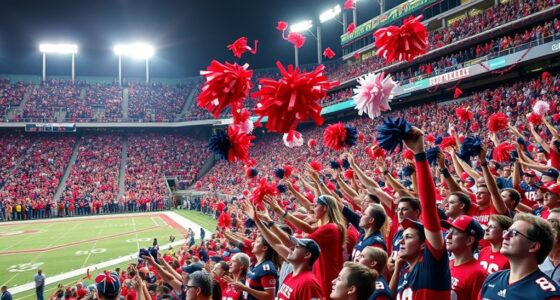
As a capo, you serve as the essential link between organizers and the crowd, leading chants with confidence and clear signals. You know how to capture attention, motivate participation, and keep the energy high. Your charisma and ability to read the crowd help you adapt and coordinate seamlessly with other capos. This leadership fosters unity and creates a powerful, shared experience. Keep going to discover more on how a capo truly energizes large gatherings.

Get sports gear delivered free with Prime
- Fast, free delivery on millions of items
- Prime Video, Amazon Music and more included
- Member-only deals all year
Key Takeaways
- Capos serve as vital links between organizers and the crowd, initiating and leading chants to foster unity.
- They use clear signals and confident gestures to command attention and encourage participation.
- Effective capos read the crowd’s mood and adapt chants to maintain high energy levels.
- They coordinate with other capos through visual cues to synchronize chants across the crowd.
- Their enthusiasm and charisma inspire collective singing, boosting overall event atmosphere.
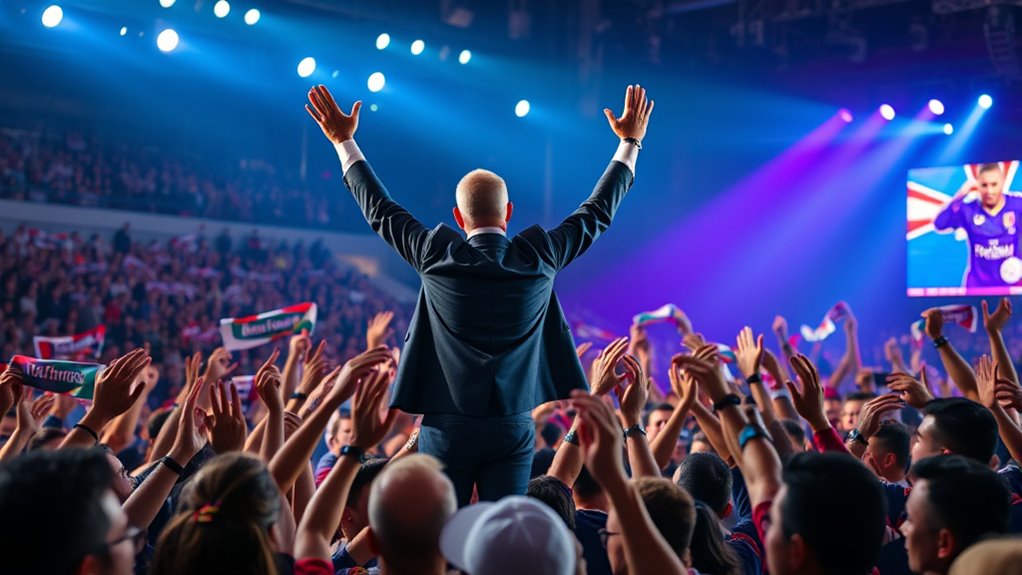
Have you ever wondered how large crowds manage to sing in perfect unison during a concert or sports event? It’s no accident. Behind the scenes, an essential role is played by the capos, who serve as the fundamental link between the organizers and the crowd. These individuals master the art of chant leadership, guiding thousands of voices to create a powerful, unified sound. Their skill lies in knowing how to command attention, inspire participation, and foster crowd engagement, ensuring everyone feels involved and motivated to follow their cues.
Capos lead chants, uniting crowds with confidence, charisma, and precise signals for powerful, synchronized cheers.
As a capo, your primary responsibility is to lead chants effectively. This means you need to be loud enough to be heard over the noise of the crowd, yet clear and confident enough to command respect. You often stand at a vantage point, making eye contact with the crowd and using gestures or signals to initiate chants. Your presence alone encourages others to join in, especially when you demonstrate enthusiasm and conviction. When you start a chant, you set the tone, and your energy can be contagious, encouraging others to pick up the rhythm and sing along. This leadership is fundamental because it provides structure amid the chaos, giving the crowd a sense of purpose and unity.
Engagement is key. You’re not just leading chants for yourself but for everyone around you. Your ability to read the crowd’s mood helps you adapt your approach—if people are hesitant, you might choose simpler, more familiar chants to get everyone involved. If the crowd is energetic, you escalate the tempo or introduce new chants to amplify the excitement. Your role is to maintain momentum, ensuring that the chant doesn’t fizzle out prematurely. You’re also responsible for coordinating with other capos or leaders to keep the chants synchronized, so the entire crowd remains in unison. This coordination requires subtle communication, often through visual cues or brief signals, to keep everyone aligned.
Crowd engagement relies heavily on your charisma and confidence. When you lead with passion, it sparks enthusiasm among the spectators, making them feel like they’re part of something bigger. This collective effort transforms a group of individuals into a cohesive, roaring chorus that can energize players, fans, or concertgoers alike. Without effective chant leadership by capable capos, the crowd might remain disorganized, missing out on the sense of communal achievement that comes from singing together. In addition, understanding the benefits of eye patches can help you appreciate the importance of clear, confident leadership in creating a unified experience. In essence, your role as a capo is to harness the collective voice, turning a sea of individuals into a synchronized wave of sound and spirit.
Frequently Asked Questions
How Do Capos Develop Their Leadership Skills?
You develop your leadership skills through dedicated leadership training and by engaging in peer mentorship. Leadership training helps you learn effective communication and organization, while peer mentorship allows you to gain experience by guiding others. By practicing these skills regularly, you build confidence and authority, enabling you to better coordinate chants and motivate your team. Consistently seeking feedback and learning from others also accelerates your growth as a leader.
What Qualities Make a Good Chant Capo?
A good chant capo demonstrates strong leadership qualities like confidence, clear communication, and enthusiasm. You should prioritize chant synchronization, ensuring everyone is in unison, and adapt to crowd energy to boost engagement. Your ability to motivate and connect with the crowd helps create a lively atmosphere. Being approachable and energetic encourages participation, making the chant more powerful and unified, which ultimately boosts team spirit and fan support.
How Are Capos Chosen Within a Group?
Choosing a capo is like finding the heartbeat of your group’s energy. You typically go through a selection process rooted in group hierarchy, where respect, leadership qualities, and familiarity with chants matter most. The group’s senior members often recommend or appoint a capo based on trust and proven dedication. This way, the leader naturally emerges, ensuring the group’s chants stay powerful, unified, and unstoppable during every rally.
Do Capos Face Any Challenges During Coordination?
Yes, capos face challenges during coordination, especially with chant synchronization and crowd engagement strategies. You might struggle to keep everyone in sync, especially in noisy or chaotic environments. Sometimes, you’ll encounter resistance or distraction from the crowd, making it harder to maintain energy and unity. Staying alert and adaptable helps you overcome these challenges, ensuring the chants are loud, coordinated, and effectively boost the group’s spirit.
How Do Capos Handle Disagreements Among Supporters?
You handle disagreements among supporters by staying calm and reminding everyone of the shared passion for the game. When fan rivalry sparks debate over chant variations, you step in as a mediator, encouraging respectful conversation and unity. Sometimes, a well-timed cheer or a popular chant helps diffuse tension. Your goal is to keep the atmosphere lively and inclusive, ensuring everyone feels part of the collective spirit, despite differences.
Conclusion
As a capo, you’re like the heartbeat of the crowd, keeping everyone in sync. I remember one match when your steady rhythm made thousands sing in perfect harmony, almost as if the chants had a mind of their own. That moment showed how your leadership turns a sea of fans into a powerful, unified chorus. Keep that rhythm, and you’ll continue to be the pulse that drives the passion forward.
Halloween Picks
halloween
As an affiliate, we earn on qualifying purchases.