
To make home games feel like stadium nights, focus on creating immersive soundscapes with well-placed speakers that mimic crowd noise and game excitement. Use surround sound with speakers at ear level, and incorporate crowd cheers, whistles, and applause synchronized with live game action. Adjust volume levels to balance commentary and crowd sounds, and use soundproofing to prevent leakage. Want to know how to perfect your setup? Keep exploring for more tips on transforming your space into a stadium-like experience.
Key Takeaways
- Use surround sound speakers positioned at ear level and strategically placed to mimic stadium acoustics.
- Incorporate dynamic crowd noise that varies with game action to enhance realism.
- Sync crowd cheers, whistles, and applause precisely with key moments for seamless immersion.
- Employ soundscaping techniques with directional audio to simulate crowd movement and ambiance.
- Add deep bass with subwoofers to replicate stadium vibrations and energy.
Why Create a Stadium-Feel at Home for Sports Nights
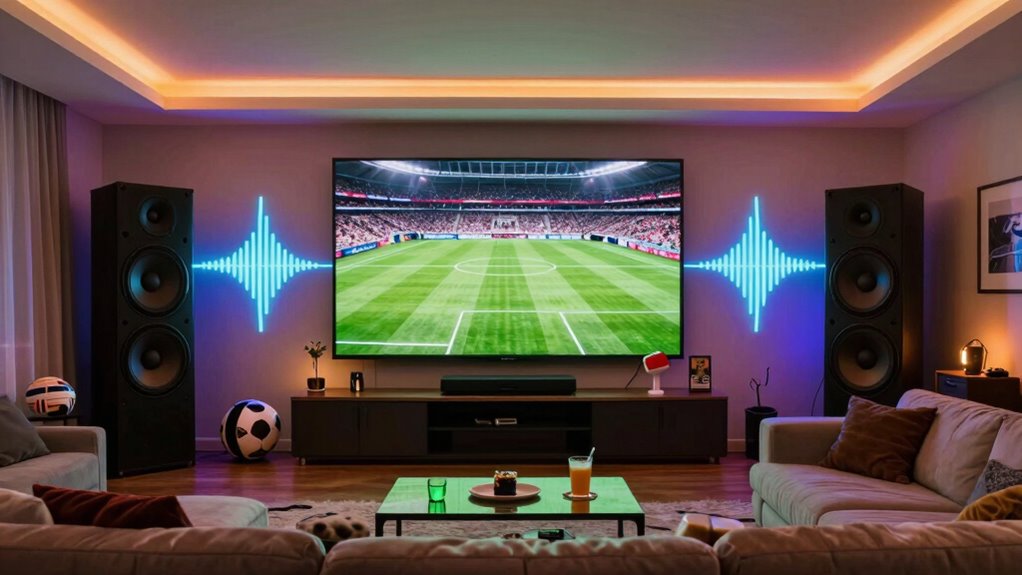
Creating a stadium-like atmosphere at home makes sports nights more exciting and immersive. When you boost fan engagement, you feel more connected to the game and your favorite team. It’s also helpful to incorporate content formats that enhance the viewing experience, such as live commentary or interactive features. Using home decoration, like team flags, banners, or themed tableware, helps set the mood and makes your space feel like a stadium. This creates a sense of unity and enthusiasm among everyone watching. Incorporating auditory cues like crowd noise or cheers can significantly elevate the atmosphere, making it more authentic. When your environment reflects the energy of a live game, you’re more likely to cheer loudly and get involved. Leveraging smart home automation can help synchronize these effects seamlessly, further elevating the experience. Incorporating soundscaping techniques that mimic stadium acoustics can also deepen the immersive feeling. When all these elements come together, the environment amplifies the thrill and makes your sports nights memorable. Ultimately, recreating a stadium vibe at home enhances your experience and keeps your passion for the game alive.
Understanding How Your Home Sound Can Mimic a Stadium Atmosphere

To make your home sound like a stadium, you need to think about strategic sound placement, so noise comes from different directions. Using dynamic volume control helps you match the energy levels of the game, creating an immersive experience. When you coordinate these elements, your home environment will feel much more like being at the actual event. Incorporating essential oils with invigorating scents can also enhance the atmosphere, making the experience more vivid and engaging. Adjusting your contrast ratio can further amplify the realism by highlighting the intensity of sound cues and visual effects. Additionally, implementing digital frames that synchronize with the audio can elevate the overall sensory experience. Paying attention to smart technology integration can optimize how these elements work together seamlessly, ensuring a truly authentic stadium-like environment. Understanding shipwreck preservation techniques and their importance can inspire innovative ways to protect and enhance your audio setup, making the experience even more immersive.
Strategic Sound Placement
Strategic sound placement is essential for transforming your home game into an electrifying stadium experience. Properly positioning speakers creates an immersive environment that mimics live crowds. Use soundproofing techniques to prevent sound leakage and focus audio within your space. Place speakers behind you and around the room to simulate crowd noise from multiple angles. Incorporate ambient lighting to enhance the atmosphere, making sounds feel more realistic. Consider the room’s shape when positioning speakers, avoiding dead spots. Here are some tips:
- Position speakers at ear level for clarity
- Use multiple speakers for surround sound
- Keep sound sources away from walls to reduce echo
- Blend sound with ambient lighting for a cohesive stadium vibe
Dynamic Volume Control
Controlling your home’s volume levels is key to mimicking the dynamic atmosphere of a stadium. You want the background music to rise and fall naturally, creating a sense of excitement during key moments and calming during others. Use a sound system with adjustable volume zones to amplify crowd noise and music selectively, simulating live game energy. Adjust the overall volume to keep voice clarity high so commentary or game sounds remain clear, even when background noise escalates. This dynamic volume control keeps the environment lively without overwhelming dialogue or commentary. It also helps mimic the ebb and flow of real stadium sounds, making your home feel more immersive. Incorporating sound system etiquette ensures that all elements blend seamlessly, enhancing the authentic experience. Additionally, understanding how to manage audio levels effectively allows you to fine-tune the atmosphere for every moment of the game. With precise volume adjustments, you’ll create an authentic, energetic atmosphere that elevates every home game experience.
Choosing the Best Speakers for Your Home Stadium Sound

To create authentic stadium sound at home, you need the right speakers that deliver clear, powerful audio. Consider how speaker placement impacts sound quality and how compatible your choices are with your existing setup. Ensuring easy connectivity will keep your game days seamless and immersive. Additionally, selecting the appropriate cabling solutions can prevent signal failures and improve overall performance. Understanding testing accuracy can also help you verify that your audio equipment performs reliably during intense gaming sessions. Incorporating proper sound calibration techniques can further optimize your home stadium experience for the best possible audio quality. Being aware of audio technology advancements can help you choose equipment that stays current with the latest innovations. Staying informed about market research can guide you toward the most reliable and cutting-edge audio options available.
Sound Quality Optimization
Choosing the right speakers is essential for creating an authentic stadium sound experience at home. To optimize sound quality, focus on clarity, volume, and even distribution. Guarantee your speakers support wireless connectivity for seamless setup and fewer cables. Acoustic treatment, like sound-absorbing panels, helps reduce echo and improve overall sound fidelity. Consider these tips:
- Use high-quality, dedicated speakers designed for immersive audio
- Prioritize speakers with wide frequency response for richer sound
- Incorporate acoustic treatment to minimize unwanted reverberations
- Select speakers with reliable wireless connectivity for convenience
- Ensure your audio system includes proper speaker placement to maximize sound coverage and immersion. Additionally, choosing speakers with consistent sound output helps maintain an even audio experience throughout your space. Experimenting with speaker calibration can further fine-tune your sound for optimal performance.
These adjustments make your audio more vivid and true to life, bringing stadium excitement directly into your home. Proper sound quality ensures every cheer and commentary feels loud and clear, elevating your game-day experience.
Speaker Placement Strategies
The placement of your speakers plays a crucial role in creating an immersive stadium atmosphere at home. Strategically positioning them enhances sound distribution, making crowds feel alive. Use soundproofing techniques to prevent sound leakage and optimize acoustic clarity. Place speakers at ear level, angling them towards your seating area for the best effect. Consider ambient lighting to complement sound placement, highlighting key areas like the TV or seating zones. To maximize impact, experiment with the following setup:
| Speaker Location | Angle & Height | Purpose |
|---|---|---|
| Front corners | Slightly upward | Envelop the room |
| Behind seating | Directly behind | Add depth and fullness |
| Side walls | Level with ears | Cover wide angles |
This arrangement ensures full stadium sound and a true game-night experience. Proper speaker placement is essential for achieving optimal sound quality and immersion, especially when considering the importance of sound distribution for a balanced audio experience. Additionally, understanding acoustic principles can help you fine-tune your setup for even better results.
Compatibility and Connectivity
Selecting the right speakers involves making sure they’re compatible with your existing devices and can connect seamlessly within your home setup. Focus on wireless connectivity options like Bluetooth or Wi-Fi to avoid clutter and facilitate easy setup. Compatibility with your devices is essential—check if the speakers support your smartphone, smart home system, or receiver.
Consider these factors:
- Support for wireless connectivity protocols (Bluetooth, Wi-Fi)
- Compatibility with your existing audio devices
- Ease of pairing and setup
- Range of connection to cover your space
Choosing speakers that match your device ecosystem ensures smooth operation and minimal frustration. Prioritizing wireless connectivity and device compatibility guarantees a hassle-free experience, making your home stadium sound truly immersive. Also, verifying VPS Hosting Discount Codes can help optimize your setup cost-effectively. Additionally, opting for wireless audio standards can enhance the reliability of your connection across your space.
To ensure consistent performance, it’s also helpful to confirm the compatibility with your smart home system, which can streamline your entire setup process.
How to Set Up Your Speakers for That Stadium Feel
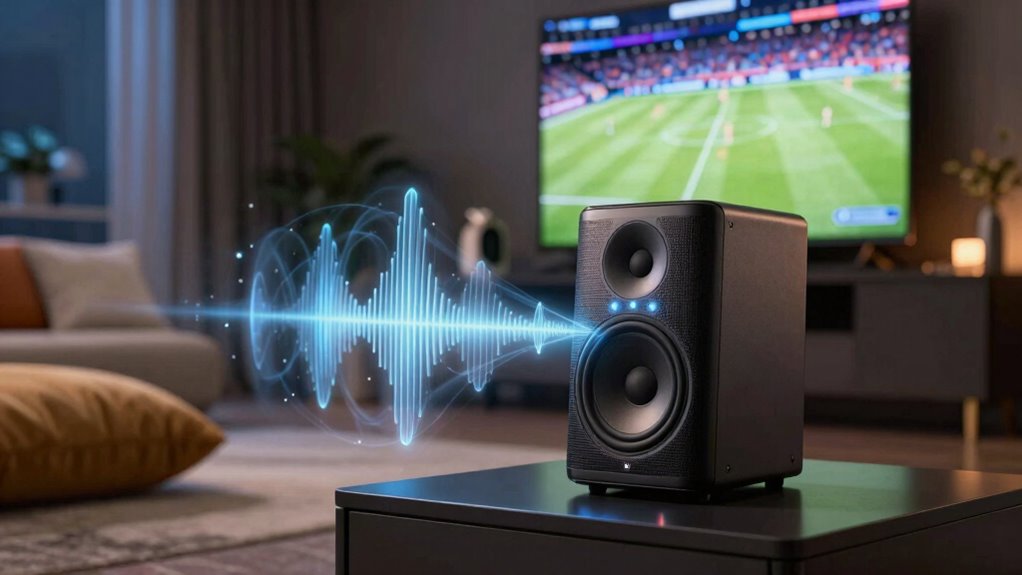
To create an authentic stadium atmosphere at home, you need to position your speakers strategically around your space. Surround sound is key to immersing yourself in the game, so place speakers at ear level and evenly spaced to mimic the stadium’s audio environment. Use a combination of front and rear speakers to create a sense of depth, making crowd noise and music playlists feel dynamic and lively. Adjust the volume levels so the crowd sounds loud but not overwhelming, enhancing fan engagement without drowning out commentary or game sounds. Consider placing a subwoofer for deep bass that replicates stadium vibrations. Proper speaker placement ensures the sound envelops you, turning your home into a virtual stadium where every cheer, chant, and musical beat amplifies the experience.
Using Spatial Audio and Soundscaping to Boost Your Game Experience
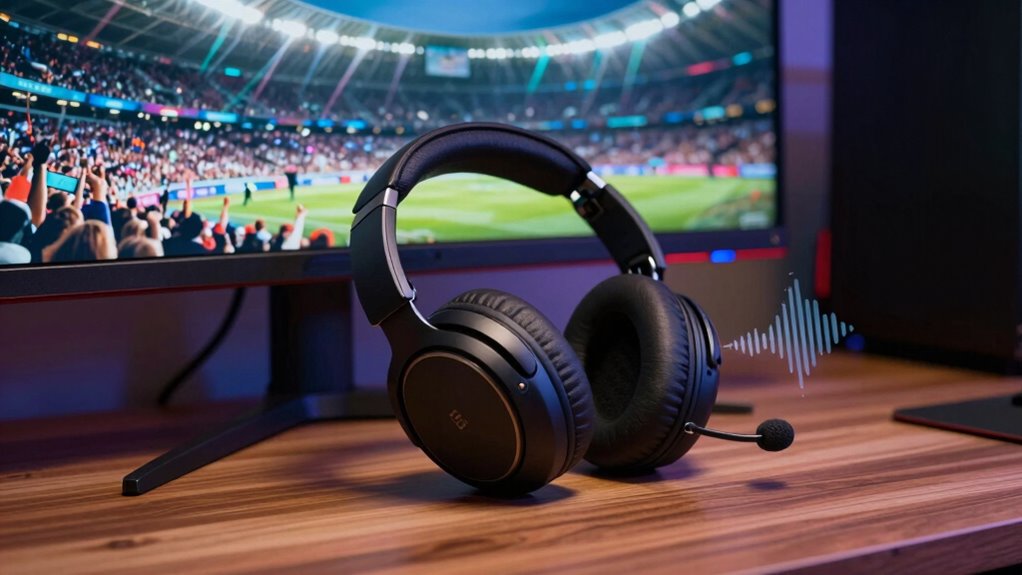
Have you ever wondered how to make your home game feel even more immersive? Using spatial audio and soundscaping can dramatically enhance your experience by creating a realistic atmosphere. Proper acoustics calibration ensures sounds come from the right direction, boosting audience engagement. To maximize this effect, consider:
- Using headphones with 3D audio capabilities
- Incorporating ambient crowd noise that varies with the action
- Adjusting speaker placement for optimal sound directionality
- Customizing soundscapes to match game intensity
These techniques help your brain interpret audio cues more naturally, making you feel like you’re right there in the stands. Spatial audio tricks heighten immersion and keep you engaged throughout the game, transforming a simple home setup into a vibrant stadium experience.
Syncing Sound Effects With Your Sports Broadcasts
Enhancing your home game experience goes beyond soundscaping; syncing sound effects precisely with your sports broadcast can make all the difference. By carefully aligning custom sound effects and crowd ambiance with live moments, you create a seamless stadium feel. When a touchdown happens, the crowd roars in sync, amplifying the excitement. Use a timeline to match sounds to key plays for realism. Imagine this setup:
| Play Event | Custom Sound Effect | Crowd Ambiance |
|---|---|---|
| Goal scored | Cheer and whistle blast | Roaring crowd in unison |
| Fumble recovery | Thud and referee whistle | Gasps and cheers |
| Free throw | Buzzer sound | Silence then applause |
| Final whistle | Uplifting music | Crowd erupting in celebration |
This synchronization immerses you, making every game feel like a live stadium experience.
Tips for Managing Room Acoustics to Amplify Crowd Noise
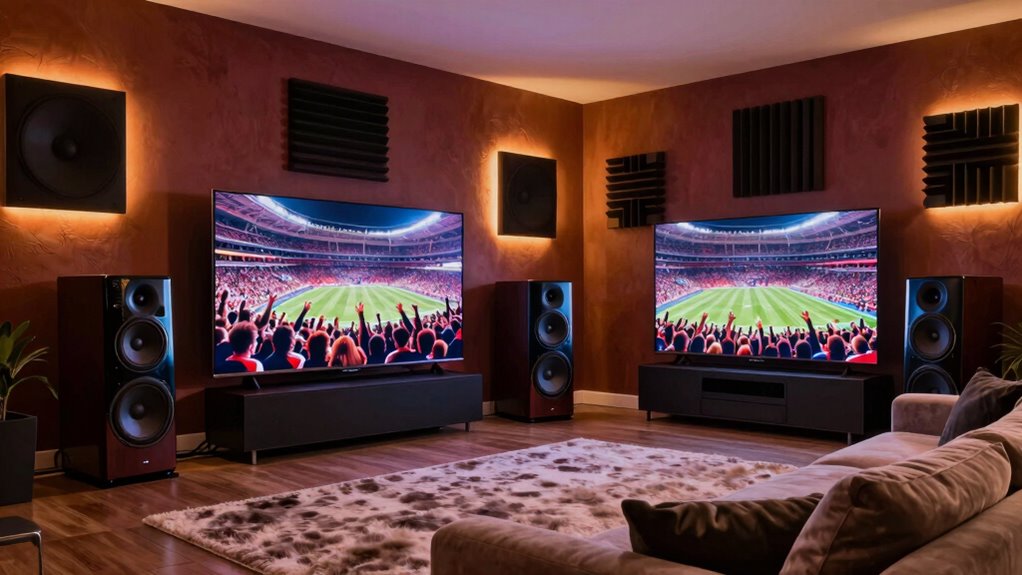
Managing your room’s acoustics is essential for amplifying crowd noise and creating an authentic stadium atmosphere. To do this effectively, focus on enhancing sound reflection and minimizing unwanted echoes. Use soundproofing techniques like adding heavy curtains or foam panels to absorb excess sound. Incorporate room decoration such as wall tapestries or fabric-covered furniture to diffuse noise evenly. You can also strategically place soft rugs or plush seating to boost crowd-like acoustics. Avoid hard, flat surfaces that bounce sound around and diminish crowd noise. Remember, the goal is to create a lively, immersive environment where crowd sounds resonate naturally. Small adjustments in room decor and soundproofing can make a significant difference in amplifying that stadium vibe during your home games.
Troubleshooting Common Sound Problems During Home Game Nights
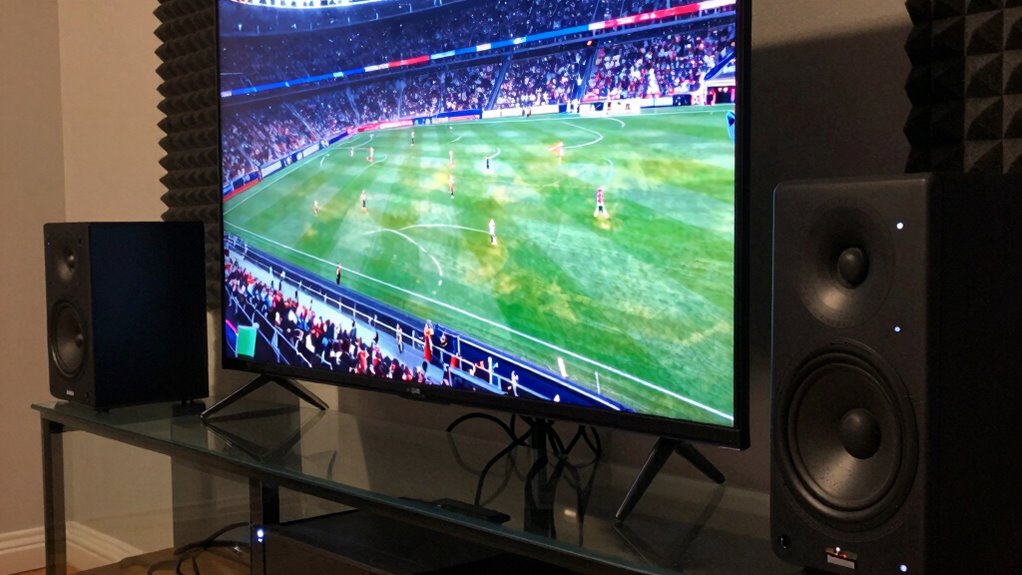
Even with a well-designed room, sound issues can still crop up during your home game nights, disrupting the stadium atmosphere you’re aiming for. Common problems include uneven sound distribution or low volume, which hinder audience engagement and the immersive experience. To troubleshoot, start by checking your speaker placement—position speakers at ear level and evenly around the room for balanced sound. Adjust sound personalization settings to emphasize crowd noise and minimize background distractions. If echoes or muffled audio occur, consider adding acoustic panels or rugs to absorb excess sound reflections. Regularly test your system before game nights to identify and fix issues early. Addressing these problems ensures your audio setup enhances audience engagement, making every home game feel like a true stadium experience.
Final Tips for Creating the Ultimate Home Stadium Sound Environment
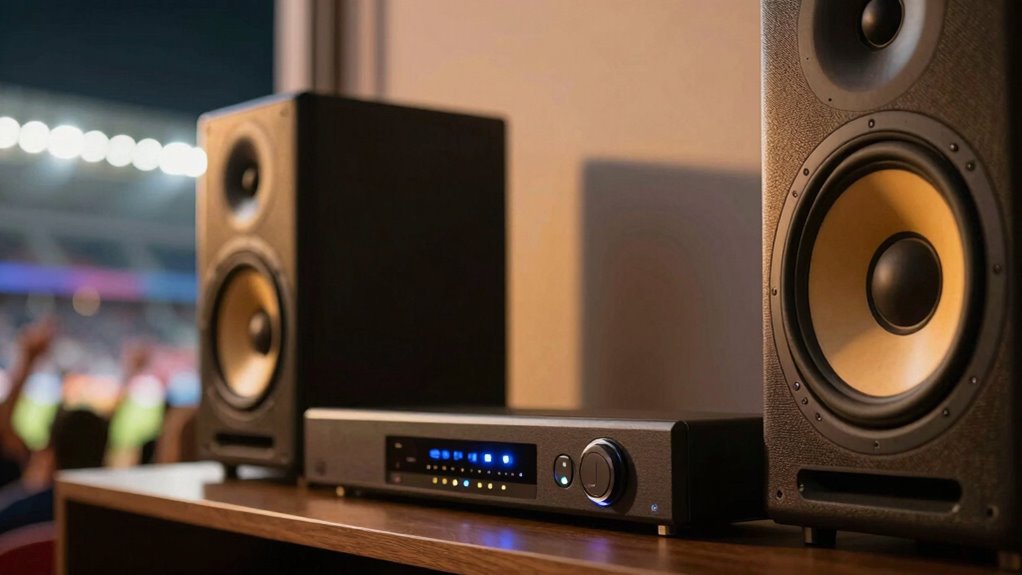
To create the ultimate home stadium sound environment, focus on fine-tuning your audio setup for maximum immersion. Proper placement of speakers is essential—position them around your space to create a surround sound effect. Incorporate authentic stadium music to set the mood and energize the atmosphere. Use a reliable sound source for team cheers, ensuring they are clear and synchronized with the game. Adjust volume levels so that crowd noise feels natural and not overwhelming.
Consider these tips:
- Use multiple speakers to distribute sound evenly
- Sync team cheers with game moments for authenticity
- Play stadium music during breaks to maintain excitement
- Regularly update your sound library for variety and realism
These steps help recreate the electrifying stadium feeling at home.
Frequently Asked Questions
Can I Use Headphones to Simulate Stadium Crowd Noise Effectively?
Yes, you can use headphones to simulate stadium crowd noise effectively. To get the best sound quality, choose high-quality headphones with good bass response and noise isolation. Play crowd noise tracks at a volume that mimics stadium energy without causing discomfort. This setup immerses you in authentic crowd noise, enhancing your home game experience and making you feel like you’re right there in the stadium.
How Does Room Size Impact the Quality of Stadium Sound at Home?
Think of your room as a concert hall; a smaller space naturally amplifies crowd sounds, while a larger one needs careful acoustic treatment. Your speaker placement becomes essential—position them to mimic stadium angles, filling the space with immersive sound. In bigger rooms, adding acoustic panels helps contain and reflect sound, creating a lively atmosphere. Smaller rooms might need less treatment but strategic placement to maximize the stadium vibe.
What Budget Options Are Available for Creating a Stadium-Like Audio Environment?
To create a stadium-like audio environment on a budget, start with simple soundproofing techniques like heavy curtains and door seals to minimize noise leakage. Use basic audio mixing tips, such as adjusting echo and reverb settings, to enhance the atmosphere. Invest in affordable speakers or soundbars, and position them strategically for immersive sound. These steps help you achieve a lively, stadium feel without breaking the bank.
Are There Specific Sound Effects That Best Replicate the Stadium Atmosphere?
Did you know that crowd noise can reach up to 130 decibels in stadiums? To create an immersive experience at home, focus on sound effects like cheering crowds, referee whistles, and stadium ambiance. High-quality recordings of these sounds deliver better sound quality and authenticity. Combining these effects strategically enhances the atmosphere, making your game nights feel more like real stadium experiences and keeping you engaged throughout the match.
How Often Should I Update or Change My Sound Setup for Optimal Experience?
You should update or change your sound setup regularly, about every few months, to keep the experience fresh. Use wireless speakers to easily reposition and enhance sound coverage, and perform sound calibration each time you make adjustments. This guarantees consistent quality and immersive stadium-like audio. Regular updates help you stay current with new sound effects and technology, making every home game feel as exciting as being at the stadium.
Conclusion
By mastering these tips, you’ll transform your living room into a vibrant stadium, much like turning a quiet pond into a roaring river. With the right speakers, soundscaping, and room setup, every game night becomes an immersive experience that makes you feel right there in the stands. So get ready to cheer loud and proud, because your home game nights will never sound the same—more like the electrifying energy of a packed stadium.