
Rivalries shape your fan identity by making your connection to the team more personal and intense. They turn game days into emotional battles, boosting your loyalty and pride. These rivalries build a sense of community and deepen your commitment, influencing how you see yourself as part of something bigger. The history and tradition behind rivalries create lasting milestones, forging a stronger bond. Keep exploring to discover how these rivalries become defining moments in your sports journey.
Key Takeaways
- Rivalries deepen emotional bonds, making fans’ identities more closely tied to their team’s success and legacy.
- Supporting a team in rivalries fosters a sense of belonging and community among fans.
- Rivalry games serve as milestones that reinforce fans’ loyalty and personal pride.
- The history and traditions of rivalries influence how fans perceive their role and self-worth.
- Rivalries transform fandom into a personal identity marker that extends beyond just winning or losing.
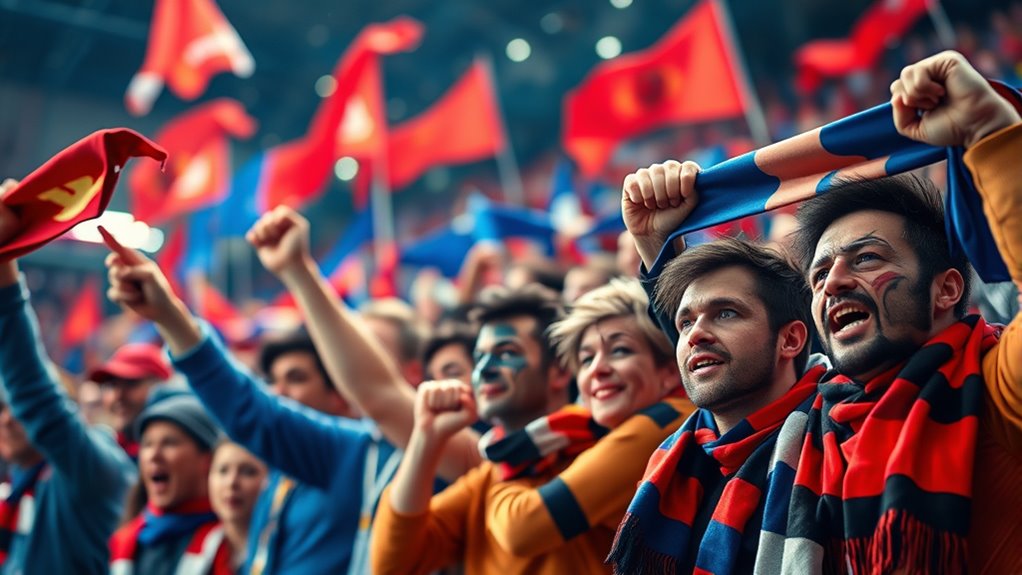
Rivalries are more than just competitive matchups; they shape your sense of identity as a fan. When you get caught up in a fierce rivalry, it’s not just about winning or losing on the field—it’s about what that game represents to you personally. Your team loyalty runs deep, and during rivalry games, that loyalty is put to the test. You feel an emotional investment that goes beyond the scoreboard. It’s about belonging, pride, and shared history. You might find yourself standing taller, feeling more connected when your team triumphs over its rival. Conversely, a loss can sting more than usual, leaving you feeling frustrated or disappointed because that game felt like a mirror of your own identity.
Rivalries define your identity as a passionate, emotionally invested fan beyond just the game.
Rivalries intensify the emotional investment you have in your team. It’s not just a casual interest; it becomes a core part of who you are as a fan. Every rivalry game feels like a personal battle, where your passion is on full display. You find yourself talking trash, defending your team’s honor, and feeling that rush of adrenaline with each big play. This emotional energy often fuels your overall fandom, making the experience more visceral and memorable. It’s this heightened emotional investment that helps forge a stronger bond with your team, creating a sense of community with other fans who share the same fervor.
As a fan, rivalries also influence how you see yourself in relation to others. You may develop a sense of identity rooted in your team’s history and the rivalry’s legacy. Supporting your team through thick and thin becomes more meaningful when it’s framed within the context of a longstanding rivalry. It’s about more than just the game; it’s about standing up for your side and feeling part of something bigger than yourself. This sense of belonging often shapes your social interactions, conversations, and even your sense of loyalty over time. You become invested not only in the game but in the stories, traditions, and rivalries that give your fandom its character.
Ultimately, rivalries help you define what it means to be a dedicated fan. They heighten your emotional investment and deepen your team loyalty, turning casual support into a passionate, identity-shaping experience. These rivalries become landmarks in your sports journey, reinforcing your sense of belonging and fueling your pride every time you cheer for your team, especially when they face their rivals. In this way, rivalries don’t just influence the outcome of a game—they shape who you are as a fan. Recognizing the role of psychological investment in rivalry dynamics explains why such competitions leave lasting impressions on fans’ identities.
Frequently Asked Questions
How Do Rivalries Influence Fan Loyalty Over Time?
Rivalries boost your fan loyalty over time by strengthening your connection to your team through shared fan traditions. As you follow the rivalry’s origins, your passion deepens, making victories more satisfying and losses more motivating. These intense feelings keep you engaged, fostering a sense of belonging. Over time, the rivalry’s history and your commitment to it create a powerful identity, making you more dedicated and loyal to your team.
Can Rivalries Create Negative Behaviors Among Fans?
Rivalries can spark negative behaviors like sportsmanship conflicts and fan hostility. While they energize your passion, they can also lead you to act aggressively or dismissively toward opponents. This intense competition might make you forget respect and camaraderie, fueling heated arguments and disrespectful gestures. Ultimately, rivalry-driven emotions can overshadow the joy of the game, turning passionate fans into sources of tension rather than celebration.
Do Rivalries Differ Across Sports and Regions?
Yes, rivalries differ across sports and regions. You’ll notice regional intensity varies, with some areas deeply passionate about local teams, while others focus on sport-specific rivalries that develop over history and tradition. This influences how you and other fans engage, creating unique atmospheres at games. Your rivalry experiences are shaped by these regional and sport-specific factors, making each rivalry distinct and integral to your fan identity.
How Do Rivalries Impact Players’ Performances?
Rivalries considerably impact players’ performances by boosting motivation and fueling rivalry psychology. When you face a fierce opponent, you’re more likely to elevate your game, driven by the desire to prove yourself and win. This intense focus can lead to improved skills or, conversely, mistakes caused by pressure. Overall, rivalry dynamics push players to perform at their best, transforming emotions into a powerful motivator that can define the outcome.
Are Rivalries Beneficial or Harmful to the Sport’s Integrity?
Rivalries are a double-edged sword for the sport’s integrity. While they fuel passion and draw crowds, they often lead to sportsmanship challenges and rivalry commercialization, which can tarnish fair play. You might see intense emotions boil over, risking the game’s true spirit. However, when managed well, rivalries energize competitions without damaging the core values, making the sport more exciting and engaging for everyone involved.
Conclusion
Your passion for rivalries fuels your sense of belonging and identity. These fierce competitions turn games into battles where you stand your ground, forging bonds with fellow fans. Remember, when you’re caught in the heat of rivalry, it’s like walking a tightrope—balancing pride and loyalty. Embrace the fire, because it’s what keeps your team alive in your heart, making the victory sweeter and the defeat easier to swallow. In rivalry, your true colors shine bright.