When you experience chills and goosebumps, your brain triggers your autonomic nervous system in response to emotional or environmental cues. Powerful feelings like awe or fear activate this system, causing tiny muscles at hair follicles to contract, which makes your hair stand up and creates those tingling sensations. This reflex, called piloerection, is rooted in ancient survival responses. To understand how your brain connects these reactions to your emotions, keep exploring this fascinating process.
Key Takeaways
- Chills and goosebumps are involuntary reactions triggered by the autonomic nervous system in response to emotional stimuli or cold.
- The limbic system processes emotional signals that activate the sympathetic nervous system, leading to physical responses like piloerection.
- Tiny muscles at hair follicles contract due to signals from the brain, causing hair to stand and creating the sensation of chills.
- These responses are inherited from ancestors, serving functions like intimidation or increasing perceived size during emotional arousal.
- The phenomenon illustrates the deep connection between emotional processing centers and physical reactions in the nervous system.
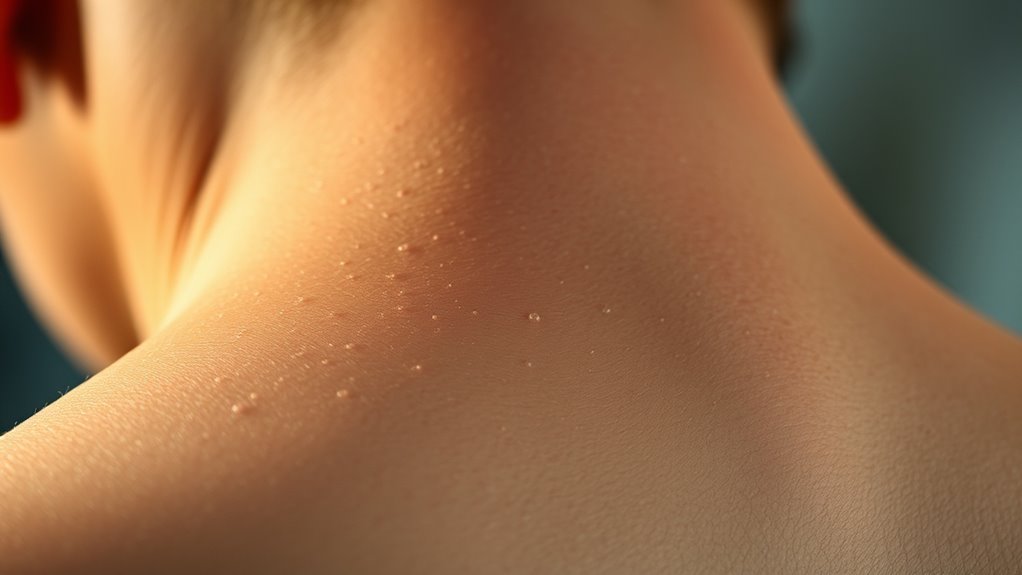
Have you ever experienced chills or goosebumps unexpectedly? That strange feeling when your skin suddenly ripples with tiny bumps, often triggered by an emotional response or a cold breeze. These involuntary reactions are closely linked to your autonomic nervous system, which controls many of your body’s automatic functions, including how you respond to emotional stimuli. Your autonomic nervous system manages your body’s fight-or-flight response, and when it detects certain emotional or environmental cues, it triggers physical reactions like shivering or the formation of goosebumps. This process isn’t just about feeling cold; it’s deeply rooted in your brain’s way of preparing your body to react to various stimuli.
Involuntary reactions like goosebumps are your body’s automatic response to emotional or environmental triggers.
When you experience a powerful emotion—whether it’s awe, fear, or even love—your brain rapidly processes these feelings and communicates with your autonomic nervous system. This communication prompts your body to produce physical signs of emotional responses. For instance, when you hear a moving piece of music or witness a breathtaking scene, your brain sends signals that activate the sympathetic branch of your autonomic nervous system. This activation causes tiny muscles at the base of hair follicles, called arrector pili muscles, to contract. As these muscles tighten, your hair stands on end, giving rise to goosebumps. This reflex, called piloerection, is a vestigial trait inherited from our furry ancestors, who used it to appear larger or more intimidating when threatened.
The connection between emotional responses and physical reactions like chills or goosebumps highlights how intertwined your mind and body are. Your brain’s limbic system, which processes emotions, plays a pivotal role in triggering these autonomic responses. When you’re deeply moved, your limbic system signals your autonomic nervous system to initiate these physiological changes. Interestingly, these reactions can also occur when you’re cold, as your body tries to conserve heat by triggering shivering and goosebumps. Yet, even in the absence of cold, emotional stimuli alone can activate these responses, revealing how your nervous system interprets psychological signals as physical cues. This neural pathway exemplifies the brain-body connection, illustrating how emotional and environmental stimuli are integrated within your nervous system.
Understanding this neural pathway underscores how your body reacts instinctively to emotional and environmental stimuli. It’s a remarkable example of the complex relationship between the brain’s emotional centers and the autonomic nervous system. So, next time you feel a sudden chill or notice your skin bristling in response to a song or a memory, remember it’s your brain’s way of communicating with your body—an ancient, automatic response rooted in your nervous system’s design to keep you alert and prepared for whatever comes your way.
Top picks for "neuroscience chill goosebump"
As an affiliate, we earn on qualifying purchases.
Frequently Asked Questions
Can Chills or Goosebumps Predict Emotional or Physical Health Issues?
Chills and goosebumps can hint at your mind-body connection and hormonal responses, but they don’t reliably predict health issues. If you notice frequent or intense episodes, it may signal underlying emotional or physical concerns that deserve attention. Pay attention to how your body reacts, and consult a healthcare professional if these responses become persistent or troubling. Understanding your body’s signals helps maintain overall health and emotional well-being.
How Do Cultural Differences Influence the Experience of Chills?
Cultural differences markedly influence how you experience and interpret chills and goosebumps. Cross-cultural expressions shape your emotional responses, making some cultures see these sensations as spiritual, while others view them as purely physical. Your emotional interpretation varies based on cultural norms and beliefs, affecting whether you see chills as a sign of awe, fear, or joy. This cultural lens alters your personal experience, highlighting the diverse ways humans connect with these physical sensations.
Are There Genetic Factors That Determine Sensitivity to Chills?
Think of your body as a finely tuned orchestra, where genetic predispositions act as the sheet music guiding responses like chills. Your sensitivity to goosebumps is partly written in your DNA, influenced by biological markers that signal how your nervous system reacts. Some people are naturally more attuned, with genes that amplify their response to emotional or sensory stimuli, making chills feel like electric whispers running through their spine.
Do Animals Experience Chills or Goosebumps Similarly to Humans?
Animals do experience responses similar to human chills or goosebumps, mainly as part of their evolutionary functions. These animal responses, like piloerection, help them appear larger to predators or insulate their bodies against cold. You’ll notice these reactions in many species, especially when they’re frightened or startled. While not identical to human chills, these responses serve similar purposes, aiding survival and communication across different animals.
Can Training or Therapy Alter Sensitivity to Chills?
Yes, training and therapy can change your sensitivity to chills. Through neural plasticity, your brain adapts, strengthening or weakening pathways involved in emotional regulation. Techniques like mindfulness or cognitive behavioral therapy can help you better manage emotional triggers, reducing overreactivity that causes chills or goosebumps. Over time, this can make you less sensitive or more aware of your emotional responses, giving you more control over how you experience these physical sensations.
Conclusion
As you experience chills and goosebumps, remember they’re like tiny sparks igniting your primal connection to awe and emotion. These sensations are your body’s way of echoing the ancient call of the wild, a symbol of vulnerability and strength intertwined. Embrace them as your personal reminder that beneath your modern facade, your brain still dances to the timeless rhythm of nature’s mysterious symphony. In each shiver, you find a whisper from your deepest, most instinctive self.