
When you attend a live concert, your energy combines with the crowd and performers, creating a powerful emotional experience. Music triggers dopamine, making you feel pleasure and connection. Engaging with call-and-response or singing along deepens your bond to the music and others around you. The shared vibrations of emotion and social cues amplify your feelings, turning a song into a memorable moment. Stay with us to explore how these psychological dynamics shape your musical adventures.
Key Takeaways
- Live performances evoke stronger emotional responses by amplifying music through sensory engagement and shared energy.
- Fan participation strategies like sing-alongs and call-and-response foster social bonding and collective excitement.
- Music releases dopamine during live events, increasing pleasure and reinforcing emotional attachment.
- Audience reactions and artist-audience interactions create a feedback loop that heightens engagement and emotional intensity.
- The combination of music, performer presence, and social cues transforms concerts into powerful, memorable emotional experiences.

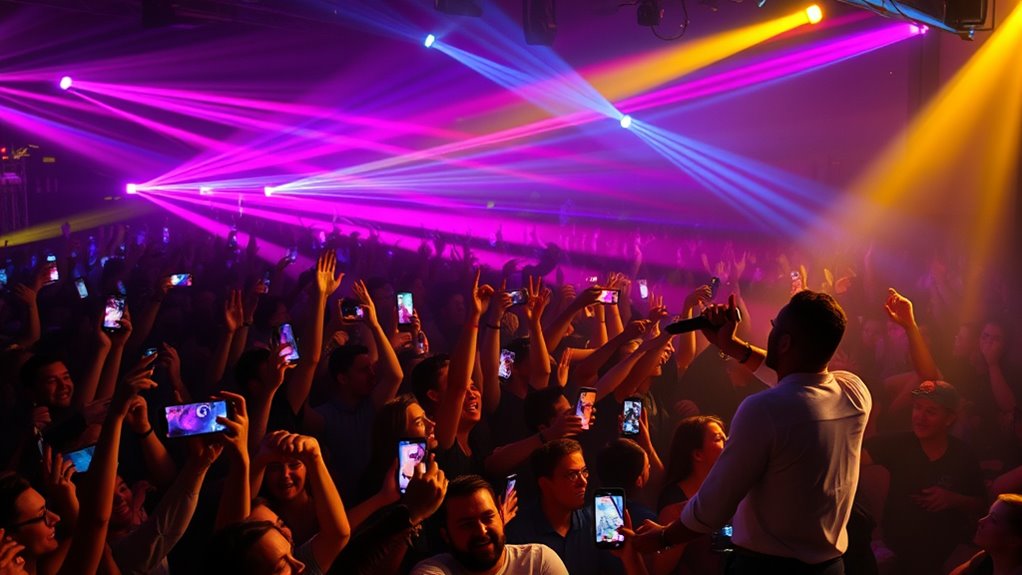
Have you ever wondered how music seems to ignite a crowd’s energy? It’s almost like an invisible current that sweeps through the audience, transforming a group of strangers into a unified, pulsating force. This phenomenon is rooted in live concert dynamics, where every beat and lyric is carefully crafted to maximize emotional impact. When you’re at a concert, you can feel the collective heartbeat of the crowd syncing with the rhythm, creating an electrifying atmosphere that’s hard to replicate elsewhere. Artists and event organizers understand this deeply, employing specific fan engagement strategies to heighten that sense of connection. They might involve the crowd in sing-alongs, encourage call-and-response interactions, or even invite fans on stage, all of which serve to deepen the emotional bond between performer and audience. These tactics aren’t just for show—they’re rooted in psychology, tapping into the way music influences human emotions and social bonding.
The power of music to evoke feelings is amplified during live performances because of the immediate, sensory experience it provides. When you hear a familiar song performed live, your brain releases feel-good chemicals like dopamine, heightening your sense of pleasure and attachment to the moment. The energy of the crowd fuels this further—seeing others singing along or dancing creates a sense of belonging and shared purpose. This collective experience is reinforced through live concert dynamics, where the artist’s stage presence and the crowd’s reactions work in tandem. The artist might vary their intensity, raising the tempo or engaging directly with the audience, which keeps the energy levels high. This continuous interaction makes every moment feel more personal and immersive, turning a simple concert into a memorable event. Additionally, the use of predictive modeling can help organizers tailor the experience to maximize audience engagement and emotional impact.
Fan engagement strategies play a crucial role in amplifying this effect. When performers acknowledge their audience, encourage participation, or even read out fan messages, they foster a sense of inclusion. These interactions create a feedback loop: the more engaged you are, the more you feel emotionally connected, which in turn heightens your overall experience. This heightened emotional state not only makes the concert more enjoyable but also deepens your emotional association with the music. It’s this intricate dance between music, performer, and audience that explains why live concerts can feel so powerful—because they tap into the fundamental human need for connection through shared emotion and collective energy. Ultimately, it’s a carefully orchestrated blend of sound, psychology, and social cues that make music a catalyst for fan energy.
Frequently Asked Questions
How Do Specific Song Elements Influence Fan Emotions?
You’ll find that lyrical symbolism and rhythmic complexity deeply influence your emotions. When a song uses powerful symbolism, it resonates on a personal level, triggering strong feelings. Meanwhile, rhythmic complexity keeps you engaged and can evoke excitement or nostalgia. Together, these elements create a compelling experience that intensifies your connection to the music, making you feel more energized, understood, or even moved on a profound emotional level.
Can Fan Energy Impact a Musician’s Performance?
Yes, fan energy can profoundly impact a musician’s performance. When you feed off crowd dynamics and emotional contagion, your enthusiasm and intensity often increase. The lively atmosphere and collective enthusiasm boost your confidence, helping you perform better. As the audience’s energy spreads through emotional contagion, it creates a positive feedback loop, elevating both your performance and the overall concert experience.
Are There Cultural Differences in Music-Driven Fan Enthusiasm?
Yes, there are cultural differences in music-driven fan enthusiasm. You’ll notice how cultural expressions influence fan behaviors, such as unique fan rituals that vary worldwide. For example, in some cultures, fans might sing along loudly, dance freely, or perform specific gestures to show their support. These differences deepen your understanding of how cultural backgrounds shape the way fans connect with music, making each experience uniquely vibrant and immersive.
How Does Music Therapy Utilize Fan Emotional Responses?
Imagine a bridge connecting your feelings and memories—music therapy uses this to help you find emotional release and trigger memory recall. You actively engage with songs that symbolize past experiences, allowing suppressed emotions to surface safely. This process transforms music into a healing tool, guiding you through emotional healing and self-awareness. By tapping into your emotional responses, you regain control and foster resilience in a supportive, therapeutic environment.
What Role Does Social Media Play in Amplifying Fan Energy?
Social media amplifies fan energy by making it easy for you to engage with viral challenges and influencer collaborations. When you participate in trending challenges or share content from your favorite artists, you help boost their visibility and excitement around their music. This creates a ripple effect, fueling collective enthusiasm and emotional connection, making you feel more involved and energized in the music community.
Conclusion
As you feel the surge of energy from your favorite song, it’s no coincidence—music connects deeply with your emotions, fueling your spirit. That shared passion, like a silent nod, reminds you that sometimes, the right tune arrives just when you need it most. It’s as if the universe conspires to lift you up, proving that in music and life, the right moment and the perfect song are always meant to meet.