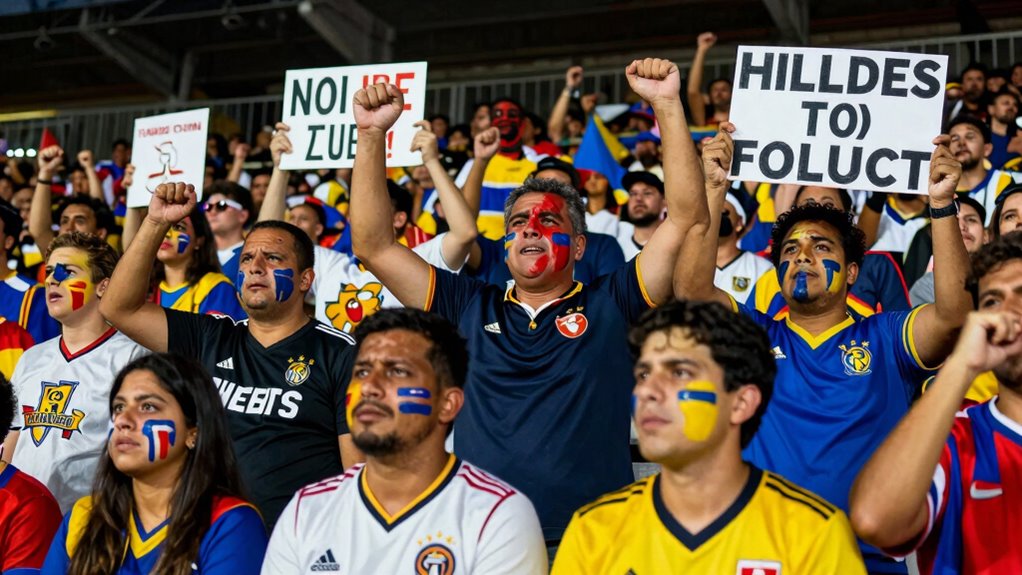

When your fandom runs deep, criticizing your team feels like attacking your identity. This is because your personal and cultural pride is tightly connected to the team’s success, causing emotional reactions that go beyond facts. You might dismiss opposing views or see criticism as a personal slight. This identity spillover intensifies arguments, making it hard to stay objective. Understanding this connection can help you see why debates get so heated—if you keep exploring, you’ll uncover even more insights.

Get sports gear delivered free — and shop member deals
- Fast, free delivery on millions of items
- Access to Prime Big Deal Days deals on October 6–7
- Prime Video, Amazon Music and more included
Key Takeaways
- Fans often defend their team as an extension of their personal identity, intensifying emotional reactions during debates.
- Identity spillover causes criticism of a team to feel like personal attacks, leading to defensive and emotionally charged responses.
- Cultural pride linked to fandom amplifies identity spillover, making disagreements seem like challenges to personal or cultural values.
- Loyalty to a team becomes intertwined with self-worth, making opposing views feel threatening to one’s identity.
- Recognizing identity spillover helps explain why fan arguments often prioritize emotional loyalty over objective facts.
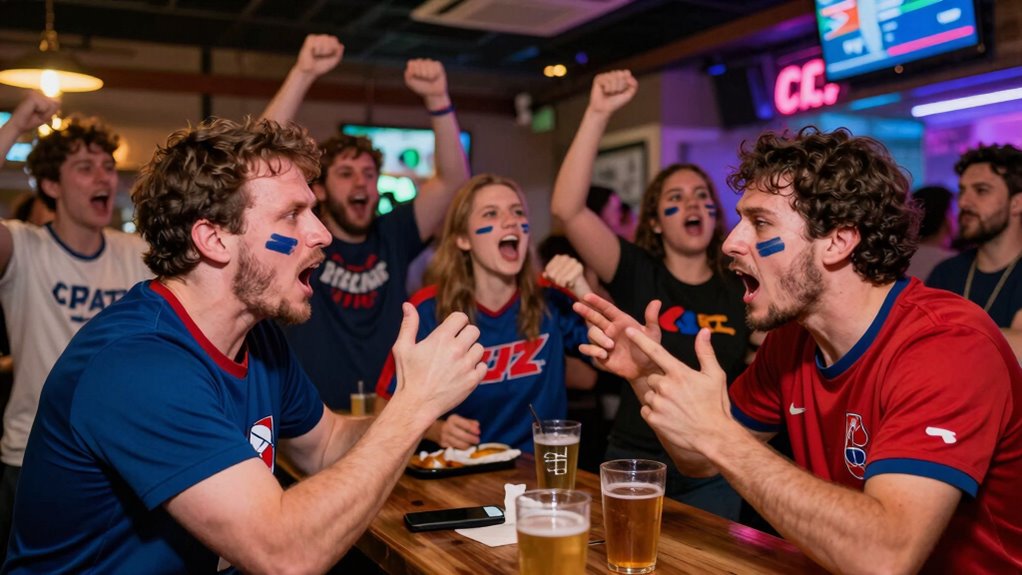
This blend of cultural influence and personal bias makes sports debates more emotional than logical. You’re not just arguing about stats or game strategies; you’re defending your sense of self. When someone criticizes your team for poor performance, it can feel like a personal slight, prompting a defensive response rooted in cultural pride. You see your team as part of your identity, and any critique threatens that core. You can also notice how confirmation bias reinforces your beliefs, making it harder to see alternative perspectives. This can lead to heated exchanges, where facts take a backseat to emotion. You might dismiss opposing viewpoints or label critics as outsiders or traitors to your community. These reactions are natural when your personal bias is intertwined with cultural influence, shaping how you interpret and respond to challenges to your team’s reputation.
Your personal bias also influences how you interpret the motives behind others’ opinions. If someone criticizes your team, you might assume they’re biased against it or have a hidden agenda. Conversely, you’re more likely to accept positive comments about your team without questioning their motives. This selective perception further entrenches your loyalty and emotional investment. Recognizing this dynamic can help you step back from heated exchanges and understand that much of your passion stems from a desire to defend who you are, not just the sport itself. Additionally, understanding the role of cultural influence can provide clarity on why certain narratives resonate more strongly within specific fan communities. Exploring the concept of identity spillover can reveal how deeply intertwined sports fandom is with personal and cultural identities.
In the end, understanding how cultural influence and personal bias shape your arguments allows you to approach debates with more awareness. Instead of viewing disagreements as personal attacks, you can see them as opportunities for growth and understanding. Sports are powerful symbols of identity, and your emotional responses are natural. By acknowledging that your arguments are intertwined with your sense of self, you can engage more thoughtfully and perhaps even find common ground with those who see the game differently.
As an affiliate, we earn on qualifying purchases.
Frequently Asked Questions
How Does Identity Spillover Develop Over Time Among Fans?
You notice that as you become more emotionally invested in a fandom, your fan identity develops gradually. Over time, this identity spillover occurs because your personal values, beliefs, and emotions intertwine with your support for the fandom. This deep emotional investment makes it easier to defend your fandom and sometimes extend those feelings into other areas of your life, reinforcing your connection and shaping your overall fan experience.
Can Identity Spillover Influence Fan Loyalty Beyond Arguments?
Yes, identity spillover can influence your fan loyalty beyond arguments by fostering cultural integration. When your personal boundaries blend with your fandom, you become more emotionally invested, feeling a deeper connection to the team or star. This integration creates a sense of belonging that extends past disagreements, strengthening your loyalty. As your identity intertwines with your fandom, you’re more likely to stay committed, even during conflicts or controversies, because it feels like part of who you are.
What Psychological Factors Contribute to Identity Spillover in Fandoms?
You feel it—your personal bias and emotional investment fueling your reactions. Psychological factors like strong identification with a fandom make you more prone to identity spillover. When your team or favorite character is involved, you unconsciously transfer your self-worth, intensifying your reactions. This emotional investment creates a powerful bond, making disagreements feel personal, and pushing you to defend your fandom fiercely, even beyond the actual context.
Are Certain Fan Communities More Prone to Identity Spillover Effects?
Yes, some fan communities are more prone to identity spillover effects due to cultural influences and group dynamics. If a community highly values loyalty and collective identity, you’ll notice spillover intensifies, especially during conflicts or debates. These social factors encourage members to see disputes as personal, amplifying emotional responses. As a result, your reactions become more intense, and your sense of identity intertwines deeply with the community’s collective identity.
How Can Fans Mitigate Negative Impacts of Identity Spillover?
Think of yourself as a steward of your emotional boundaries, much like a lighthouse keeper safeguarding the shore. To reduce negative spillover, stick to community norms that promote respectful dialogue. Engage with fans who share your values, and take breaks when conversations become heated. Setting clear boundaries helps prevent identity spillover from escalating into personal attacks, ensuring your fandom remains a positive space where passionate debate doesn’t turn toxic.
Conclusion
So, remember, your loyalty isn’t just about a team or a player—it’s like a mirror reflecting your own identity. When debates flare, it’s as if your pride and passions spill over, turning friendly banter into storms of conviction. Embrace this fiery energy, but stay aware that behind every argument is a piece of who you are. In this game of fandom, your identity is both the spark and the flame, shaping every passionate exchange.
Fall Picks
fall essentials
As an affiliate, we earn on qualifying purchases.