
Your judgments as a sports fan are often influenced by cognitive biases like confirmation bias, where you favor information supporting your existing beliefs, and social proof, which makes you adopt popular opinions. These biases can distort your view, making you overlook flaws or unfairly elevate certain players or teams. Recognizing these influences can help you develop a more balanced perspective. Stay with us to explore how understanding these biases can change your sports experience for the better.

Get sports gear delivered free — and shop member deals
- Fast, free delivery on millions of items
- Access to Prime Big Deal Days deals on October 6–7
- Prime Video, Amazon Music and more included
Key Takeaways
- Confirmation bias causes fans to prioritize information supporting their existing beliefs about teams or players while ignoring contradictory evidence.
- Social proof, such as crowd cheers and social media likes, influences fans to adopt popular opinions and reduces independent judgment.
- Biases lead to overhyping certain players or dismissing opponents unfairly, distorting the true assessment of performance.
- Industry success and financial prominence shape fan perceptions, often valuing entertainment over actual sports quality.
- Recognizing biases and seeking diverse perspectives help fans develop more objective, balanced views of teams and players.

When it comes to evaluating your favorite teams or players, cognitive biases often shape your judgments more than you realize. One common bias is confirmation bias, which causes you to seek out information that supports your existing beliefs while ignoring evidence that contradicts them. For example, if you believe your team is unbeatable, you’ll pay more attention to their wins and overlook their losses or mistakes. This bias reinforces your loyalty and makes it harder to see your team objectively. You might dismiss negative reports or critical analyses as biased or unfounded, further entrenching your favorable view. Confirmation bias keeps you in a bubble, where only confirming evidence reaches your consciousness, making it difficult to assess your favorite team or player fairly. Additionally, the influence of popular figures such as WWE Raw’s high valuation and its impact on the global entertainment industry can shape your perceptions of the sport’s significance, often leading to overestimating its importance based on its financial success rather than the quality of competition.
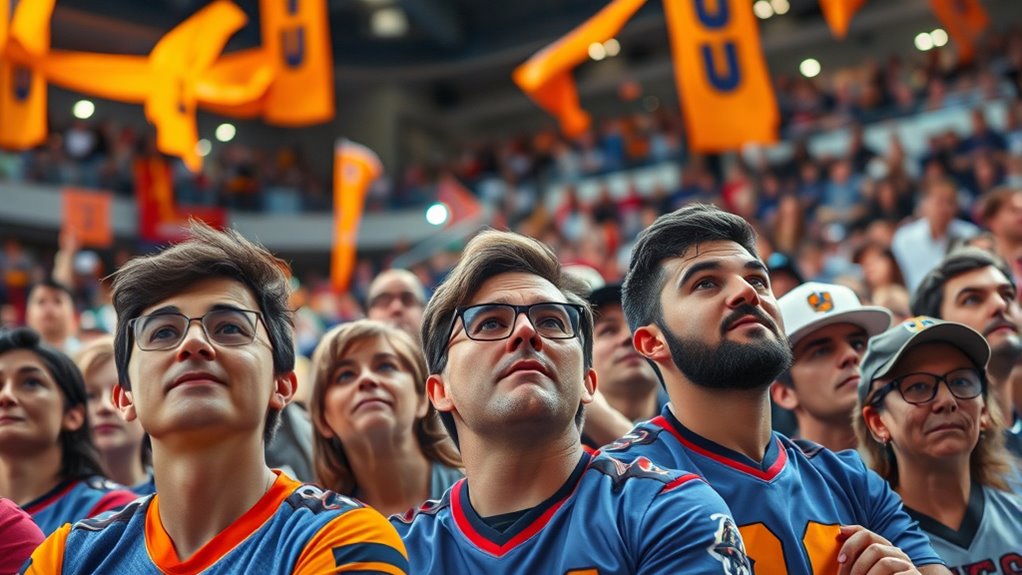
Social proof also plays a significant role in shaping your opinions as a fan. When you see a large crowd cheering for a particular player or team, you’re more likely to adopt a positive view of them, assuming they’re truly deserving of admiration. This effect isn’t limited to crowds; it extends to social media, where likes, shares, and comments create an illusion of consensus. If many fans praise a player, you might feel compelled to agree, even if your personal assessment is more nuanced. Social proof fuels groupthink, encouraging you to align your opinions with what others are saying, often without critical analysis. It can lead you to overvalue popular opinions and undervalue your own, independent judgment. This dynamic can be especially powerful during high-stakes games or trending debates, where the majority’s viewpoint influences individual perceptions.
Both confirmation bias and social proof can distort your perception of reality as a fan. They make it easier to stick to your preconceived notions and follow the crowd rather than critically evaluating the facts. This can lead to biased voting in awards, overhyping certain players, or dismissing opponents unfairly. Recognizing these biases is the first step toward more objective assessments. Be aware that confirmation bias might make you cling to your favorite team’s narrative, while social proof can sway you to adopt popular opinions without scrutiny. Challenge yourself to seek out diverse perspectives and examine facts independently, rather than relying solely on what confirms your existing beliefs or what others seem to agree upon. Doing so helps you enjoy a more balanced, honest view of the game, players, and teams you love, making your fandom more insightful and less biased.
Frequently Asked Questions
How Do Cognitive Biases Influence Sports Betting Decisions?
Cognitive biases influence your sports betting decisions by leading you to rely on heuristic shortcuts, which simplify complex choices but can be misleading. Emotional reasoning also plays a role, causing you to bet based on feelings rather than facts. These biases can make you overestimate teams you love or underestimate opponents, increasing the risk of poor bets. Recognizing these tendencies helps you make more rational, informed decisions.
Can Awareness of Biases Improve Fan Objectivity?
Think of your mind as a ship steering stormy seas; awareness of biases acts like a sturdy lighthouse guiding your decisions. Recognizing fan emotionality and bias recognition helps you see past favoritism, making you more objective. When you’re aware of these biases, you can steer clear of clouded judgment, improving your appreciation for sports and making more balanced calls. This awareness keeps you from being tossed by emotional waves, fostering clearer, more rational fandom.
What Are Common Biases Among Casual Sports Fans?
As a casual sports fan, you often fall prey to confirmation bias, favoring information that supports your team’s success and ignoring the negatives. You might also experience overconfidence bias, overestimating your understanding of the game or team’s potential. These biases influence your judgment, making you more emotionally attached and less objective. Recognizing these tendencies can help you enjoy sports with a more balanced perspective and reduce biased opinions.
Do Biases Differ Across Various Sports or Leagues?
You might notice that biases like fan loyalty and regional favoritism vary across sports and leagues. For example, in football, regional favoritism can be stronger due to local rivalries, while in basketball, fan loyalty often drives passionate support regardless of team performance. These differences happen because each sport’s culture and history shape how biases influence your judgment. Coincidentally, understanding these nuances helps you enjoy the game even more, knowing your biases are part of the experience.
How Can Teams or Broadcasters Mitigate Bias Effects?
You can mitigate bias effects by using data visualization to present factual, objective information clearly, helping fans see the full picture. Implement bias correction techniques like blind analyses or diverse panel reviews to reduce subjective influences. Encourage broadcasters to provide balanced coverage and highlight data-driven insights, fostering fair judgment. By actively applying these methods, you help fans make more rational decisions, minimizing the impact of cognitive biases on their perceptions.
Conclusion
By recognizing biases, questioning assumptions, and challenging emotions, you become a more mindful fan. By understanding biases, you avoid blind loyalty; by questioning assumptions, you make better judgments; by challenging emotions, you enjoy a clearer perspective. Embrace awareness, seek understanding, and foster fairness. When you do so, you elevate your fandom beyond bias, beyond emotion, and into genuine appreciation. Because only then can you truly enjoy the game, the team, and the passion that drives you.
Fall Picks
fall essentials
As an affiliate, we earn on qualifying purchases.