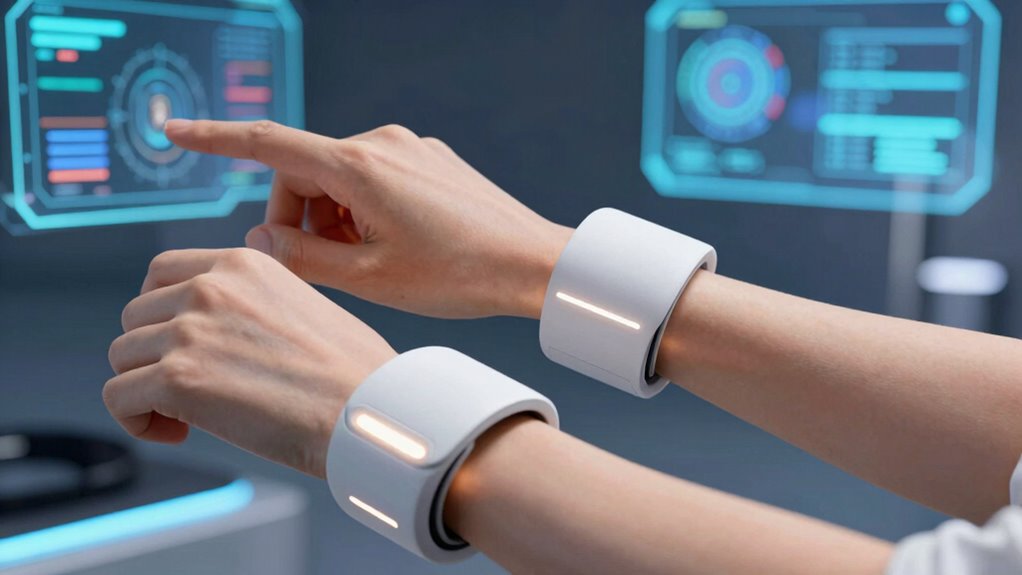

Haptic wearables matter beyond accessibility because they transform virtual experiences into something more immersive and emotionally engaging. They allow you to feel textures, impacts, and movements, making gaming, training, and collaboration more realistic and intuitive. These devices turn passive observation into active participation, enriching how you play, learn, and connect. As technology advances, they’re shaping a future where touch seamlessly bridges digital and physical worlds—stay with us to discover how these innovations will impact your everyday interactions.

Get sports gear delivered free — and shop member deals
- Fast, free delivery on millions of items
- Access to Prime Big Deal Days deals on October 6–7
- Prime Video, Amazon Music and more included
Key Takeaways
- They transform virtual experiences into tactile realities, increasing immersion and emotional engagement beyond basic accessibility.
- Enable realistic training, education, and remote collaboration through precise, responsive tactile feedback.
- Expand sensory interactions, turning passive observation into active participation in digital environments.
- Drive technological advancements that seamlessly blend physical and virtual worlds for diverse applications.
- Elevate haptic wearables from accessibility aids to essential tools for immersive entertainment, learning, and professional use.

Haptic wearables have traditionally been associated with enhancing accessibility for individuals with sensory impairments, but their potential extends far beyond that narrow scope. Now, they’re transforming how you experience digital environments, especially in areas like enhanced gaming and virtual reality immersion. When you wear haptic devices, you’re not just observing a virtual world—you’re feeling it. This tactile feedback bridges the gap between the digital and physical, making virtual experiences more engaging and realistic. For gamers, this means feeling the recoil of a gun, the grip of a sword, or the impact of a collision, adding a layer of immersion that’s impossible with visuals alone. You’re no longer just watching a game unfold—you’re part of it, sensing every punch, explosion, or subtle movement as if it were happening in real life.
Haptic wearables turn virtual experiences into immersive, tactile realities, making gaming and VR feel truly alive.
This heightened sense of presence is what makes virtual reality so compelling. With haptic wearables, you’re transported into immersive environments where every touch and interaction feels genuine. Whether you’re exploring alien worlds, fighting in a fantasy domain, or maneuvering through a complex simulation, the tactile feedback enhances your connection to the virtual space. It’s not just about seeing or hearing anymore; it’s about feeling the virtual landscape beneath your fingertips and through your body. This technology taps into your natural instincts to respond to touch, making the experience more intuitive and engaging. Additionally, advancements in tactile feedback technology are continually improving the realism and responsiveness of these devices, further elevating the user experience. As these devices become more sophisticated, they will likely incorporate biometric data to personalize feedback and enhance immersion even further.
Beyond gaming and VR, haptic wearables open up new possibilities in training, education, and even remote collaboration. You can practice surgical procedures with realistic tactile feedback or learn a new instrument by feeling the vibrations and responses. When it comes to remote work, you could manipulate objects or communicate with physical sensations, making virtual meetings or collaborative tasks more lifelike. Furthermore, sensor integration can enable these devices to adapt in real-time, creating more nuanced and responsive tactile experiences. The significance isn’t just in the novelty—these devices can improve skills, build confidence, and create more meaningful connections across distances.
In essence, you’re no longer limited by the traditional boundaries of digital interaction. Haptic wearables expand your sensory experience, making virtual environments more vivid, realistic, and emotionally resonant. They turn passive observation into active participation, enriching how you play, learn, and collaborate in digital worlds. Their importance goes well beyond accessibility, shaping a future where digital and physical realities blend seamlessly through the power of touch.
haptic wearable devices for gaming
As an affiliate, we earn on qualifying purchases.
As an affiliate, we earn on qualifying purchases.
Frequently Asked Questions
How Do Haptic Wearables Enhance Everyday Productivity?
Haptic wearables boost your productivity by providing instant sensory feedback, helping you stay focused and aware of important notifications or alerts without distraction. They improve wearable ergonomics, ensuring comfort during extended use, so you can work longer without fatigue. By integrating tactile cues into your daily routine, these devices streamline communication and task management, allowing you to respond quickly and efficiently, ultimately enhancing your overall productivity.
What Are the Latest Materials Used in Haptic Wearable Technology?
You’ll find that material innovation like flexible silicone and graphene considerably enhances haptic wearables, offering better comfort and durability. Sensor advancements, such as stretchable and high-precision tactile sensors, enable more accurate feedback. These latest materials and sensor technologies allow your devices to deliver richer, more nuanced sensations, making haptic wearables more effective for various applications beyond accessibility, including gaming, virtual reality, and healthcare.
Can Haptic Wearables Improve Mental Health and Well-Being?
Haptic wearables can profoundly improve your mental health and well-being by aiding emotional regulation and stress management. When you wear these devices, they provide tactile feedback that helps you recognize and control emotional responses, reducing anxiety and stress. By offering real-time cues, they empower you to stay calm and focused, fostering better mental health. Over time, these wearables support healthier habits and resilience, enhancing your overall emotional well-being.
How Do Haptic Wearables Integrate With Other Smart Devices?
Haptic wearables seamlessly integrate with other smart devices through device interoperability, allowing you to control and receive tactile feedback across platforms. This integration verifies the theory that tactile feedback enhances user experience by providing intuitive cues. You can sync your wearable with smartphones, smart home devices, and fitness trackers, creating a cohesive ecosystem. This interconnectedness guarantees that haptic feedback is timely and relevant, enriching your overall interaction with technology.
What Are the Privacy Concerns Related to Haptic Data Collection?
You should be aware that privacy concerns with haptic data collection revolve around data security and consent management. Your personal information could be vulnerable if not properly protected, risking unauthorized access or misuse. Ensuring strict data security measures and clear consent management practices helps safeguard your privacy. Always review the device’s privacy policies and control your data sharing preferences to maintain your privacy and prevent potential misuse of your sensitive haptic data.
Conclusion
Just as Da Vinci’s sketches hinted at a future where art and science intertwine, haptic wearables reveal a world where touch bridges gaps. They’re not just tools for accessibility but gateways to richer experiences, deeper connections, and new domains of interaction. Embrace this evolving landscape, where your movements whisper secrets to technology, transforming how you perceive and engage with the world around you. The future of touch is in your hands—literally.
NFL season / tailgating Picks
team gear
As an affiliate, we earn on qualifying purchases.