
Digital twins can transform stadium planning by allowing you to visualize and test designs before construction begins, reducing errors and costly changes. You can analyze real-time data on crowd flow, safety, and environmental factors to make informed decisions. Scenario testing, like emergency evacuations, helps improve safety and efficiency. Plus, seamless collaboration among teams becomes easier, ensuring everyone stays aligned. Keep exploring to discover how digital twins can enable smarter, safer stadiums from start to finish.

Get sports gear delivered free with Prime
- Fast, free delivery on millions of items
- Prime Video, Amazon Music and more included
- Member-only deals all year
Key Takeaways
- Enable detailed virtual exploration of stadium designs before construction, reducing errors and costly revisions.
- Provide real-time data insights for optimizing crowd flow, safety, and operational efficiency during planning and operation.
- Facilitate scenario testing like emergency evacuations and lighting adjustments, improving safety and fan experience.
- Support collaborative design processes across teams with integrated digital twin platforms, ensuring alignment.
- Extend into ongoing management for proactive maintenance, security, and operational improvements post-build.
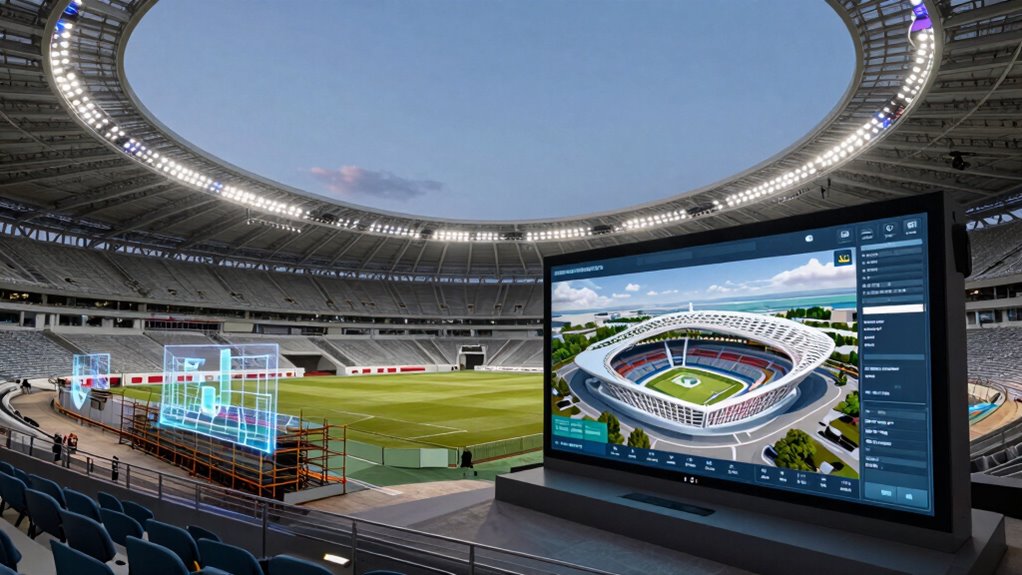
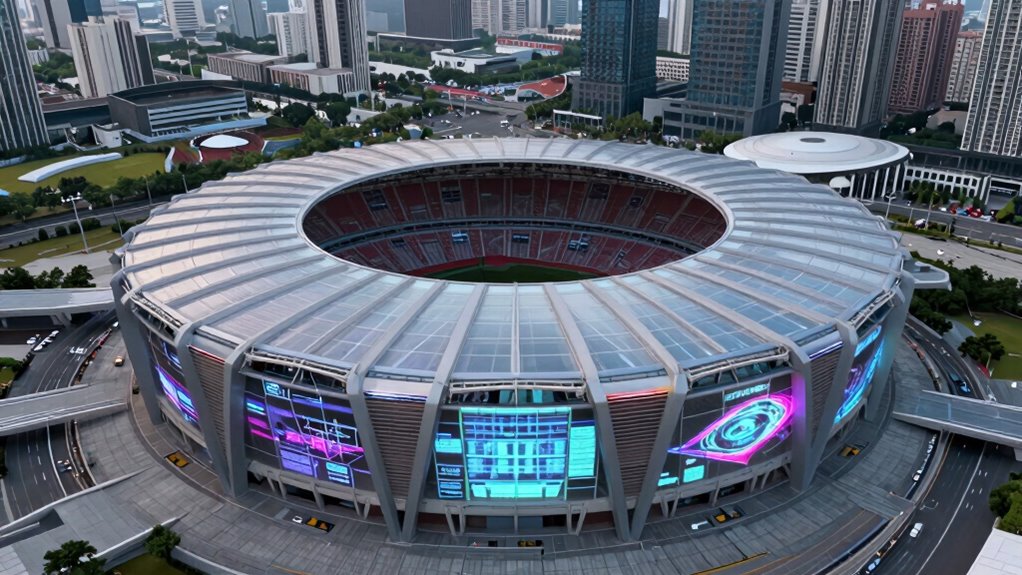
Digital twins are transforming stadium planning by providing immersive, real-time simulations of physical spaces before construction begins. Imagine stepping into a virtual replica of the stadium long before the first brick is laid. This technology allows you to explore every detail, from seating arrangements to sightlines, ensuring ideal design choices. Virtual simulations give you a clear visualization of how the finished stadium will look and function, reducing guesswork and costly mistakes. You can identify potential issues early on, making adjustments swiftly without the need for physical prototypes or extensive rework.
Digital twins enable immersive virtual stadium planning, reducing errors and optimizing design before construction begins.
As you interact with these digital twins, real-time analytics become your most valuable tools. They process data from various sources—traffic flow, crowd movement, environmental factors—and provide instant feedback. This means you can see how changes in seating layout or entry points impact crowd management, safety, and overall experience. Real-time analytics also help you streamline operational efficiency, such as predicting maintenance needs or adjusting security protocols based on live data. By continuously monitoring the virtual model, you gain actionable insights that enhance decision-making throughout the planning process. Additionally, the integration of advanced data processing techniques allows for more precise and efficient analysis of complex stadium systems. These processes also support sustainable design practices by optimizing resource use and minimizing environmental impact.
The ability to use virtual simulations combined with real-time analytics empowers you to test different scenarios without disrupting the actual construction process. You might simulate emergency evacuations to identify bottlenecks or experiment with different lighting and acoustics to improve fan experience. These simulations enable you to make data-driven decisions that align with safety standards, fan satisfaction, and cost efficiency. Furthermore, digital twin technology facilitates seamless collaboration among diverse teams, ensuring that design and operational goals are aligned from the outset. These collaborative features foster more efficient project execution and stakeholder engagement. Incorporating machine learning algorithms can further optimize these models by learning from ongoing data and suggesting improvements automatically. Moreover, as these models evolve, they can incorporate predictive maintenance to foresee potential issues before they occur, further reducing operational disruptions.
Moreover, digital twins can extend beyond the construction phase into operational management. Post-build, you can leverage the same model for ongoing maintenance, security planning, and even fan engagement. For instance, integrating real-time data from sensors in the stadium helps you anticipate wear and tear, schedule repairs proactively, and improve the overall experience for visitors. This holistic approach, combining virtual simulations and real-time analytics, reduces risks, saves costs, and results in a stadium that’s both innovative and highly functional.
In essence, digital twins revolutionize stadium planning by offering a complete, data-driven way to design, build, and operate these complex venues. You gain a powerful tool that minimizes uncertainties, enhances collaboration, and ultimately delivers a smarter, safer, and more enjoyable experience for everyone involved.
As an affiliate, we earn on qualifying purchases.
Frequently Asked Questions
How Cost-Effective Are Digital Twins for Stadium Development Projects?
Digital twins are quite cost-effective for stadium development projects because they enable you to identify potential issues early, leading to significant cost savings. You can perform detailed investment analysis by simulating different scenarios without physical changes, saving money and time. This proactive approach helps you optimize design, streamline construction, and reduce risks, making digital twins a smart investment that enhances overall project efficiency and minimizes costly mistakes.
What Are the Main Technical Challenges in Implementing Digital Twins?
You face main challenges in implementing digital twins, like ensuring seamless data integration from various sources, which can be complex and time-consuming. Maintaining high simulation accuracy is also critical, requiring precise models and real-time updates. These technical hurdles demand advanced technology and expertise, but overcoming them enables you to create reliable digital replicas that optimize stadium planning, enhance decision-making, and improve overall project outcomes.
How Do Digital Twins Improve Safety and Security in Stadiums?
Digital twins considerably boost stadium safety and security by enhancing crowd management and emergency response. You can simulate various scenarios, identifying potential bottlenecks or hazards before they happen. This proactive approach allows you to optimize evacuation plans, monitor crowd density in real-time, and swiftly respond to emergencies. As a result, digital twins create a safer environment, ensuring quick, effective actions that protect spectators and staff during critical situations.
Can Digital Twins Adapt to Real-Time Stadium Changes Effectively?
Yes, digital twins can adapt to real-time stadium changes effectively. By integrating real-time data, they enable adaptive modeling that reflects current conditions, such as crowd movement or structural shifts. This allows you to respond swiftly to emergencies, optimize crowd flow, and update safety plans dynamically. As a result, your stadium becomes more resilient, ensuring a safer, more efficient environment for everyone inside.
What Is the Typical Timeline for Deploying a Digital Twin System?
You typically see a digital twin system deployed within a few months to a year, depending on the stadium’s complexity. You start with virtual modeling, creating an accurate digital replica. Then, you focus on data integration, connecting real-time data sources. This process involves planning, design, and testing phases, ensuring the digital twin adapts effectively to real-time changes. Your team’s expertise and infrastructure influence the overall timeline.
Conclusion
By embracing digital twins, you can revolutionize stadium planning, turning dreams into reality with the precision of a modern-day Leonardo da Vinci. As you navigate this brave new world, remember that even in an era of flying cars, the power of virtual models can help you craft safer, more efficient, and unforgettable venues. Don’t wait for the future to arrive—step into it today, and watch your vision come to life with unparalleled clarity and confidence.
NFL season / tailgating Picks
team gear
As an affiliate, we earn on qualifying purchases.