
When modeling capacity at zero-waste venues, you need to accurately estimate waste generation based on foot traffic and event schedules. Design infrastructure with enough recycling, composting, and waste stations to handle peak loads, aligning with local waste management capabilities. Proper capacity planning helps prevent overflow, boosts efficiency, and supports sustainability goals. To fine-tune your approach and make certain your venue meets zero-waste targets, exploring detailed strategies can provide valuable insights.
Key Takeaways
- Assess waste generation rates based on anticipated foot traffic and event schedules to determine appropriate bin and storage capacity.
- Incorporate local waste infrastructure capabilities, such as recycling and composting facilities, into capacity planning.
- Model peak waste loads to ensure infrastructure can handle maximum loads without overflow or disruption.
- Use scenario simulation to evaluate different waste diversion strategies and optimize infrastructure deployment.
- Continuously monitor and adjust capacity estimates based on actual waste data to improve efficiency and support zero-waste goals.
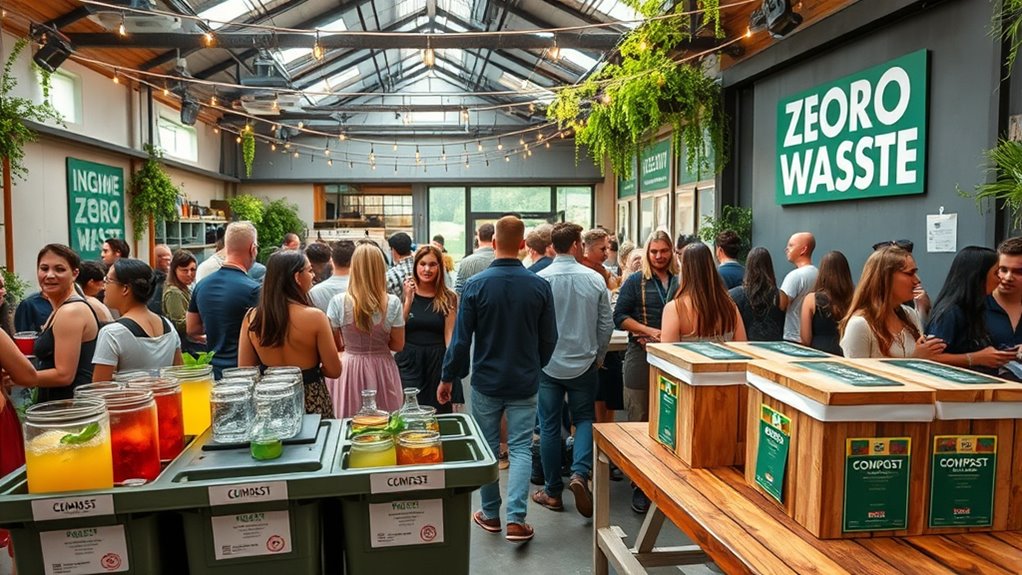
As more venues commit to zero-waste goals, accurately modeling their capacity becomes vital for balancing sustainability with operational efficiency. You need to understand how much waste your venue generates and how to manage it effectively to reach zero-waste status. This requires a clear grasp of sustainable infrastructure and waste management strategies. Sustainable infrastructure involves designing facilities and systems that minimize environmental impact while supporting your waste reduction objectives. You might implement composting stations, recycling bins, and waste diversion pathways that are seamlessly integrated into the venue’s layout. By doing so, you create a foundation that encourages waste-conscious behaviors among staff and visitors alike. Properly modeling capacity means evaluating how much waste can be processed, stored, and diverted without disrupting the venue’s operations. This involves analyzing foot traffic patterns, event schedules, and waste generation rates to determine the right number of bins, compost stations, and storage areas needed to handle peak loads. When you accurately estimate your waste capacity, you avoid over- or under-provisioning, which can lead to inefficiencies or waste overflow. Incorporating waste management strategies into your capacity models ensures that waste streams are effectively separated, collected, and processed. For example, implementing clear signage, strategic placement of waste stations, and staff training can substantially improve diversion rates. Additionally, understanding local waste management infrastructure is essential; knowing whether your city recycles, composts, or landfills helps tailor your strategies accordingly. You might partner with local recycling facilities or composting services to optimize waste processing and reduce landfill contributions. A precise capacity model also helps you set measurable goals, track progress, and identify bottlenecks early. If you notice certain waste streams are overwhelming your infrastructure, you can adjust your strategies—adding more bins, enhancing signage, or modifying event layouts—to improve efficiency. Furthermore, modeling capacity allows you to simulate different scenarios, such as larger events or increased visitor numbers, ensuring your waste management strategies scale effectively. This proactive approach minimizes disruptions and keeps your zero-waste commitments on track. Incorporating waste streams into your planning processes can further enhance your overall waste diversion success. Ultimately, by integrating sustainable infrastructure development with well-planned waste management strategies, you establish a resilient system that supports your zero-waste ambitions. This not only helps meet environmental goals but also enhances your venue’s reputation as a responsible, eco-friendly destination. Accurate capacity modeling empowers you to optimize resource use, reduce waste, and create a more sustainable environment for everyone involved.
Frequently Asked Questions
How Does Waste Management Impact Capacity Calculations at Zero-Waste Venues?
Waste management directly impacts your capacity calculations at zero-waste venues. You need to consider recycling infrastructure and composting logistics, as efficient systems reduce waste volume and space needed for storage. Proper planning guarantees that waste is diverted from landfills, allowing you to maximize venue capacity. Without effective waste management, overflowing bins and logistical challenges could limit your event size, so integrating these factors is vital for accurate capacity modeling.
What Technological Tools Assist in Modeling Capacity for Zero-Waste Initiatives?
Your mind will explode with possibilities when you use digital simulation and data analytics to model capacity at zero-waste venues. These tools let you predict how many people can attend while maintaining sustainability goals. Digital simulation creates virtual scenarios, helping you optimize space and waste management. Meanwhile, data analytics offers real-time insights into attendee flow and waste patterns, empowering you to make smarter, more eco-friendly capacity decisions effortlessly.
Are There Industry Standards for Capacity Modeling in Zero-Waste Event Planning?
Yes, industry benchmarks exist for capacity modeling in zero-waste event planning. You should consider these standards to guarantee effective waste reduction and sustainable practices. By aligning your venue’s capacity with established benchmarks, you can optimize space while minimizing waste. Implementing these standards helps you meet zero-waste goals, improve resource management, and create a more environmentally friendly event experience that resonates with eco-conscious attendees.
How Do Zero-Waste Practices Influence Crowd Flow and Venue Safety?
Zero-waste practices impact crowd flow and venue safety by encouraging sustainable infrastructure that efficiently manages waste and resources. You influence attendee behavior by promoting mindful movements and waste reduction, which helps prevent congestion and hazards. Implementing clear signage and designated pathways ensures smooth flow, while sustainable infrastructure supports safety measures. This integrated approach creates a safer, more organized environment, making your event both environmentally responsible and enjoyable for everyone.
What Are Common Challenges in Accurately Modeling Capacity at Zero-Waste Venues?
You might think modeling capacity at zero-waste venues is straightforward, but recycling logistics and attendee behavior make it tricky. Attendees often underestimate waste, leading to unpredictable recycling needs. Plus, recycling stations can cause congestion if not planned properly. These factors challenge accurate capacity modeling because they influence crowd flow and safety. To get it right, you need to closely monitor behavior patterns and adapt your logistics in real-time, ensuring smooth and safe event experiences.
Conclusion
By understanding how to model capacity at zero-waste venues, you reveal the blueprint for harmony between sustainability and crowd management. It’s like tuning a finely crafted instrument, where each note guarantees smooth performance. As you refine these models, you’ll find that balancing environmental goals with attendee experience becomes less of a tightrope walk and more of a graceful dance. Embrace these insights, and you’ll turn zero-waste visions into a symphony of sustainable success.