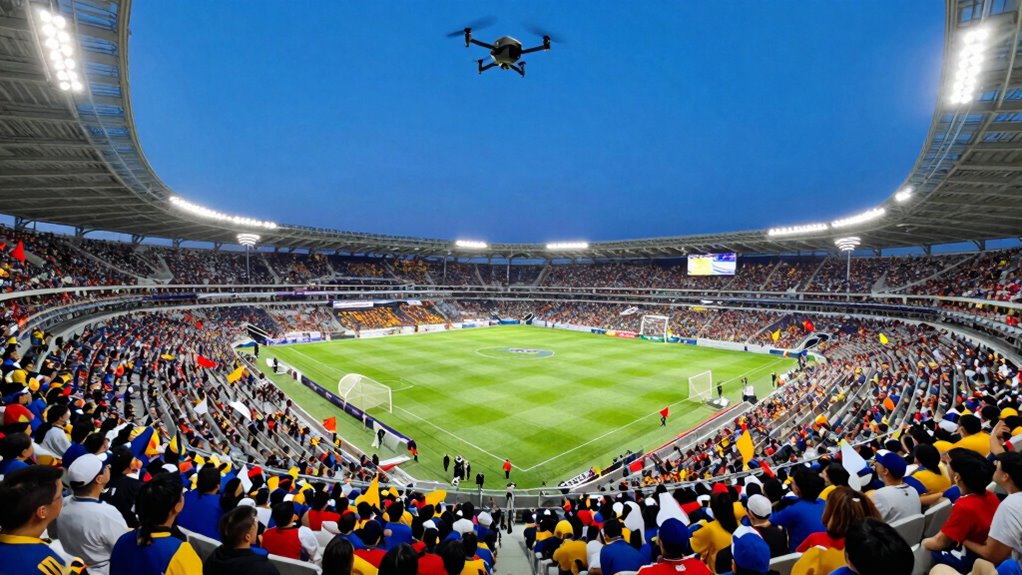

Stadium Wi-Fi data shows how you and other fans interact during game day, revealing which moments create the most excitement and engagement. It highlights where network strain occurs, helping operators optimize coverage and improve your connection. You share content, participate in polls, and access exclusive offers more during high traffic times. This data also helps tailor experiences and content delivery to keep fans connected and engaged. Keep exploring to discover how these insights shape an unforgettable game day experience.

Get sports gear delivered free — and shop member deals
- Fast, free delivery on millions of items
- Access to Prime Big Deal Days deals on October 6–7
- Prime Video, Amazon Music and more included
Key Takeaways
- Patterns of fan engagement highlight popular moments and content, enhancing real-time interaction strategies.
- Network performance metrics identify congestion points, enabling immediate adjustments to improve connectivity.
- Device usage data reveals fan preferences and behaviors, guiding infrastructure optimization.
- Traffic analysis informs access point placement and capacity planning for future events.
- Content sharing trends help tailor marketing efforts and deliver targeted, timed notifications during the game.

On game day, stadium Wi-Fi networks become bustling hubs of activity as thousands of fans connect to share their excitement in real-time. This surge in connectivity offers a wealth of data that reveals much about fan engagement and how networks perform under pressure. When you analyze this data, you see patterns of engagement that highlight which moments captivate the crowd most—whether it’s a game-changing play, a touchdown celebration, or a viral fan moment. These insights help stadium operators understand what excites fans and how they interact during live events, allowing for tailored experiences that boost overall fan engagement.
The data also uncovers how well the network is optimized to handle high traffic. During game day, the Wi-Fi system faces intense demand, and its performance directly impacts fan satisfaction. By examining connection speeds, latency, and congestion points, you can identify areas where the network might falter under load. This real-time monitoring enables immediate adjustments, like reallocating bandwidth or adding access points, ensuring fans stay connected without frustration. Over time, these insights inform infrastructure upgrades that improve network resilience and capacity, making future events smoother and more enjoyable. Additionally, understanding the network performance helps identify potential points of failure before they impact large crowds. This proactive approach is crucial for maintaining a seamless fan experience and preventing disruptions.
Furthermore, Wi-Fi data sheds light on fan behavior patterns—what devices they use, how long they stay connected, and which areas see the most traffic. For example, if data reveals that certain sections experience more congestion, stadium managers can optimize access point placement to distribute the load evenly. This proactive approach not only enhances user experience but also maximizes the network’s capacity, allowing more fans to connect simultaneously without degradation of service. When fans stay engaged on their devices, they’re more likely to share content, participate in interactive polls, or access exclusive content, all of which amplify their overall experience. Additionally, this data can reveal device usage trends that help tailor network resources more effectively.
In addition, analyzing Wi-Fi data helps stadiums craft targeted marketing campaigns. By understanding which content resonates most with fans during different game moments, marketers can deliver personalized offers or notifications right when they’re most relevant. This targeted approach boosts revenue and deepens fan loyalty. Ultimately, the data collected during game day provides an extensive view of how well the Wi-Fi network supports fan engagement and how it can be optimized to create an immersive, connected, and satisfying event experience. Recognizing the importance of content sharing and fan interaction further highlights the value of robust Wi-Fi networks in enhancing the overall stadium experience.
As an affiliate, we earn on qualifying purchases.
Frequently Asked Questions
How Is Stadium Wi-Fi Data Collected and Anonymized?
Stadium Wi-Fi data is collected through network access points that track device connections, like smartphones, while ensuring user consent is obtained beforehand. Data is anonymized using encryption techniques like data encryption, which masks personal details, so individual identities are protected. This process allows stadiums to analyze trends and improve service without compromising your privacy, providing valuable insights while respecting your rights and maintaining security standards.
What Privacy Concerns Are Associated With Wi-Fi Data Collection?
Oh, the irony isn’t lost on you—fans happily share their data, unaware of privacy concerns. You might think your fan privacy is protected, but data security lapses could expose personal info or tracking habits. While stadium Wi-Fi boosts experience, it raises real privacy issues. You should be cautious, as your data, if mishandled, could compromise your privacy, turning your game day into a security risk instead of fun.
How Does Wi-Fi Usage Differ Between Various Sports or Events?
You’ll notice Wi-Fi usage varies across sports and events, reflecting different fan behaviors. For example, football fans might use more data sharing photos and social media, while concertgoers could focus on live streaming. Venue managers analyze this to optimize the experience, tailoring Wi-Fi services to match event-specific needs. This data helps enhance connectivity, boost fan engagement, and improve overall venue operations for diverse types of events.
Can Wi-Fi Data Predict Game Attendance or Fan Engagement?
Think of Wi-Fi data as a crystal ball revealing fan behavior; it can hint at game attendance and engagement levels. During a recent match, spikes in data correlated with crowd energy, showing how connected fans are. While data accuracy improves with technology, predicting exact attendance remains nuanced. You can gauge engagement trends, but factors like Wi-Fi access and device usage influence how reliably data reflects true enthusiasm.
What Future Technologies Will Enhance Stadium Wi-Fi Data Insights?
Future technologies like augmented reality and wearable integrations will profoundly boost stadium Wi-Fi data insights. You’ll experience enhanced fan engagement through AR-enhanced interactions, while wearables will provide real-time data on audience behavior. These innovations will allow you to analyze movement patterns, preferences, and social interactions more precisely, helping stadiums personalize experiences, optimize operations, and deepen understanding of fan engagement, ultimately creating a more immersive and data-driven game day environment.
Conclusion
Think of stadium Wi-Fi data as a heartbeat, pulsing with the energy of every game day. It tells a story of fans cheering, sharing, and living the moment in real time. As you witness this digital symphony, remember you’re part of a larger tapestry—each connection a thread woven into the fabric of unforgettable memories. So, embrace the chaos, the passion, and the unity that makes game day truly extraordinary.
NFL season / tailgating Picks
team gear
As an affiliate, we earn on qualifying purchases.