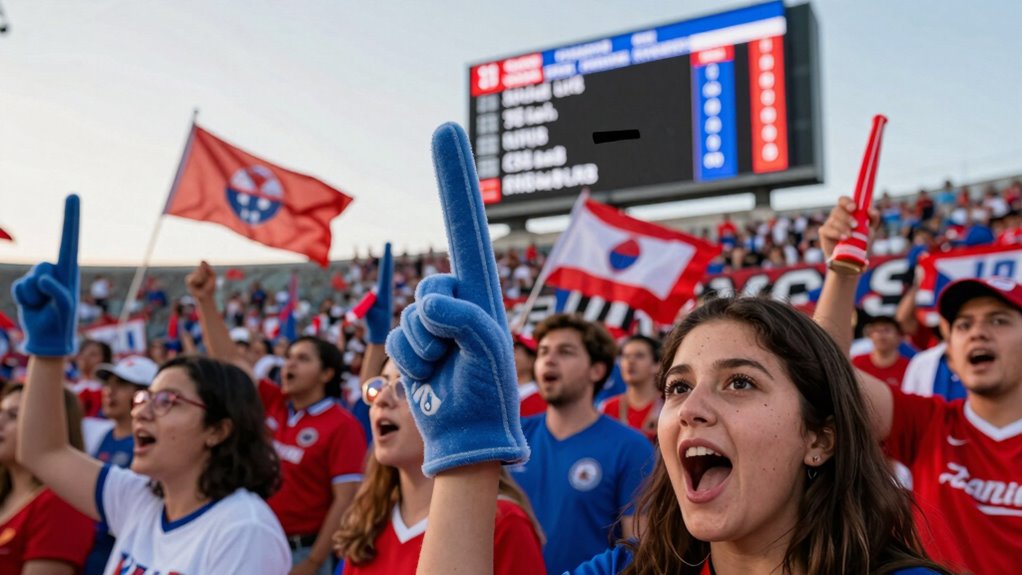

Predictive models often overlook the emotional and psychological factors that truly drive fan loyalty. You might rely on past purchase data or social media activity, but these approaches miss deeper bonds, memories, and perceptions of players. As a result, your predictions can be superficial or misleading. Loyalty isn’t static—it fluctuates with circumstances and personal attachments. Keep exploring to discover how understanding these nuances can make your insights more accurate and meaningful.

Get sports gear delivered free — and shop member deals
- Fast, free delivery on millions of items
- Access to Prime Big Deal Days deals on October 6–7
- Prime Video, Amazon Music and more included
Key Takeaways
- They often rely solely on transactional data, ignoring emotional bonds and personal memories that strongly influence loyalty.
- Models assume past behaviors predict future loyalty, overlooking fluctuating fan sentiments and external influences.
- They overlook psychological factors like perceptions of players and community involvement that drive authentic fan attachment.
- Static models fail to account for loyalty variability, missing dynamic shifts in fan commitment over time.
- Focusing only on social media engagement and purchases can lead to superficial predictions that miss deeper emotional connections.

Predictive models are transforming how sports organizations and marketers understand fan loyalty, allowing them to anticipate behaviors and tailor their strategies accordingly. However, despite their sophistication, these models often fall short because they tend to oversimplify the complex factors that drive loyalty. They might analyze past purchase patterns or social media engagement but overlook the deeper aspects of player psychology that influence how fans connect to their teams. Fan loyalty isn’t just about attending games or buying merchandise; it’s rooted in emotional bonds, personal memories, and perceptions of players and teams. If a model ignores these emotional nuances, it risks making predictions that are superficial or even misleading.
Predictive models often overlook emotional bonds and personal memories that truly drive fan loyalty.
Many predictive models assume that past behaviors reliably forecast future loyalty, but this can lead to errors. For instance, a fan might have been highly engaged during a winning streak but could quickly lose interest if the team faces a losing season. Conversely, a dedicated supporter may remain loyal even through tough times because of a strong personal attachment or admiration for specific players. Player psychology plays a vital role here—fans often develop their loyalty based on their perceptions of players’ character, resilience, or authenticity. Ignoring these human elements makes it difficult for models to accurately predict shifts in loyalty, especially when emotional factors outweigh statistical patterns. Additionally, external influences such as societal issues or personal life changes can significantly impact fan engagement, which many models tend to overlook. Recognizing the importance of emotional factors can help organizations develop a more holistic understanding of their audience. Incorporating psychological insights into predictive frameworks can improve their ability to capture these subtle shifts in fan sentiment. Furthermore, understanding behavioral variability is crucial to adapting predictions to the dynamic nature of fan loyalty.
Marketing strategies built solely on predictive models can also misfire if they don’t account for these emotional underpinnings. For example, a campaign targeting fans who frequently buy tickets might overlook the fans who are emotionally motivated by a player’s story or community involvement. By focusing only on transactional data, teams risk alienating segments of their audience or missing opportunities to deepen loyalty through authentic storytelling or personalized engagement. These strategies fail to recognize that loyalty often stems from personal identification with players or values, not just transactional interactions. Moreover, predictive models often treat loyalty as a static trait rather than a dynamic, evolving relationship. Fans may fluctuate in their commitment based on circumstances, and models that don’t account for this variability might lead teams to misallocate resources or misread their audience’s needs. To truly understand fan loyalty, organizations need to integrate insights from player psychology and human behavior, rather than relying solely on data patterns. Without considering these emotional and psychological factors, their predictions risk being superficial and less effective at fostering genuine loyalty.
fan loyalty emotional connection sports merchandise
As an affiliate, we earn on qualifying purchases.
As an affiliate, we earn on qualifying purchases.
Frequently Asked Questions
How Do Emotional Factors Influence Fan Loyalty Beyond Data Predictions?
Emotional attachment and personal identity play vital roles in shaping your loyalty beyond what data predictions show. When you deeply connect with a team or sport, it becomes part of who you are, fueling unwavering support even during tough times. These feelings often override rational analysis, making loyalty more about personal meaning than statistics. So, your emotional bond influences your fandom in ways that data alone can’t fully capture.
Can Predictive Models Account for Sudden Changes in Fan Behavior?
Predictive models struggle to account for sudden behavioral shifts because data limitations prevent capturing real-time emotional or external influences. You might see unexpected drops or spikes in fan loyalty after unforeseen events, which models often miss. These models generally rely on historical patterns, making them less effective at predicting abrupt changes driven by emotional reactions or significant external factors. So, they can’t fully anticipate rapid fan behavior shifts.
What Role Does Social Media Play in Shaping Fan Loyalty?
Social media plays a huge role in shaping your fan loyalty through social influence and viral content. It exposes you to peer opinions, trending topics, and emotionally charged posts, which can strengthen your connection to a team or brand. Viral content amplifies this effect, making fans more engaged and passionate. You’re more likely to develop loyalty when social influence spreads positive messages, creating a sense of community and shared identity online.
Are There Ethical Concerns With Using Predictive Analytics on Fans?
Yes, there are ethical concerns with using predictive analytics on fans. You might infringe on privacy concerns by collecting and analyzing personal data without clear consent. Additionally, data bias can skew results, unfairly targeting or excluding certain fan groups. It’s essential to guarantee transparency, respect privacy, and address biases to maintain trust and avoid ethical pitfalls when leveraging predictive models in fan engagement strategies.
How Do Cultural Differences Affect Predictive Accuracy in Fan Loyalty?
Cultural differences considerably impact predictive accuracy, as cultural nuances shape fan identity and loyalty. When models overlook these nuances, they may misinterpret behaviors or preferences, leading to inaccurate predictions. You need to take into account diverse cultural backgrounds to enhance model accuracy, ensuring they capture unique expressions of fandom. By integrating cultural context, you improve your understanding of fan loyalty, making your predictions more reliable and respectful of varied fan identities worldwide.
Conclusion
You might think predictive models have fan loyalty all figured out, but they’re basically trying to read your mind using a crystal ball made of data. They get it wrong more often than a broken compass in a hurricane! Fan loyalty isn’t just numbers and patterns—it’s passion, history, and emotion. So, don’t rely solely on these models; they’re like trying to catch lightning in a bottle—impossible and wildly inaccurate.
Fall Picks
fall essentials
As an affiliate, we earn on qualifying purchases.