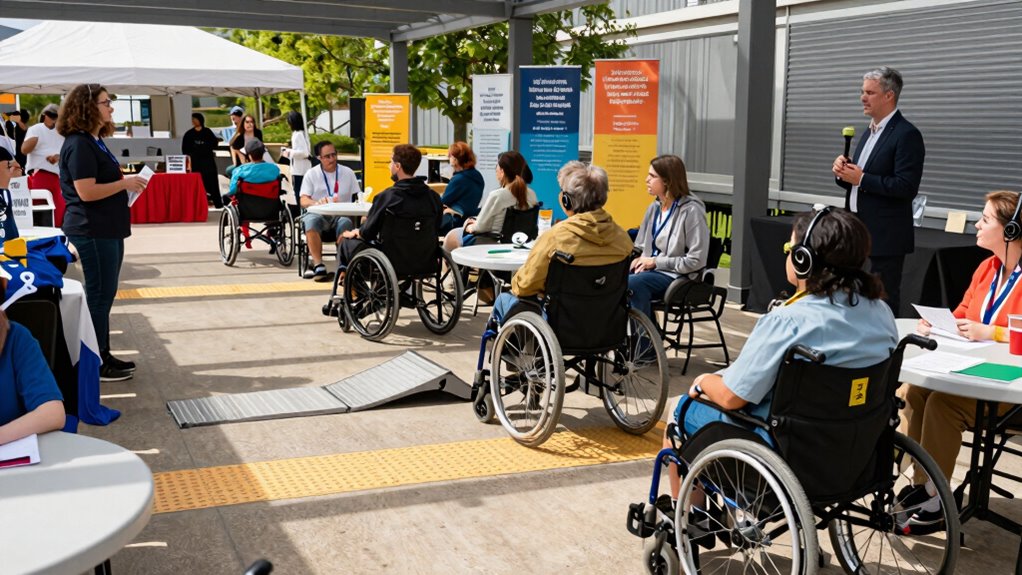
To make accessibility part of every event plan, start by considering diverse needs early in your planning process. Choose inclusive venues with features like step-free entrances, accessible restrooms, and clear signage. Incorporate assistive technologies such as captioning and sign language interpreters. Communicate accessibility features clearly to attendees beforehand. Prioritize inclusive design, and work closely with venue staff to guarantee everything functions smoothly. By proactively addressing these elements, you’ll create welcoming events that everyone can enjoy—discover more ways to enhance accessibility throughout your planning.
Key Takeaways
- Incorporate accessible design principles in venue selection, including step-free entrances and accessible restrooms.
- Integrate assistive technologies like captioning, hearing loops, and sign language interpreters from the planning stage.
- Communicate accessibility features clearly to attendees beforehand to promote transparency and inclusion.
- Engage with venue staff early to verify and test accessibility features are functioning properly.
- Embed accessibility considerations into sustainability practices, ensuring environmental and inclusivity goals are aligned.
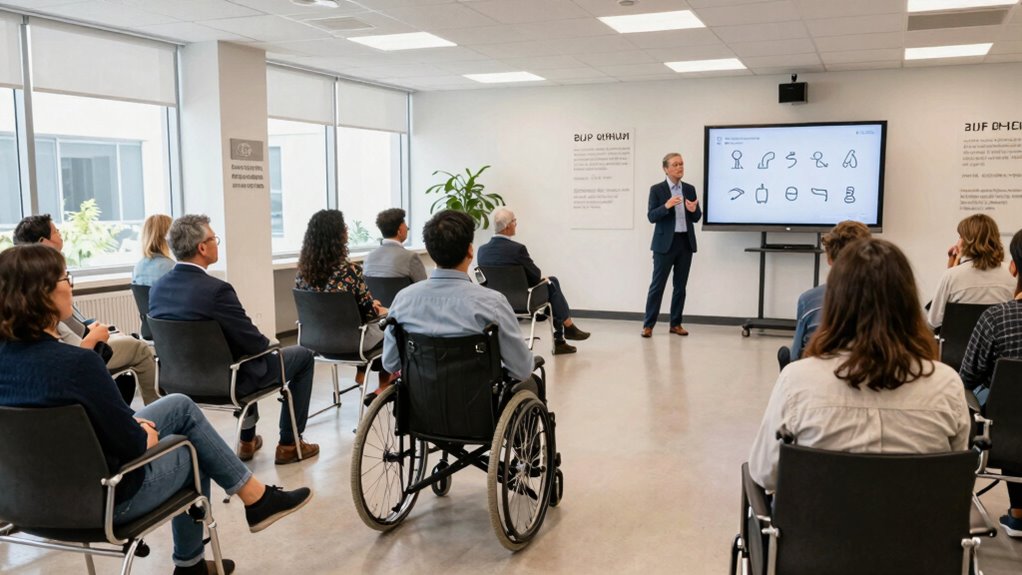
Have you ever considered how inclusive your event truly is? Ensuring accessibility isn’t just a nice-to-have; it’s essential for creating welcoming experiences where everyone feels valued. One of the most effective ways to achieve this is by integrating assistive technologies into your planning. These tools—such as hearing loops, screen readers, and captioning services—break down barriers that might prevent some attendees from fully engaging. When you incorporate assistive technologies, you demonstrate a commitment to inclusivity that goes beyond compliance, making your event more accessible to people with various disabilities.
But technology alone isn’t enough. You need to adopt an inclusive design approach from the outset. Inclusive design involves considering the diverse needs of all potential attendees during the planning process. It means choosing venues with step-free entrances, wide pathways, and accessible restrooms. It also involves designing event materials that are easy to read and navigate, such as using large fonts, high-contrast colors, and clear signage. When you prioritize inclusive design, you create an environment where everyone can participate comfortably and confidently, reducing the need for last-minute adjustments. Incorporating accessible environments into your planning ensures that inclusivity is built into the foundation of your event.
Thinking about accessibility early in your planning process allows you to identify potential obstacles and address them proactively. For instance, when selecting a venue, you can verify its accessibility features and work with the venue staff to ensure they’re functioning correctly. You can also provide multiple ways for attendees to engage, such as offering both verbal and visual information or providing materials in different formats. Incorporating assistive technologies, like real-time captioning or sign language interpreters, enhances communication and ensures that no one is left out of the conversation. Additionally, understanding the importance of indoor air quality can contribute to creating a healthier environment for all participants. Paying attention to environmental sustainability practices can also make your event more eco-friendly and inclusive for those concerned about health and pollution. Being aware of emerging accessibility technologies can further help you leverage innovative solutions to improve inclusivity.
It’s equally important to communicate your accessibility efforts clearly to attendees beforehand. Let them know what features are available and how they can access them. This transparency not only reassures attendees with disabilities but also encourages others to be mindful and respectful of all participants. By making accessibility a fundamental part of your event plan, you foster an inclusive atmosphere that celebrates diversity and promotes equal participation.
Ultimately, making accessibility an integral part of every event plan requires intentionality and foresight. When you use assistive technologies and embrace inclusive design principles, you create experiences where everyone can thrive. Your efforts demonstrate respect for all attendees’ needs and set a standard for inclusivity in event planning. It’s not just about compliance—it’s about creating meaningful, accessible experiences that leave a lasting impression on everyone involved.
assistive listening devices for events
As an affiliate, we earn on qualifying purchases.
As an affiliate, we earn on qualifying purchases.
Frequently Asked Questions
How Do I Budget for Accessibility Features Effectively?
To budget effectively for accessibility features, start by researching costs for essential accessibility technology like sign language interpreters and audio descriptions. Include inclusive seating options, such as wheelchair accessible areas, in your plan. Prioritize features based on attendee needs and set aside a contingency fund for unexpected expenses. By planning ahead and consulting vendors early, you guarantee all accessibility elements are integrated smoothly without overspending.
What Are Common Accessibility Mistakes to Avoid?
Avoid accessibility mistakes like overlooking signage clarity, which can confuse attendees, or neglecting wheelchair access, like building a bridge without a ramp. You should always guarantee clear, visible signage and unobstructed pathways. Don’t assume every attendee’s needs are the same—engage with diverse groups beforehand. Failing to do so is like sailing without a compass; you risk missing essential accessibility requirements, making your event less inclusive and welcoming.
How Can I Ensure Staff Are Trained on Accessibility Needs?
You can guarantee staff are trained on accessibility needs by implementing regular staff training sessions focused on accessibility awareness. Make sure your team understands different needs, such as mobility, vision, and hearing impairments, and how to support attendees effectively. Incorporate practical scenarios and resources to reinforce learning. Ongoing education helps staff stay informed about best practices, guaranteeing accessibility remains a priority at every event.
What Specific Tools Assist With Accessibility Planning?
Think of assistive technologies and inclusive design as your event’s guiding stars, lighting the way for accessibility. You can use tools like screen readers, captioning services, and accessible event platforms to guarantee everyone’s needs are met. Incorporate inclusive design principles early in planning, and you’ll create an environment where all attendees feel valued. These tools help you craft seamless experiences, turning your event into a truly accessible and welcoming space.
How Do I Gather Feedback on Accessibility From Attendees?
You gather feedback on accessibility by distributing attendee surveys and feedback forms after your event. Encourage honest responses by asking specific questions about their accessibility experiences, such as ease of navigation or availability of accommodations. Use digital and paper options to reach everyone. Review the feedback carefully to identify areas for improvement, and incorporate these insights into your future event plans to enhance accessibility for all attendees.
Conclusion
Incorporating accessibility into your event plans is like planting seeds for inclusivity that grow stronger with each step you take. By thinking ahead and considering diverse needs, you guarantee everyone feels welcome and valued. Remember, accessibility isn’t a one-time effort but an ongoing commitment. When you make it a priority, your events become more vibrant and welcoming—like a kaleidoscope of different perspectives coming together. Embrace this approach, and watch your events thrive with genuine connection and participation.