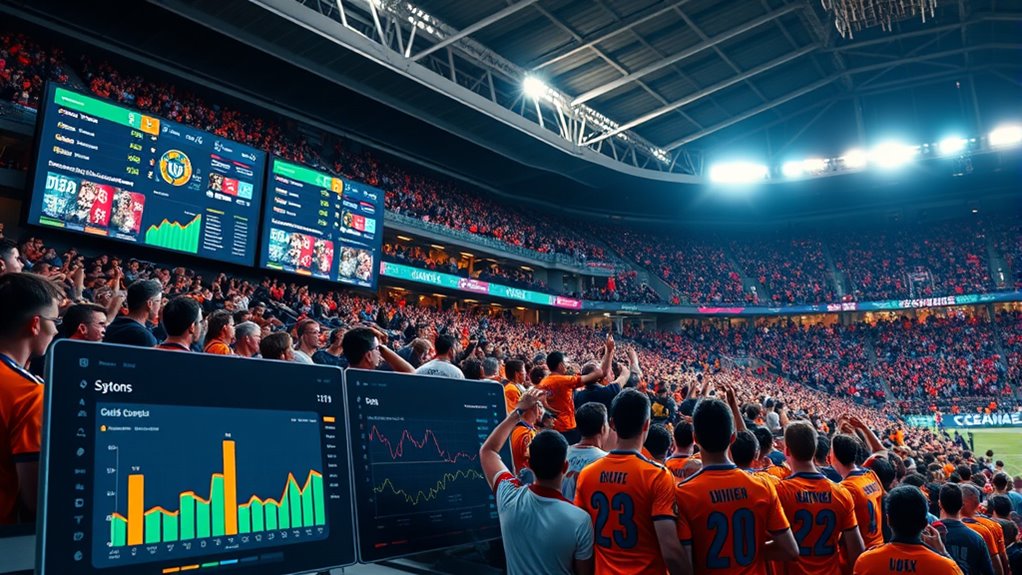

In a data-driven stadium, you experience personalized content thanks to advanced technology that gathers data from ticket scans, apps, and social media. Real-time stats, such as live game updates and player performance, keep you engaged and informed. Interactive features like polls and social media integrations foster a sense of community and participation. By analyzing your interactions, stadiums can enhance service and tailor experiences, making every visit more exciting. Continue exploring to discover how these innovations reshape fan experiences.
Key Takeaways
- Successful stadiums leverage integrated data from ticket scans, apps, and social media to personalize fan experiences and optimize operations.
- Real-time analytics provide instant game updates, player stats, and visualizations, enhancing fan engagement and understanding.
- Interactive digital displays and apps foster active participation through live polls, social media sharing, and personalized messaging.
- Data-driven insights guide stadium staff to improve service delivery, such as reducing wait times and suggesting relevant merchandise.
- The adoption of technology transforms passive spectators into engaged participants, creating memorable, personalized experiences.
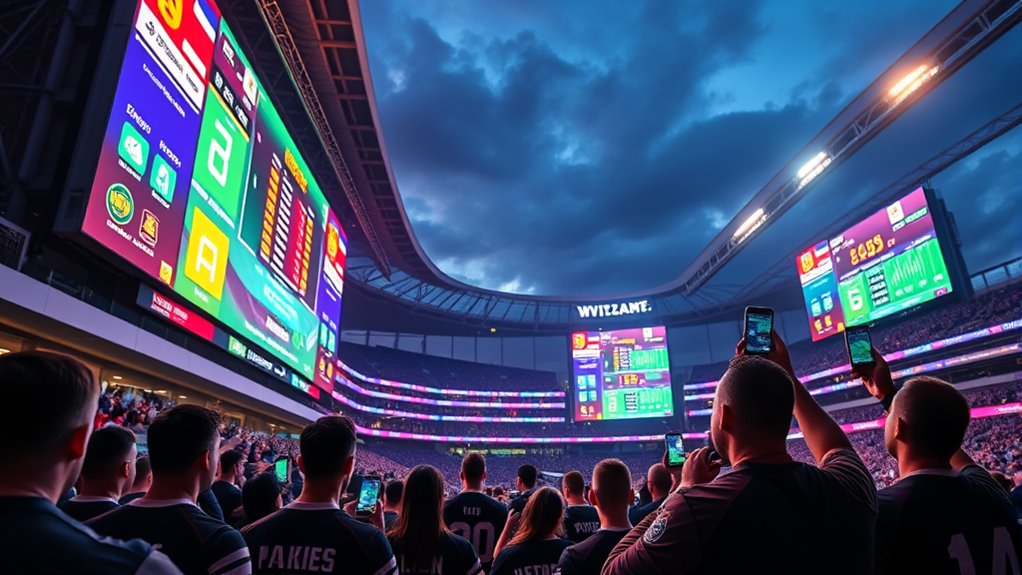
In today’s sports industry, leveraging data has become essential to creating a seamless and personalized stadium experience. When you walk into a modern arena, you’re not just there to watch a game—you’re immersed in an environment that adapts to your preferences, enhances your engagement, and keeps you connected in real time. This shift heavily relies on advanced technology integration, which gathers and analyzes data to elevate fan engagement. As a fan, you’re now part of a dynamic ecosystem where your interactions, preferences, and behaviors are continuously monitored to deliver tailored content and services.
Technology integration allows stadiums to collect a vast array of data points—from ticket scans and mobile app activity to social media interactions and in-stadium purchases. This data fuels real-time analytics systems that respond instantly to your needs, whether it’s guiding you to the shortest concession lines or suggesting merchandise based on your previous purchases. By harnessing this information, venues can personalize your experience, making every visit feel unique and memorable. For instance, you might receive personalized notifications about upcoming events, exclusive offers, or seat upgrades directly through your mobile device, all based on your past behavior and current location within the stadium.
Fan engagement becomes more meaningful when data-driven insights are used creatively. For example, during breaks or timeouts, digital displays can showcase personalized messages, highlight your favorite players, or even display your name, making you feel directly involved. Interactive apps enable you to participate in live polls, fantasy leagues, or social media conversations, fostering a sense of community that extends beyond the physical stadium. This active participation deepens your connection to the team and the event, transforming passive spectatorship into an engaging, participatory experience.
The integration of real-time stats further heightens this engagement. You can access live game data, player stats, and dynamic visualizations right on your device, keeping you informed and involved throughout the game. This immediate access helps you understand plays, track your favorite players’ performances, or analyze game momentum, all while enjoying the game in real time. Such seamless data delivery ensures you stay engaged without missing a beat, creating a more immersive experience that is both informative and entertaining.
Ultimately, the combination of technology integration and a focus on fan engagement redefines what you expect from a stadium visit. It’s no longer just about the game on the field—it’s about feeling connected, informed, and involved at every moment. As stadiums continue to adopt these data-driven strategies, you’ll find your experience becoming more personalized, interactive, and exciting, making every game a truly unforgettable event.
Additionally, data collection practices enable stadiums to optimize operations and improve overall service quality, ensuring a better experience for all attendees.
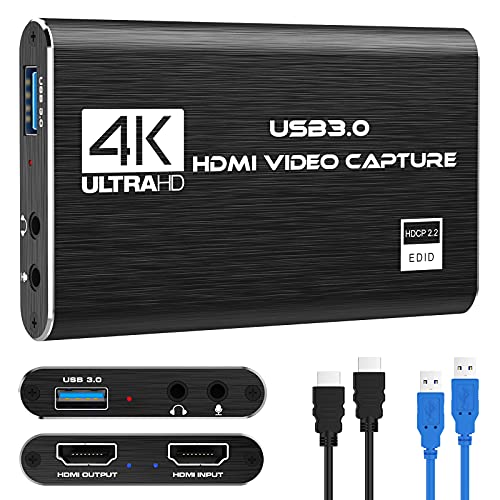
Capture Card Nintendo Switch, 4K HDMI Video Capture Card, 1080P 60FPS, HDMI to USB 3.0 Capture Card for Streaming Work with Camera/Xbox/PS4/PS5/PC/OBS
【1080P HD High Quality】Capture resolution up to 1080p for video source and it is ideal for all HDMI...
As an affiliate, we earn on qualifying purchases.
Frequently Asked Questions
How Is Fan Privacy Protected With Real-Time Data Collection?
You’re protected through fan anonymity, which guarantees your personal identity stays private during data collection. Stadiums also use data encryption to secure your information from unauthorized access. These measures work together to keep your privacy safe while providing real-time stats and a better experience. By prioritizing fan privacy, stadiums make sure your data is handled responsibly and securely, giving you peace of mind as you enjoy the game.
What Technologies Are Used to Gather Live Stadium Data?
You use wearable devices, sensors, and cameras to gather live stadium data. Wearable devices track your movements and biometrics, while sensors embedded in seats, floors, and infrastructure collect environmental and crowd information. Cameras monitor activity and crowd flow. Data analytics processes this information in real-time, allowing stadiums to enhance fan experience, improve safety, and optimize operations. These technologies work together to create a seamless, engaging, and safe environment for everyone.
How Does Data Influence Stadium Security Measures?
Data influences stadium security by enhancing crowd control and emergency response. You can rely on real-time data to monitor crowd density, identify unusual behavior, and quickly respond to potential threats. This allows security teams to manage large crowds effectively, prevent incidents, and coordinate emergency responses swiftly. By using data-driven insights, you create a safer environment where security measures adapt proactively to evolving situations, ensuring a better experience for everyone.
Can Data-Driven Insights Predict Future Game Outcomes?
Sure, predictive analytics and data visualization can seem like crystal balls for sports fans, but they can’t guarantee game outcomes. While you might get some insights into team trends and player stats, the unpredictable nature of sports makes perfect predictions impossible. So, don’t rely solely on data-driven insights to foresee victories. Instead, enjoy the game, knowing analytics add context, not certainty, to the excitement.
What Challenges Exist in Implementing Real-Time Data Systems?
Implementing real-time data systems faces challenges like data privacy concerns and system integration issues. You need to make certain sensitive data stays protected while collecting and sharing information across multiple platforms. Seamless system integration requires compatibility between hardware and software, which can be complex and costly. These hurdles demand careful planning, robust security measures, and skilled technical teams to create a smooth, effective real-time data experience for stadiums.
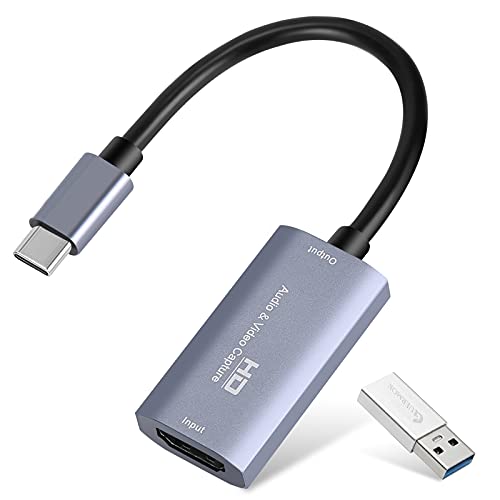
Guermok Video Capture Card, 4K USB3.0 HDMI to USB C Capture Card for Streaming, 1080P 60FPS, Compatible with iPad Mac OS Windows, Quest 3, OBS, PS5/4, Switch2/1, Xbox, Camera (Silver)
【1080P 60FPS Video Capture Card】 This HDMI game capture card is based on USB3.0 high speed transmission port,...
As an affiliate, we earn on qualifying purchases.
Conclusion
You’ve seen how data drives dazzling, dynamic stadium experiences, delivering real-time results right to your fingertips. By blending bold insights with breathtaking visuals, the stadium becomes a seamless, sensory spectacle. As technology transforms tedious to tantalizing, you’re truly tuned into the thrill of the game, where information ignites inspiration. Embrace this evolution, and enjoy every exhilarating, eye-opening encounter, elevating your experience from ordinary to outstanding through the power of data-driven design.

Elgato 4K S – External Capture Card for PS5, Xbox Series X/S, Switch 2, PC, Mac, iPad | 4K60, 1440p120, or 1080p240 Passthrough and Capture, HDR10, VRR, USB-C, Near-Zero Latency
4K60 Capture: Record in cinematic quality with crisp detail and vivid colors
As an affiliate, we earn on qualifying purchases.
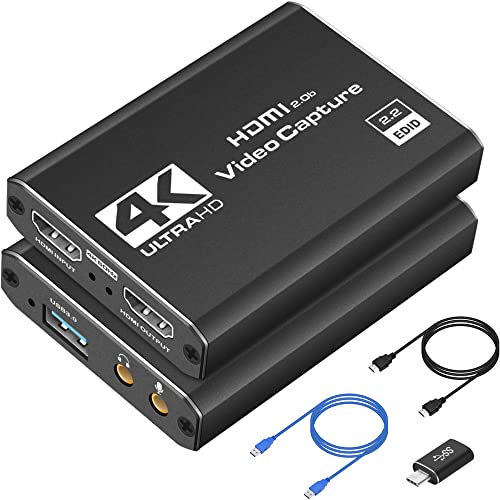
4K HDMI Capture Card USB 3.0 – 1080P 60FPS Gaming & Streaming Video Capture Card with HDMI Loop-Out, Plug & Play, Low-Latency Recording for PS5/PS4/Xbox/Switch/OBS/PC/Mac
High-Quality Video Capture, 4K HDMI Capture Card Ready:Capture smooth and vibrant video with this 4K HDMI capture card,...
As an affiliate, we earn on qualifying purchases.