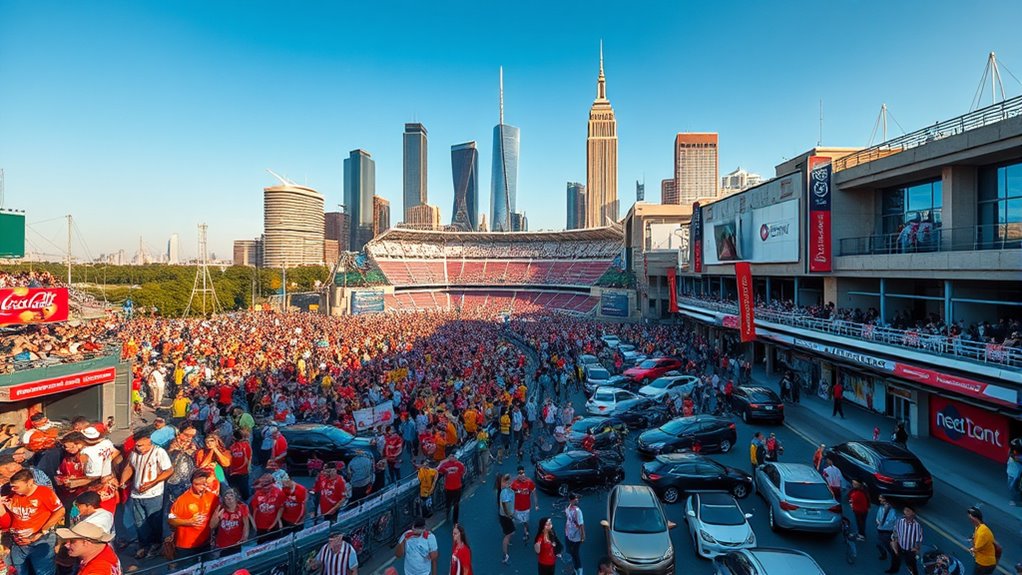

Fan travel during major sporting events boosts the local economy by increasing ticket sales, hotel stays, and spending at local businesses. You’ll find more out-of-town visitors filling hotels and dining at restaurants, which raises revenue for many sectors. This influx not only supports event organizers but can also lead to long-term city improvements and growth. If you explore further, you’ll uncover how these effects combine to create lasting economic benefits for host cities.
Key Takeaways
- Fan travel significantly boosts ticket sales, increasing revenue for event organizers and local vendors.
- Out-of-town visitors elevate hotel occupancy rates and hotel revenues during major sporting events.
- Increased visitor spending benefits local attractions, restaurants, and retail sectors, stimulating the broader economy.
- Hosting large events enhances city profiles, leading to long-term tourism growth and infrastructure improvements.
- The combined economic benefits of fan travel often outweigh hosting costs, supporting urban development and economic resilience.

When fans travel to attend major sporting events, their presence can substantially boost the local economy of host cities. This influx of visitors often results in increased ticket sales, which directly benefits event organizers and local vendors. As fans purchase tickets, they contribute to the revenue needed to host large-scale events, ensuring the event’s financial viability. The surge in ticket sales also indicates heightened demand, which can lead organizers to schedule more games or expand seating, further amplifying economic benefits.
Beyond ticket sales, hotel occupancy rates see a significant rise during major sporting events. Fans traveling from out of town typically need accommodations, filling hotels, motels, and short-term rentals. This increased demand pushes occupancy rates higher than usual, leading to increased revenue for the hospitality sector. Hotels often raise their prices during these periods, capitalizing on the heightened demand, which results in higher nightly rates and additional income for lodging providers. Local businesses that cater to tourists, such as restaurants, bars, and transportation services, also experience a boost as visitors spend money on food, drinks, and travel arrangements.
Hotel occupancy surges during major sports events, boosting local hospitality and restaurant revenues.
The economic impact extends beyond immediate ticket and lodging sales. As visitors explore the city, they tend to spend on shopping, entertainment, and other activities, creating a ripple effect that benefits multiple sectors. Local attractions, museums, and retail outlets often see increased foot traffic, which translates into higher sales and revenue. This influx of spending can lead to job creation, as businesses hire additional staff to meet the increased demand during the event period.
Furthermore, the presence of large crowds can elevate the city’s profile, attracting future visitors and hosting more events. City officials and event organizers recognize that the economic benefits often outweigh the costs, making these sporting events a strategic tool for urban growth and development. The temporary boost in economic activity can also lead to long-term improvements, such as upgraded infrastructure and better public services, which continue to benefit residents long after the event concludes.
As an affiliate, we earn on qualifying purchases.
Frequently Asked Questions
How Do Fan Travel Costs Affect Local Businesses’ Revenues?
Fan travel costs directly impact local businesses’ revenues by influencing attendance and spending. When fans spend more on transportation and accommodations, ticket sales can increase, boosting revenue for event venues. Additionally, the hospitality industry benefits from higher demand for hotels, restaurants, and other services. Conversely, high travel costs might deter some fans, reducing overall spending and negatively affecting local businesses, especially those reliant on event-related patronage.
What Environmental Impacts Are Associated With Increased Fan Travel?
You increase your carbon footprint and pollution levels when fan travel rises. More fans driving or flying to events emit greenhouse gases, contributing to climate change. This surge in travel also heightens air and noise pollution in host cities, impacting local air quality and residents’ health. As you travel more for events, you inadvertently amplify these environmental impacts, emphasizing the need for sustainable travel options to minimize harm.
How Do Cities Prepare for Large Influxes of Visiting Fans?
You prepare for large influxes of visiting fans by coordinating stadium security and fan transportation. Did you know that cities often see a 30% increase in crowd size during major events? To manage this, you enhance security measures and streamline transportation options, like extra shuttle services and designated routes. This guarantees fans arrive safely and efficiently, minimizing congestion and creating a positive experience for everyone.
Are There Long-Term Economic Benefits for Host Cities?
You’ll find that host cities often enjoy long-term economic benefits through stadium investments and sustained tourism growth. These investments can bolster infrastructure, attract future events, and enhance city branding. As tourism increases, local businesses thrive, creating jobs and generating tax revenue. While benefits may vary, strategic planning ensures that the economic gains from hosting major events can positively impact the city long after the fans leave.
How Does Fan Travel Influence Local Infrastructure Development?
Fan travel prompts you to invest in urban planning and transportation upgrades. You’ll see improved infrastructure like better roads, expanded transit options, and enhanced public spaces to accommodate visitors. These upgrades make city mobility smoother and boost daily life for residents. As a result, your city becomes more attractive for future events and tourism, creating a positive cycle of growth and development driven by increased fan travel.
Conclusion
As you’ve seen, fan travel acts like a vibrant river flowing through host cities, bringing life, energy, and economic significance. Every ticket purchased and meal enjoyed fuels a bustling marketplace, turning stadiums into treasure chests bursting with opportunity. Your journey as a fan doesn’t just cheer for a team; it sparks a ripple effect, transforming the city into a lively tapestry woven with shared passion and prosperity. Keep traveling—you’re shaping more than just games; you’re shaping communities.