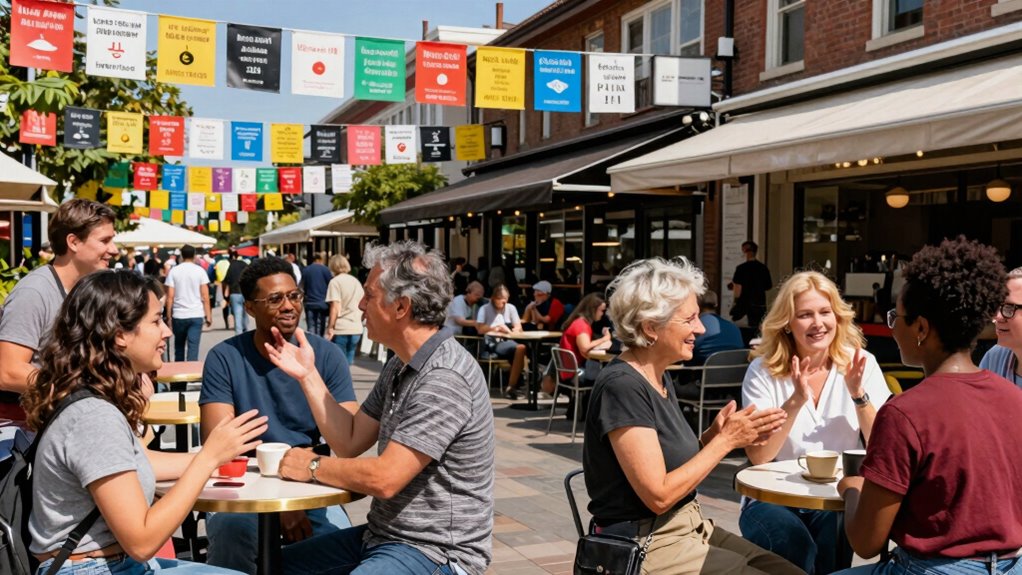
To make your multilingual community feel natural, prioritize cultural sensitivity and authenticity. Respect diverse traditions, use idiomatic expressions, and avoid literal translations that may cause misunderstandings. Create accessible, inclusive spaces with resources in multiple languages and encourage members to share their backgrounds. Celebrate cultural festivals and foster organic conversations to build genuine connections. Maintaining this approach as your community grows will help everyone feel valued. If you’d like to discover more ways to nurture authentic diversity, keep exploring the ideas ahead.

Get sports gear delivered free with Prime
- Fast, free delivery on millions of items
- Prime Video, Amazon Music and more included
- Member-only deals all year
Key Takeaways
- Incorporate cultural nuances and idiomatic expressions to foster authentic and meaningful communication.
- Create multilingual interfaces and resources that are culturally relevant and accessible.
- Encourage members to share their languages and cultural backgrounds openly to build belonging.
- Train community leaders to be culturally sensitive and adept at navigating diverse communication styles.
- Promote an inclusive environment that celebrates diversity and prioritizes genuine connections over perfect translations.
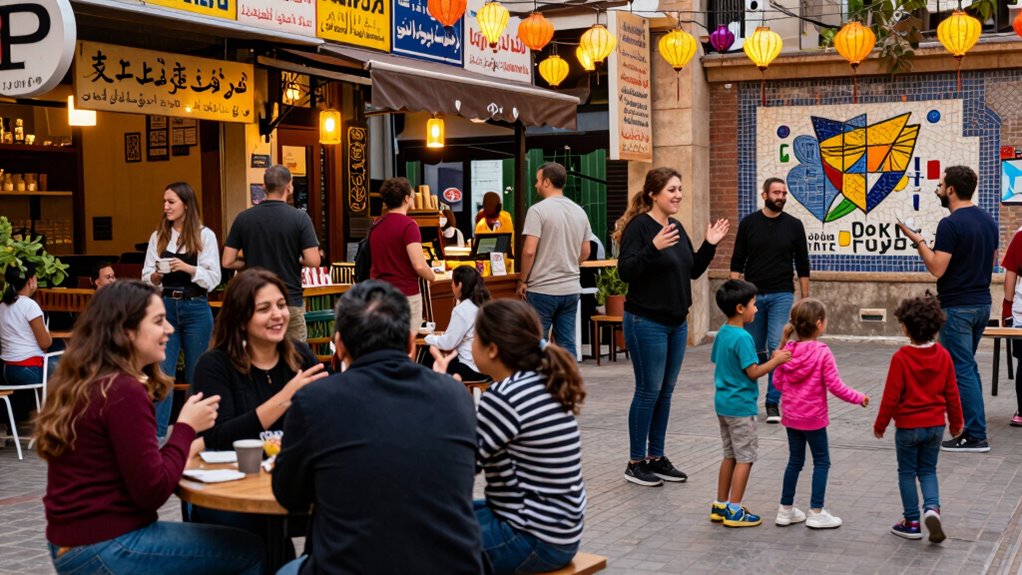
Creating a multilingual community that feels natural requires more than just offering multiple language options—it’s about fostering genuine inclusivity and seamless communication. When you prioritize cultural adaptation, you acknowledge that language isn’t just about words; it’s tied to traditions, values, and social norms. By understanding and respecting these cultural nuances, you help members feel valued and understood, which promotes authentic interactions. Language inclusion isn’t merely about translation; it’s about making everyone’s voice heard in ways that resonate personally. When your community actively incorporates diverse languages into its daily fabric, members are more likely to engage openly without feeling like outsiders or second-class participants.
Creating an inclusive multilingual space fosters genuine connection and celebrates diverse cultural identities.
To achieve this, you need to create environments where multilingual interactions happen naturally. This involves designing interfaces, discussions, and resources that are accessible in multiple languages, but also ensuring that cultural context is preserved. For example, using idiomatic expressions or culturally relevant examples can bridge gaps and make communication more relatable. When you implement cultural adaptation, you help prevent misunderstandings that often arise from literal translations or overlooked cultural cues. This way, language becomes a bridge rather than a barrier, encouraging more organic conversations and stronger community bonds. Incorporating cultural competence into your community management can further enhance understanding and respect among members. Additionally, fostering language exchange and encouraging members to share their language and cultural backgrounds without hesitation can significantly strengthen community bonds. You can facilitate this by creating spaces for language exchange, offering multilingual support, and celebrating cultural festivals or traditions. When members see that their languages are not only supported but also celebrated, it reinforces a sense of belonging. You should also empower community leaders and moderators to be culturally sensitive, making sure they understand the importance of context and nuance in multilingual communication.
Consistency is key. Regularly updating your tools and resources to reflect the diversity of your community keeps language inclusion genuine. As your community grows, so should your efforts to adapt culturally, ensuring that newcomers feel just as comfortable as long-standing members. Recognizing that cultural diversity plays a crucial role in shaping communication styles can help tailor your approach effectively. To maintain ongoing engagement, consider implementing cultural awareness training for your team to better understand diverse communication styles and customs. Developing an understanding of multilingual communication best practices can help your team navigate complex interactions more effectively. Remember, making a community feel natural isn’t about perfect translation or rigid language policies; it’s about cultivating an environment where everyone’s linguistic and cultural identity is recognized and respected. When you do this, your community becomes a vibrant, authentic space where diversity is embraced, and seamless, meaningful communication flourishes.
Products Worth Considering

GoPro Hero12 Black Waterproof Action Camera with 5.3K60 Video and 27MP Photos

Solo Stove Ranger 2.0 15-Inch Smokeless Fire Pit with Stand

YETI Carbon Steel Griddle, Pre-Seasoned Nonstick, 12 x 22 x 4.2, Black
As an affiliate, we earn on qualifying purchases.
Frequently Asked Questions
How Do I Address Cultural Differences in Multilingual Communities?
You address cultural differences by practicing cultural sensitivity and promoting inclusive communication. Listen actively to community members’ perspectives, respecting their unique traditions and values. Use language that’s respectful and considerate, avoiding assumptions. Encourage open dialogue and adapt your messaging to reflect diverse cultural contexts. By fostering understanding and showing genuine respect, you create an environment where everyone feels valued, safe, and genuinely included in the community.
What Tools Best Facilitate Real-Time Translation?
You should use real-time translation tools like Google Translate or Microsoft Translator, which prioritize translation accuracy and feature user-friendly interfaces. These tools enable seamless, instant communication across languages, making conversations feel more natural. Look for options that offer clear user interfaces and reliable translation quality, so you and your community can focus on meaningful interactions without struggling with language barriers. This approach helps foster genuine connections.
How Can I Encourage Language Learning Among Community Members?
You can kill two birds with one stone by organizing language exchange events that promote cultural sensitivity and foster genuine connections. Encourage community members to share their language skills and stories, creating an engaging environment for learning. Offer resources like language classes or conversation groups, and emphasize respect for diverse backgrounds. When people feel valued and understood, they’re more likely to embrace language learning, making your community richer and more harmonious.
What Privacy Concerns Arise With Multilingual Communication Platforms?
Privacy concerns on multilingual communication platforms include data encryption and user anonymity. You need to guarantee that messages are protected through strong encryption, so sensitive information stays secure. User anonymity is also essential; members should have control over their identities, preventing unwanted exposure. By prioritizing these aspects, you create a safer environment that respects members’ privacy, encouraging open, genuine communication without fear of data breaches or identification risks.
How Do I Handle Language Dominance or Imbalance?
You handle language dominance by encouraging code switching strategies that allow community members to fluidly switch between languages, promoting equality. Support language preservation by creating spaces where minority languages are actively used and celebrated. Recognize and address imbalance openly, fostering inclusive conversations. This approach guarantees all languages coexist harmoniously, empowering members to express themselves authentically without feeling overshadowed, and sustains linguistic diversity within your community.
Conclusion
Creating a multilingual community is like tending a vibrant garden—you need to nurture each plant, listen to its unique needs, and watch as they grow together in harmony. By fostering understanding, offering inclusive spaces, and celebrating diverse languages, you help your community blossom naturally. Remember, the beauty lies in the mix; when everyone feels valued and heard, your community becomes a rich tapestry woven with threads of many cultures, thriving in unity and mutual respect.