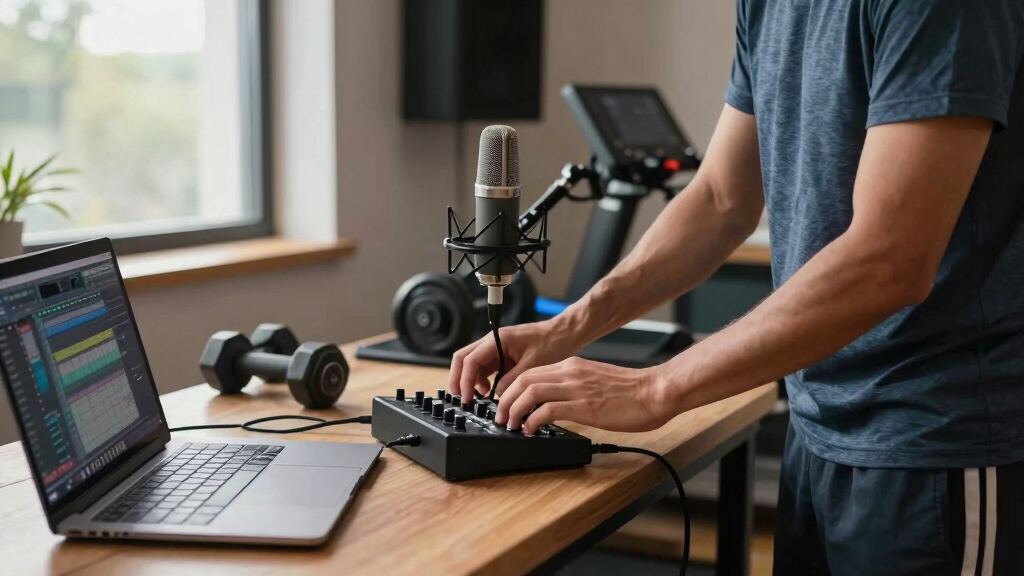

When choosing the best audio interface for sports podcasts, creators need a device that balances sound quality, ease of use, and reliability. The RØDE RØDECaster Pro II stands out for its all-in-one design and professional features, making it ideal for serious podcasters. The Focusrite Scarlett Solo 3rd Gen offers excellent value for beginners, while the Zoom PodTrak P4 excels in remote interview capabilities. Each option involves tradeoffs like cost versus features or portability versus expandability. Continue reading for a detailed breakdown of these top picks and what makes them suitable for different podcasting needs.

Get sports gear delivered free with Prime
- Fast, free delivery on millions of items
- Prime Video, Amazon Music and more included
- Member-only deals all year
Complete the kit


Key Takeaways
- The best audio interfaces for sports podcasts balance high-quality sound with user-friendly features and durability.
- Models with multiple input options and headphone outputs support versatile recording setups, especially for co-hosts or guests.
- Portability is a key factor for podcasters who record on the go, making battery-powered units and compact designs ideal.
- Price ranges vary significantly; higher-priced models often include professional features, but budget options still deliver solid sound quality.
- Additional features like sound pads, voice effects, and AI noise reduction can enhance podcast production but may add complexity or cost.
| MAONO E2 Gen2 Podcast Equipment Bundle Audio Interface Mixer |  | Best All-in-One Podcasting Solution | Compatible Devices: Personal Computer, Smartphone, Tablet | Supported Software: OBS, Discord, Zoom, Audacity, YouTube, Facebook, TikTok, Twitch | Connectivity Technology: AUX, Bluetooth, USB | VIEW LATEST PRICE | See Our Full Breakdown |
| Zoom PodTrak P4 Podcast Recorder with 4 XLR Mic Inputs, 4 Headphone Outputs, Phone & USB Input for Remote Interviews, Sound Pads, 2-In/2-Out USB Audio Interface, Battery Powered |  | Best Portable Recorder for On-the-Go Podcasts | Microphone Inputs: 4 with phantom power | Headphone Outputs: 4 | Input Types: XLR, Phone, USB | VIEW LATEST PRICE | See Our Full Breakdown |
| RØDE RØDECaster Pro II All-in-One Audio Production Studio |  | Best Professional-Grade All-in-One Studio | Number of XLR inputs: 4 | Outputs: Headphone outs | Recording options: Multitrack to computer, microSD, USB drive | VIEW LATEST PRICE | See Our Full Breakdown |
| Focusrite Scarlett Solo 3rd Gen USB-C Audio Interface |  | Best Entry-Level USB Interface for Beginners | Connectivity: USB-C | Bit Depth: 24-bit | Sample Rate: 192kHz | VIEW LATEST PRICE | See Our Full Breakdown |
| MAONO P2 Hybrid USB Audio Interface Dual XLR for PC, Phone, iPad, Guitar |  | Best Versatile Mobile Interface for Creators | Connectivity: Dual USB with MFi certification | Inputs: Dual XLR | Audio Quality: 24-bit/192kHz | VIEW LATEST PRICE | See Our Full Breakdown |
| M-AUDIO M-Track Duo USB Audio Interface |  | Best Overall for Versatile, Portable Podcasting | Audio Resolution: 48kHz | Inputs: 2 combo XLR/Line/Instrument with phantom power | Outputs: 1/4″ headphone, stereo 1/4″ outputs | VIEW LATEST PRICE | See Our Full Breakdown |
| Zoom PodTrak P4next Podcast Recorder with 4 Inputs + AI Noise Reduction |  | Best for Multi-Mic Remote and In-Person Podcasting | Microphone Inputs: 4 XLR | Headphone Outputs: 4 with separate volume controls | Supported Storage: SD card | VIEW LATEST PRICE | See Our Full Breakdown |
| Podcast Equipment Bundle with Microphone and Voice Changer |  | Best for All-in-One Streaming and Live Podcasting | Channels: 2 | Connectivity: USB Type C | Audio Input: XLR | VIEW LATEST PRICE | See Our Full Breakdown |
More Details on Our Top Picks
MAONO E2 Gen2 Podcast Equipment Bundle Audio Interface Mixer
The MAONO E2 Gen2 stands out for combining multiple connectivity options—Bluetooth, AUX, USB—and customizable sound effects into a single package, making it highly versatile for creators who want an integrated setup. Compared with the RØDECaster Pro II, this bundle is more accessible for beginners and offers a broader range of device compatibility, but it sacrifices some advanced features and expandability. Its high-quality preamps deliver clear audio with low noise, ideal for live streaming and recording. However, it doesn’t support power delivery or phone charging, which could limit longer recording sessions. This pick makes the most sense for hobbyists or small teams seeking an all-in-one podcast kit without complex setup.
Pros:- All-in-one solution with multiple connectivity options
- High-quality preamps for clear sound
- Customizable sound effects and voice modulation
- Long battery life supports extended sessions
Cons:- Does not support phone charging or external power delivery
- Limited to recording and mixing without advanced editing features
Best for: Podcasters seeking a comprehensive, plug-and-play setup with multiple device compatibility
Not ideal for: Professional broadcasters or advanced producers needing expandability and extensive effects
- Compatible Devices:Personal Computer, Smartphone, Tablet
- Supported Software:OBS, Discord, Zoom, Audacity, YouTube, Facebook, TikTok, Twitch
- Connectivity Technology:AUX, Bluetooth, USB
- Number of Channels:10
- Frequency Response:20 KHz
- Operating System:Windows, macOS
Our verdict“This is an excellent choice for beginners or casual podcasters wanting an easy-to-use, versatile setup.”
Zoom PodTrak P4 Podcast Recorder with 4 XLR Mic Inputs, 4 Headphone Outputs, Phone & USB Input for Remote Interviews, Sound Pads, 2-In/2-Out USB Audio Interface, Battery Powered
The Zoom PodTrak P4 is ideal for mobile podcasters needing a compact, battery-powered device, with four XLR inputs supporting phantom power and multiple headphone outputs for versatile setups. Compared to the Focusrite Scarlett Solo, which excels in studio-quality sound, the P4 prioritizes portability and remote interview capabilities, though its battery life of just 3.5 hours can be limiting for longer sessions. The inclusion of sound pads makes live effects easy, and the ability to connect via phone or USB enhances flexibility. Its complex setup might challenge beginners, but for on-location recording or remote interviews, it’s highly effective.
Pros:- Portable, battery-powered design for mobility
- Four microphone and headphone inputs for multi-participant recordings
- Supports remote interviews via phone and USB
- Includes sound pads for live effects
Cons:- Limited battery life of around 3.5 hours
- Setup can be complex for users unfamiliar with audio gear
- Requires frequent battery replacements
Best for: Podcasters who record outside a traditional studio, especially during remote interviews or live events
Not ideal for: Podcasters focused solely on studio recording or those needing extended battery life for lengthy productions
- Microphone Inputs:4 with phantom power
- Headphone Outputs:4
- Input Types:XLR, Phone, USB
- Battery Life:Up to 3.5 hours
- Recording Time:Up to 24 hours
- Dimensions:6.1″D x 4.41″W x 1.85″H
Our verdict“This device is perfect for mobile podcasters and remote interviewers who need a compact, versatile recorder on the go.”
RØDE RØDECaster Pro II All-in-One Audio Production Studio
The RØDECaster Pro II is designed for serious podcasters and streamers seeking a complete, studio-quality setup, with four XLR inputs, sound pads, and built-in effects. It surpasses many competitors like the Focusrite Scarlett Solo in terms of integrated features, offering multitrack recording directly to various media without needing additional hardware. While its extensive capabilities are appealing, its complexity can overwhelm beginners, and limited expandability might restrict more advanced users. This unit suits those who want a professional environment with minimal external equipment.
Pros:- Multiple XLR inputs with high-quality preamps
- Built-in sound pads and effects for live editing
- Multitrack recording options to internal storage or computer
- Easy presets with professional-grade sound
Cons:- Complex interface may intimidate newcomers
- Limited expandability beyond built-in features
- Higher price point
Best for: Experienced podcasters and streamers who need a high-end, all-in-one production station
Not ideal for: Beginners or casual creators who prefer simple, plug-and-play solutions
- Number of XLR inputs:4
- Outputs:Headphone outs
- Recording options:Multitrack to computer, microSD, USB drive
- Includes:Console, power supply, USB-C cable
Our verdict“This is a strong pick for seasoned podcasters wanting a professional, all-in-one recording studio with minimal setup complexity.”
Focusrite Scarlett Solo 3rd Gen USB-C Audio Interface
The Focusrite Scarlett Solo 3rd Gen offers straightforward, high-quality audio capture for those starting their podcast journey, with 24-bit/192kHz fidelity and a switchable Air mode that adds brightness—useful for voice clarity. Compared with the MAONO E2 Gen2, which provides more connectivity options, this interface emphasizes simplicity and audio quality, making it ideal for solo hosts or small-scale productions. Its limited inputs mean it’s not suited for multi-mic setups, but its compact design and included software bundle make it a practical choice for beginners and hobbyists.
Pros:- High-quality 24-bit/192kHz audio conversion
- Switchable Air mode enhances vocal brightness
- Includes professional software for editing and production
- Compact and durable for travel and home use
Cons:- Limited to one microphone and one instrument input
- Requires USB-C port, may need adapters for some computers
- Basic feature set may limit future expandability
Best for: New podcasters or musicians seeking a reliable, easy-to-use interface with high fidelity
Not ideal for: Podcasters planning complex multi-mic interviews or needing extensive input/output options
- Connectivity:USB-C
- Bit Depth:24-bit
- Sample Rate:192kHz
- Inputs:1 microphone, 1 instrument
- Outputs:2 balanced outputs
- Included Software:Pro Tools Intro+, Ableton Live Lite, Cubase LE
Our verdict“Ideal for beginners or solo creators wanting professional sound in a simple, portable package.”
MAONO P2 Hybrid USB Audio Interface Dual XLR for PC, Phone, iPad, Guitar
The MAONO P2 excels in supporting multiple devices simultaneously, thanks to dual USB ports with MFi certification, making it perfect for creators who work across computers, phones, and tablets. Compared with the Zoom PodTrak P4, which focuses on portable recording and remote interviews, the P2 emphasizes seamless multi-device connectivity and studio-quality audio with 24-bit/192kHz resolution. Its durable aluminum alloy build ensures longevity, and including all necessary cables simplifies immediate use. The lack of detailed dimensions and power options could be a concern for some, but overall, it offers a flexible, high-fidelity experience for mobile and desktop workflows.
Pros:- Supports simultaneous connection to multiple devices
- Studio-grade 24-bit/192kHz audio quality
- Compact and durable aluminum construction
- Includes comprehensive cables and accessories
Cons:- Limited details on dimensions and weight
- No external power supply options specified
- Lacks additional hardware expandability
Best for: Content creators needing a flexible, portable interface compatible with multiple devices simultaneously
Not ideal for: Podcasters requiring extensive multiple microphone inputs or onboard effects
- Connectivity:Dual USB with MFi certification
- Inputs:Dual XLR
- Audio Quality:24-bit/192kHz
- Supported Devices:Mac, PC, iPhone, Android, cameras
- Material:Aluminum alloy
- Included Accessories:USB-C to USB-A/C cable, user manual
Our verdict“This interface suits creators who need high-quality, multi-device connectivity in a compact form factor.”
M-AUDIO M-Track Duo USB Audio Interface
The M-Audio M-Track Duo stands out for its balanced combination of quality and portability, making it ideal for podcasters who need reliable sound on the go. Its 48kHz audio resolution guarantees clear recordings, which surpass the quality of many entry-level options, while the two combo inputs support both microphones and instruments. Compared to the Zoom PodTrak P4next, it doesn’t offer multiple headphone outputs but excels in simplicity and studio-quality sound. The main tradeoff is its limitation to just two inputs, which may fall short for more complex setups. Still, for solo or duo podcasts, its flexibility and included software make it a smart choice.
Pros:- High-quality 48kHz audio resolution ensures crisp sound
- Versatile combo XLR/Line/Instrument inputs support diverse sources
- Zero latency monitoring with USB/Direct switch improves workflow
- Includes MPC Beats software for music creation
Cons:- Limited to 2 inputs, restricting multi-guest recordings
- No bundled accessories or additional features for expanded use
Best for: Podcasters seeking a portable, high-quality interface with versatile input options for solo or duo recordings
Not ideal for: Podcasters planning to record with multiple guests or requiring more than two inputs simultaneously
- Audio Resolution:48kHz
- Inputs:2 combo XLR/Line/Instrument with phantom power
- Outputs:1/4″ headphone, stereo 1/4″ outputs
- Software:Includes MPC Beats
- Monitoring:Zero latency with USB/Direct switch
- Compatibility:Requires compatible Mac or PC
Our verdict“This interface is ideal for solo or small-scale podcasters who prioritize portability and sound quality over multiple inputs.”
Zoom PodTrak P4next Podcast Recorder with 4 Inputs + AI Noise Reduction
The Zoom PodTrak P4next excels for podcasts involving multiple guests, thanks to its four XLR inputs with high gain support and robust monitoring options. Its AI noise reduction and tone enhancement features help produce clear, professional-sounding audio, a step above basic interfaces like the Focusrite Scarlett Solo. Unlike the M-Audio M-Track Duo, it offers four microphone inputs, making it better suited for group recordings. However, uncertainties around battery life and storage capacity may impact portability and long sessions. Its lightweight design combined with direct smartphone connectivity makes it a practical choice for remote interviews or on-the-go recording sessions.
Pros:- Supports up to four microphones with high gain support (+70dB)
- Includes AI noise reduction and tone enhancement for professional sound
- Multiple headphone outputs with independent volume controls
- Connects directly to smartphones for quick, high-quality recordings
Cons:- Battery requirements are not specified, which could hinder portability
- Limited info on storage capacity and battery life
Best for: Podcasters recording with multiple guests or remote participants who need high-quality, noise-reduced audio
Not ideal for: Solo podcasters or those with limited technical experience seeking a straightforward, simple interface
- Microphone Inputs:4 XLR
- Headphone Outputs:4 with separate volume controls
- Supported Storage:SD card
- Max Gain:+70dB
- Recording Time:510 minutes
- Weight:10.56 ounces
Our verdict“This recorder is perfect for multi-guest or remote podcasts that demand high-quality, noise-reduced sound with flexible monitoring options.”
Podcast Equipment Bundle with Microphone and Voice Changer
The Podcast Equipment Bundle offers a comprehensive setup for podcasters who want studio-quality sound and a variety of creative tools. Its noise reduction and omnidirectional microphone capture ensure clear audio, while the included voice effects and live sound card support dynamic streaming and broadcasting. Compared to dedicated interfaces like the Focusrite Scarlett Solo, this bundle packs more features into one package, but its complexity might be overwhelming for beginners. The battery-powered design adds portability, though limited details on long-term durability suggest it may suit casual or semi-professional podcasters better than heavy daily use.
Pros:- Studio-grade sound quality with noise reduction and omnidirectional pickup
- Plug & Play via USB-C for easy setup across devices
- Includes professional microphones and voice effects for creative flexibility
- Supports multiple devices including smartphones, PCs, and gaming consoles
Cons:- Complex features may require technical knowledge to operate fully
- Battery charging needed before initial use could be inconvenient
- Limited information on long-term durability
Best for: Podcasters who want an all-in-one solution with creative effects and broad device compatibility for casual or semi-professional streaming
Not ideal for: Professionals seeking a straightforward, plug-and-play interface for consistent, high-volume recording
- Channels:2
- Connectivity:USB Type C
- Audio Input:XLR
- Power Source:Battery Powered
- Output Connector Type:USB Type C
- Item Weight:1.48 kg
Our verdict“This bundle suits podcasters who seek a versatile, all-in-one setup for creative streaming and casual production, though it may be overkill for simple solo recordings.”

How We Picked
These products were selected based on a combination of performance, usability, build quality, and value for sports podcast creators. Priority was given to devices that offer clear, professional sound with straightforward operation—critical for engaging sports audiences. Features like multiple inputs, headphone outputs, and remote connectivity were key for versatile setups. We also considered portability for creators recording in different locations and the overall durability of each unit. The ranking reflects a balance between affordability and feature set, aiming to help both beginners and seasoned podcasters find suitable options.Factors to Consider When Choosing Best Audio Interface For Sports Podcasts
Choosing the right audio interface for sports podcasts involves several important considerations. While features like multiple inputs and sound quality are essential, other factors such as ease of use, portability, and future-proofing can significantly influence your decision. Understanding these broader aspects helps ensure you select a device that not only meets your current needs but can grow with your podcasting journey.Number of Inputs and Outputs
For sports podcasts, having multiple XLR inputs is often necessary to accommodate co-hosts and guest speakers. The number of headphone outputs also matters if you plan to have multiple people monitoring audio simultaneously. A flexible interface with additional line inputs or USB connectivity can expand your setup as your podcast grows. Be cautious of models that limit input options, as they can restrict your ability to include guests or additional audio sources later.
Sound Quality and Preamp Performance
Clear, professional sound hinges on high-quality preamps and converters. Cheaper interfaces may introduce noise or distortions, which can detract from your listeners’ experience, especially during lively sports commentary. Look for units that offer good dynamic range and low latency. Investing in a slightly higher-priced interface can pay off with noticeably better audio clarity, critical for capturing the energy and detail of sports discussions.
Ease of Use and Setup
Sports podcasts often require quick setup and minimal fuss, especially if recording in different locations. Interfaces with intuitive controls, clear indicators, and straightforward software integration reduce the risk of technical issues. Features like plug-and-play operation and simple gain controls make it easier to focus on content rather than troubleshooting technical glitches. Avoid overly complex interfaces if you prioritize speed and simplicity in your workflow.
Portability and Power Options
If you record outdoors or in multiple venues, portability becomes a key factor. Battery-powered units or compact designs that connect via USB are ideal for on-the-go sports coverage. Durability and lightweight construction also matter for frequent transport. Keep in mind that portable interfaces may sacrifice some advanced features found in studio-grade models, so balance your mobility needs with desired functionality.
Additional Features and Future-Proofing
Extras such as sound pads, voice effects, AI noise reduction, or multi-channel mixing can enhance your production quality, especially in noisy environments like sports venues. However, these features often come at a higher cost and complexity. Consider whether such additions align with your current setup and budget. Investing in a more capable interface now can prevent the need to upgrade prematurely as your podcasting skills and audience grow.
Frequently Asked Questions
Do I need a high-end audio interface for beginner sports podcasts?
Not necessarily. While high-end interfaces offer superior sound and more features, many budget-friendly options provide excellent audio quality suitable for starting out. For beginners, ease of use and reliability often matter more than advanced features. As your podcast grows, you can consider upgrading to more professional gear, but initial investments should match your current needs and technical skills.
Can I use a USB microphone instead of an audio interface for sports podcasts?
Yes, USB microphones are a convenient and affordable alternative that simplifies setup, making them popular among beginner podcasters. However, they often lack the flexibility and audio quality of dedicated audio interfaces, especially when recording multiple voices simultaneously or in noisy environments. If your goal is professional sound quality and expandable setups, an audio interface with XLR microphones is a better long-term investment.
How important is portability for a sports podcast audio interface?
Portability can be vital if you frequently record outdoors, at sports venues, or in multiple locations. Compact, battery-powered, or USB-only interfaces enable quick setup and transport. However, portable units may have fewer inputs or features compared to larger studio models. If most of your recording happens in a fixed location, portability becomes less critical, and you might prioritize other features like input flexibility or sound quality.
What features should I prioritize for remote interviews in sports podcasts?
For remote interviews, look for interfaces with good USB connectivity, low latency, and reliable audio quality. Some models include phone or Bluetooth inputs, making it easier to connect with guests from different locations. AI noise reduction and echo cancellation features can also improve audio clarity in less controlled environments. Prioritizing these features helps maintain a professional sound even when recording outside a studio.
Is it worth investing in a mixer or bundle for sports podcasting?
Bundles and mixers combine multiple features and inputs into a single package, which can be cost-effective for new or evolving podcasts. They simplify setup and often include microphones and accessories, saving time and money. However, they may also include unnecessary features or lower-quality components that could compromise sound quality. Consider your current needs and future plans—sometimes a dedicated interface with upgrade options is a better long-term choice.
Conclusion
For those just starting out or recording solo in a fixed location, the Focusrite Scarlett Solo 3rd Gen offers excellent value with straightforward operation. Podcast creators who need to record multiple guests or co-hosts will benefit from the RØDE RØDECaster Pro II for its all-in-one design and advanced features. If portability and remote recording are priorities, the Zoom PodTrak P4 provides a compact, battery-powered solution. Budget-conscious beginners can confidently pick a simple USB interface, while more experienced podcasters should consider investing in higher-end models with expanded inputs and professional-grade sound quality. Your choice should align with your recording environment, technical comfort, and future ambitions.