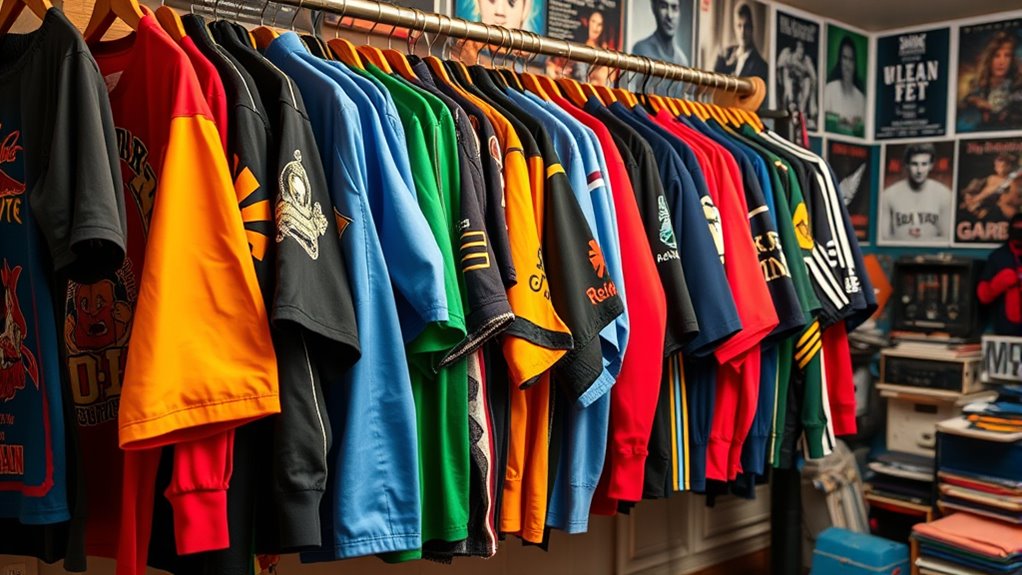

The shirt collecting culture among fans is all about passion for music and shared memories. You’ll find enthusiasts hunting for vintage tees at thrift stores, online shops, or concerts, cherishing each rare find. Wearing these shirts at shows creates a sense of community and identity. It’s a way to connect with others who share your musical tastes and history. Keep exploring, and you’ll discover how deeply personal and rich this vibrant scene can be.
Key Takeaways
- Shirt collecting fosters community bonding through trading, sharing stories, and wearing vintage tees at concerts.
- Fans view shirts as symbols of memories, cultural moments, and personal identity connected to music history.
- Collecting involves hunting for rare items at thrift stores, auctions, and vintage markets, enhancing the hobby’s excitement.
- Owning and displaying shirts develop knowledge of authenticity, rarity, and music culture, enriching personal and social connections.
- Shirt collecting serves as a form of self-expression, preserving music history and creating a sense of nostalgia among fans.
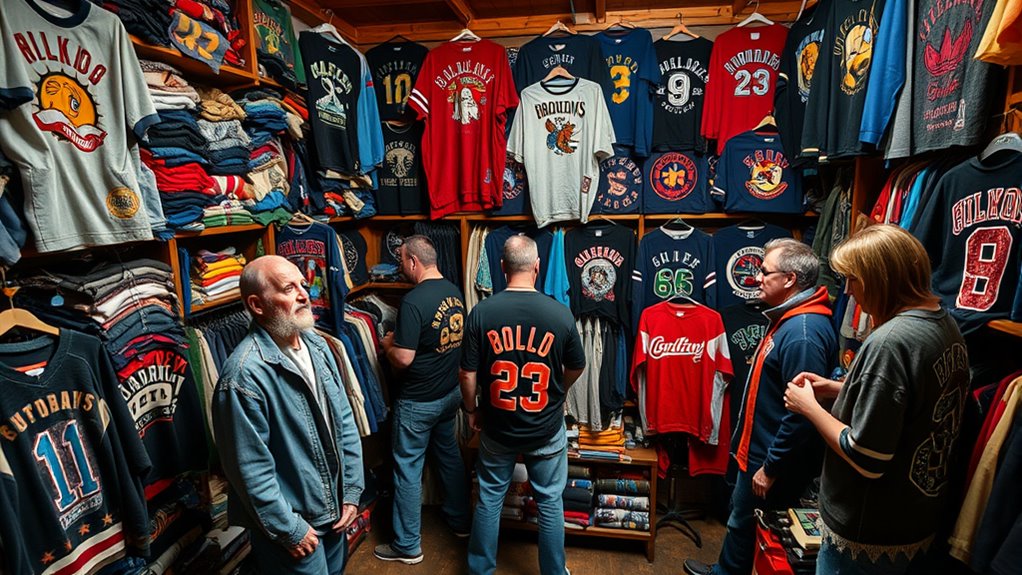
Shirt collecting has become a popular hobby for many enthusiasts who appreciate the craftsmanship, history, and unique designs behind each piece. Whether you’re into band merchandise or vintage tees, collecting shirts offers a way to connect with your passions on a deeper level. Band merchandise shirts, in particular, hold a special place for fans because they symbolize more than just music—they represent memories, shared experiences, and the culture surrounding your favorite bands. These shirts often feature iconic logos, album artwork, or tour dates, making each one a tangible piece of music history. When you hunt for band merchandise, you’re not just adding to your collection; you’re preserving a moment in time that resonates with you personally.
Band merchandise shirts preserve memories and culture, turning music into tangible, cherished pieces of history.
Vintage tees, on the other hand, carry a nostalgic charm that pulls collectors into the past. These shirts often come from decades ago, with faded prints, soft fabrics, and a worn-in feel that new shirts can’t replicate. When you find a vintage tee, it’s like uncovering a hidden treasure. Each one tells a story—perhaps from a concert you attended years ago, a band that’s no longer around, or a style that defined a generation. Collecting vintage tees requires patience and an eye for authenticity, but the reward is owning a piece of history that’s rare and meaningful. You might find these shirts at thrift stores, online auctions, or vintage markets, and every find feels like a victory.
The culture around shirt collecting is vibrant and personal. You might display your collection proudly, trade shirts with fellow enthusiasts, or wear your vintage tees to concerts and events. Each shirt you own becomes a conversation starter, a way to connect with others who share your interests. For many collectors, it’s about more than just the shirt—it’s about the stories, the memories, and the feeling of owning something unique. The thrill of tracking down a hard-to-find band tee or a rare vintage shirt keeps your hobby exciting and rewarding.
As you build your collection, you’ll learn about the history of the shirts, the bands, and the fashion trends that influenced their designs. You’ll develop an eye for quality, authenticity, and rarity, making each addition more meaningful. Shirt collecting isn’t just a pastime; it’s a way to express your identity, celebrate your music, and preserve cultural moments. Whether you’re a dedicated collector or just starting out, each shirt you add enriches your personal story and deepens your connection to the music and culture you love.
Frequently Asked Questions
How Do Collectors Authenticate Vintage Shirts?
To authenticate vintage shirts, you should start with authenticity verification by closely examining tags, stitching, and fabric quality. Use vintage shirt appraisal guides and compare them with known authentic pieces. Look for signs of age, such as fading or wear, and check for any inconsistencies. If unsure, consult experts or professional services to verify authenticity, ensuring your collection maintains its value and credibility.
What Is the Most Expensive Shirt Ever Sold?
The most expensive shirt ever sold is a rare Chanel piece, fetching over $50,000. You might find it interesting that this luxury brand crafted it from rare fabric, making it a true collector’s item. When you seek high-value shirts, focus on limited editions, unique designs, and authentic signatures. Authenticity and condition profoundly impact value, so always verify details before making a high-stakes purchase.
Are There Online Communities for Shirt Collectors?
Yes, there are online communities for shirt collectors. For example, you might join dedicated online forums or social media groups where enthusiasts share their latest finds and trade shirts. Imagine connecting with others who appreciate vintage band tees or limited-edition sports jerseys; these platforms make it easy to swap tips, showcase your collection, and stay updated on upcoming releases. You’ll find a passionate, supportive community enthusiastic to share your shirt collecting journey.
How Do Collectors Preserve Their Shirts Over Time?
To preserve your shirts over time, focus on proper shirt storage and maintenance. Store them in a cool, dry place, preferably folded or hung on padded hangers to prevent stretching. Avoid direct sunlight to prevent fading. Regularly inspect your shirts for signs of wear or damage, and wash them carefully using gentle detergents. Proper shirt maintenance guarantees your collection stays pristine and vibrant for years to come.
What Are Common Signs of a Counterfeit Shirt?
Spotting a counterfeit shirt is like decoding a mystery. Watch for signs like poor stitching, incorrect logos, or unusual tags. Famous counterfeit cases often reveal inconsistent fonts or faded colors. Use counterfeit detection tips such as comparing it to authentic images or feeling the fabric’s quality. If something feels off, trust your instincts—these clues can help you avoid falling for a fake. Stay sharp and always verify before buying.
Conclusion
You never expect that a simple shirt can hold so much meaning, yet here you are, surrounded by memories and stories. It’s funny how one piece of fabric can connect fans across time and space, just like that unexpected encounter at the game or the chance conversation with a fellow collector. In this way, shirt collecting becomes more than a hobby — it’s a reminder that sometimes, the smallest things carry the biggest stories, waiting to be discovered.