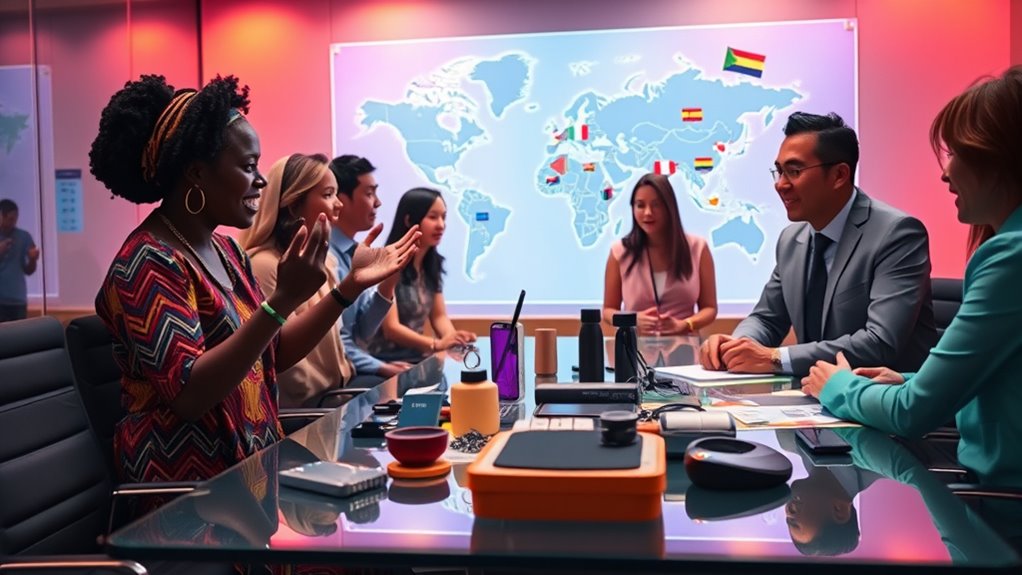

Merging local culture with global teams requires embracing cultural differences through open dialogue, understanding diverse communication styles, and adapting behaviors accordingly. Focus on building mutual respect, sharing cultural perspectives, and promoting inclusive practices that value everyone’s contributions. Flexibility around work customs and continuous learning help foster innovation and trust. By prioritizing cross-cultural understanding, you can create a cohesive, resilient, and dynamic team. Exploring these strategies further can help you unearth the full potential of your diverse workforce.
Key Takeaways
- Foster open dialogue to share cultural customs, communication styles, and workplace preferences among team members.
- Provide ongoing cultural awareness and cross-cultural communication training for all team members.
- Promote cultural adaptation by encouraging flexibility in work hours, holidays, and behavioral expectations.
- Recognize and leverage cultural differences as strengths to enhance innovation and team resilience.
- Create an inclusive environment where diversity is valued, fostering mutual respect and understanding across cultures.
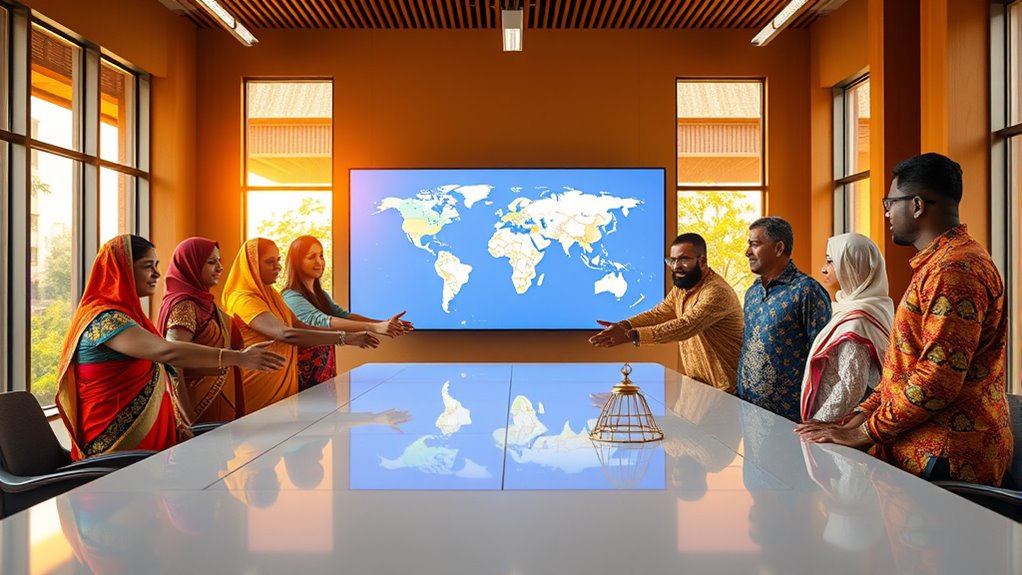
Bringing together local cultures with global teams can be a powerful way to foster innovation and strengthen collaboration. When you embrace diverse perspectives, you open the door to creative solutions that might never surface in a homogenous environment. However, successfully merging these cultures requires more than just assembling a diverse team; it demands a focus on cross cultural communication and cultural adaptation. These elements are essential for creating a work environment where everyone feels valued and understood.
Embracing diverse cultures enhances innovation through effective cross cultural communication and mutual adaptation.
Cross cultural communication involves understanding how different cultures express ideas, emotions, and expectations. You need to recognize that gestures, tone, and even timing can have varied meanings across cultures. For instance, directness in communication might be appreciated in some cultures but considered rude in others. By becoming aware of these nuances, you can avoid misunderstandings and foster clearer, more respectful exchanges. This awareness helps your team navigate language barriers and cultural differences with empathy, ultimately boosting productivity and morale.
Cultural adaptation is equally critical. It’s about adjusting your behaviors, processes, and expectations to align with the diverse cultural backgrounds of your team members. You might find that flexible work hours or different holiday observances are necessary considerations. You’ll also need to encourage your team to share their cultural perspectives, creating an environment where adaptation isn’t one-sided but a mutual effort. This not only enhances inclusivity but also allows team members to bring their authentic selves to the table, which can lead to more innovative ideas.
To effectively merge local culture with global teams, you should promote open dialogue and continuous learning. Encourage team members to share their customs, communication styles, and workplace preferences. Offer training on cultural awareness and cross cultural communication to ensure everyone understands the value of diversity. As you do this, set clear expectations around respectful interactions and adaptability.
Remember that cultural adaptation is an ongoing process, not a one-time fix. It requires patience, active listening, and a willingness to challenge your assumptions. Incorporating Cultural Intelligence (CQ) into your leadership approach can significantly enhance your team’s ability to navigate these differences effectively. When you prioritize these efforts, you’ll create a collaborative environment where cultural differences are seen as strengths rather than obstacles. In turn, your team will become more innovative, resilient, and aligned toward common goals. By consciously integrating local cultures with your global team through effective cross cultural communication and cultural adaptation, you lay the foundation for a truly dynamic and inclusive workplace.
Frequently Asked Questions
How Can Local Customs Influence Team Communication Styles?
Local customs influence your team’s communication styles through cultural nuances and communication etiquette. You might find that certain gestures, tone, or directness are appreciated differently, shaping how messages are delivered and received. Understanding these subtleties helps you avoid misunderstandings and foster respect. By adapting your approach to respect local customs, you create a more inclusive environment where team members feel valued and understood, enhancing overall collaboration.
What Are Effective Strategies for Managing Cultural Misunderstandings?
Did you know 70% of global teams face cultural misunderstandings? To manage these effectively, you should foster intercultural sensitivity and encourage cultural adaptation. Actively listen to team members’ perspectives, clarify assumptions, and promote open dialogue. Address miscommunications promptly, and create a respectful environment where diverse customs are valued. By doing so, you’ll build trust, improve collaboration, and turn cultural differences into strengths rather than obstacles.
How Do Language Barriers Impact Global Team Collaboration?
Language barriers can substantially hinder global team collaboration because limited language proficiency causes misunderstandings and delays. You might struggle with clear communication, leading to frustration or errors. Translation challenges also pose issues, as nuanced messages may get lost or misinterpreted. To improve teamwork, foster open dialogue about language difficulties, use simple language, and leverage translation tools. This approach helps bridge gaps and promotes smoother collaboration across diverse linguistic backgrounds.
What Role Does Technology Play in Cultural Integration?
Technology plays a crucial role in cultural integration by enabling virtual reality and cross-cultural training. You can immerse your team in realistic cultural scenarios through virtual reality, fostering understanding and empathy. Cross-cultural training programs delivered online help your team grasp diverse perspectives and communication styles. These tools break down barriers, promote collaboration, and create a cohesive global team, making cultural integration more effective and engaging for everyone involved.
How Can Leaders Foster Cultural Inclusivity Across Diverse Teams?
You can foster cultural inclusivity by practicing cross-cultural leadership, where you actively understand and respect diverse perspectives. Encourage inclusive decision-making by creating open forums for team members to share their ideas and experiences. Promote awareness through ongoing cultural competency training, and model inclusive behavior. By valuing every voice, you build trust and cohesion, ensuring your team thrives in a multicultural environment and reflects a truly inclusive culture.
Conclusion
By blending local culture with your global team, you foster stronger connections and boost collaboration. Imagine a multinational company in Japan integrating traditional tea ceremonies into team-building; employees feel more valued and engaged. When you embrace cultural differences, you create a workplace where everyone thrives. So, take the time to understand and incorporate local customs—your team will thank you with increased innovation, loyalty, and success. It’s a simple step toward truly global teamwork.