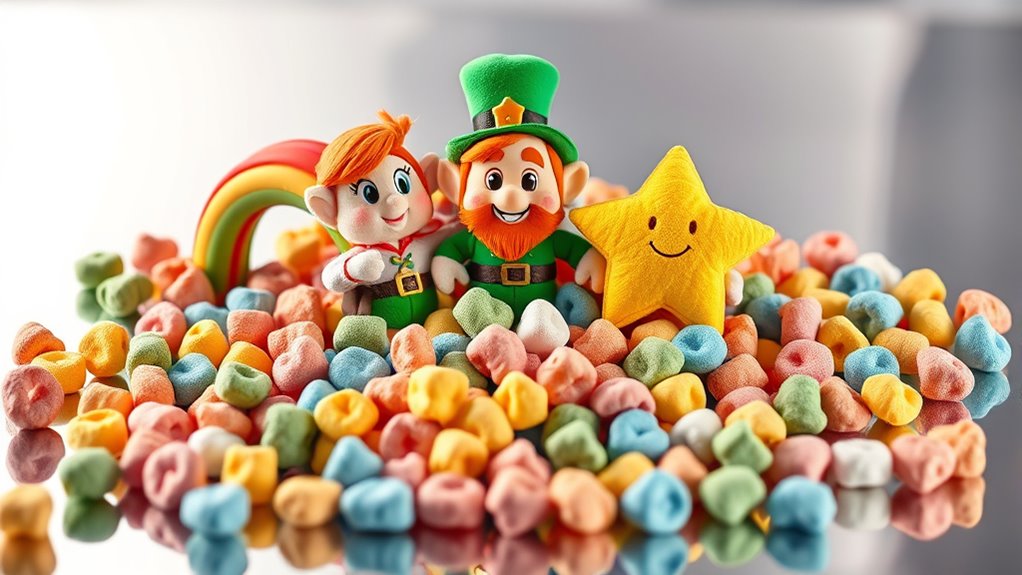

The Lucky Charms mascot, the leprechaun, embodies Irish folklore and adds a magical, cultural touch to the cereal. Its lively personality and mischievous antics make it memorable and engaging, creating a strong emotional connection. The mascot’s vibrant imagery and storytelling boost brand recognition and appeal across generations. If you keep exploring, you’ll discover how this charming figure helps Lucky Charms stand out and stay relevant in a competitive market.
Key Takeaways
- The Lucky Charms mascot is a leprechaun inspired by Irish folklore, symbolizing luck, mischief, and magic.
- The leprechaun character enhances brand identity through playful storytelling and humorous narratives.
- Vibrant visuals and themed promotions featuring the mascot foster consumer engagement and brand loyalty.
- The mascot helps Lucky Charms stand out in the market, making it a cultural icon beyond just a cereal product.
- Cultural symbolism of the leprechaun deepens emotional connections, boosting brand recognition and longevity.
Have you ever wondered why Lucky Charms is so instantly recognizable? It’s not just because of its colorful cereal but also because of the clever use of cultural symbolism and marketing strategies. From the moment you see the leprechaun mascot, you’re drawn into a world that feels both playful and familiar. The leprechaun isn’t just a random figure; he embodies Irish folklore, which adds a layer of cultural symbolism that resonates worldwide. This choice cleverly taps into a rich tradition, making the brand feel rooted in a mythic, magical land. The leprechaun’s image signals luck, mischief, and treasure, which aligns perfectly with the cereal’s promise of fun and fortune. This cultural symbolism makes the mascot more than just a character; it becomes a symbol of joy and abundance, appealing to both children and adults alike.
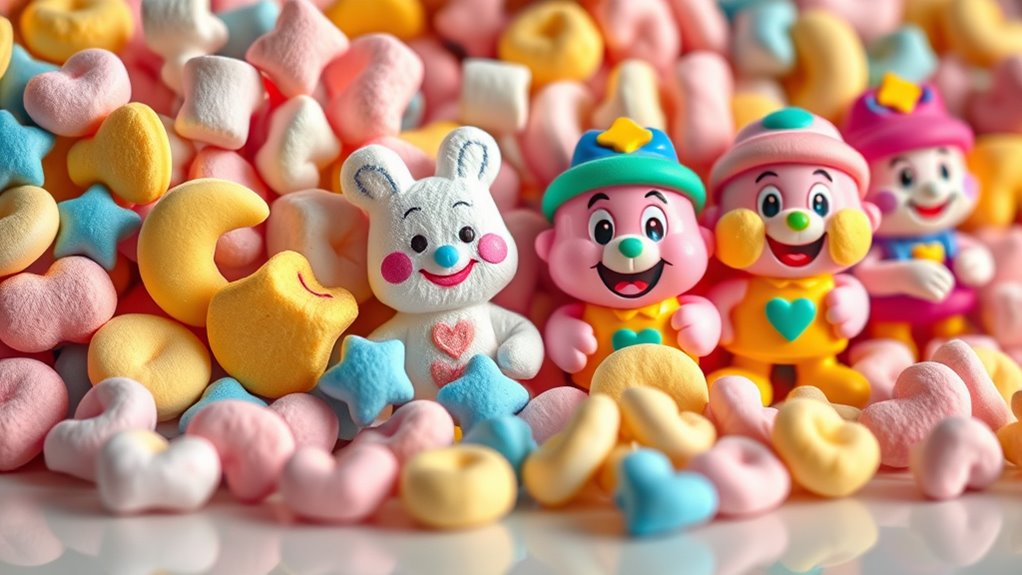
Marketing strategies play a huge role in cementing Lucky Charms’ identity. The brand consistently uses its mascot in various advertising campaigns, emphasizing the leprechaun’s playful personality and mischievous antics. These ads often feature the leprechaun trying to hide or steal the cereal’s marshmallow charms, creating a humorous and memorable narrative. This storytelling approach keeps consumers engaged, encouraging brand loyalty. The use of vibrant colors and whimsical visuals in commercials and packaging further amplifies the brand’s fun image. Limited-edition marshmallows and themed promotions are also part of the strategy, creating hype and reinforcing the cereal’s magical appeal. Lucky Charms’ marketing team understands the power of a strong mascot, and they leverage it to forge an emotional connection with audiences. They make sure the leprechaun isn’t just a logo but a character that embodies the brand’s values of fun, luck, and childhood wonder.
This combination of cultural symbolism and targeted marketing strategies creates a lasting impression. It transforms Lucky Charms from a simple breakfast cereal into a cultural icon. The mascot’s personality and the stories surrounding him make the product memorable and relatable. Every time you see that mischievous leprechaun, it reminds you of the playful magic that the brand promises. It’s a smart, strategic move that keeps Lucky Charms standing out in a crowded market. By blending cultural symbolism with clever marketing, the brand has built an identity that’s both timeless and engaging. That’s why, even decades after its debut, Lucky Charms remains a beloved and instantly recognizable part of breakfast tables everywhere. Additionally, understanding the cultural symbolism behind mascots can help brands create more meaningful and lasting connections with their audiences.

Fiesta Toys Lucky Leprechaun 8" by Fiesta, Non-Personalized Leprechaun
- Size: 8-inch plush toy
As an affiliate, we earn on qualifying purchases.
As an affiliate, we earn on qualifying purchases.
Frequently Asked Questions
Who Was the First Mascot for Lucky Charms?
The first mascot for Lucky Charms was Lucky the Leprechaun. You can see how this cultural mascot significance was central, as the leprechaun symbolizes Irish luck and magic. Over time, the mascot design evolution made Lucky more playful and engaging, appealing to kids. You’re likely to notice how his appearance has become more colorful and animated, enhancing brand recognition and creating a fun, memorable character that resonates with audiences.
How Do Mascots Influence Children’s Cereal Choices?
Mascots influence your children’s cereal choices by boosting brand loyalty and enhancing visual appeal. When kids see a fun, recognizable mascot, they’re more likely to choose that cereal because it feels familiar and exciting. Mascots create a connection, making the product stand out on shelves. This visual appeal fosters loyalty over time, encouraging kids to prefer and request their favorite cereals with beloved mascots, shaping their eating habits.
Are There Any Discontinued Lucky Charms Mascots?
You’ll find that some Lucky Charms mascots were discontinued over the years, reflecting the cereal’s evolving branding. notably, the cereal mascot evolution shows how brand mascot marketing adapts to changing audiences. For example, the Trix Rabbit and Lucky the Leprechaun have had periods of absence. These shifts aim to re-engage kids and maintain interest, highlighting how strategic mascot changes influence consumer appeal and keep the brand fresh.
What Is the History Behind Lucky Charms’ Mascot Designs?
You explore the history behind Lucky Charms’ mascot designs, noticing their magical symbolism and evolution over time. The mascot, the leprechaun, was initially portrayed as a mischievous, traditional Irish figure, but his design has evolved to be more friendly and approachable, appealing to kids. This mascot evolution reflects changing marketing trends and a desire to create a magical, enchanting brand image that captures the charm and whimsy of the cereal.
How Do Lucky Charms Mascots Compare to Competitors’ Mascots?
You might think Lucky Charms’ mascots stand out, but they actually compare well with competitors’ in brand recognition. Their mascot design evolution has kept them colorful, friendly, and memorable, helping to create a strong emotional connection with consumers. This consistency and playful approach give Lucky Charms an edge, as their mascots are easily recognizable and evoke nostalgia, setting them apart from other cereal mascots who often lack that same level of charm and brand loyalty.
Conclusion
So, next time you see a mascot or enjoy a bowl of Lucky Charms, remember the fun stories and symbolism behind them. Have you ever wondered why these characters make such a lasting impression? They’re more than just symbols—they’re part of our culture, sparking joy and nostalgia. Whether for luck or entertainment, these mascots and cereals remind us that a little bit of magic can brighten any day. Isn’t that a charm worth celebrating?