Colors on fans and flags carry deep cultural meanings worldwide. Red often symbolizes passion, good fortune, or bravery; blue represents tranquility and loyalty; green signifies growth and harmony; yellow and gold stand for wealth and hope. These colors communicate cultural pride, values, and history, giving each symbol a special significance. If you explore further, you’ll discover how these vibrant hues tell powerful stories about the identities and traditions of different societies.
Key Takeaways
- Colors in fans and flags symbolize cultural values like passion (red), tranquility (blue), and hope (green).
- Red often represents good fortune, bravery, or sacrifice, depending on cultural context.
- Blue signifies loyalty, spirituality, and peace across different traditions worldwide.
- Green symbolizes growth, fertility, and natural harmony, especially in Islamic and Irish symbolism.
- Gold and yellow convey wealth, prosperity, and enlightenment, reflecting national pride and cultural significance.
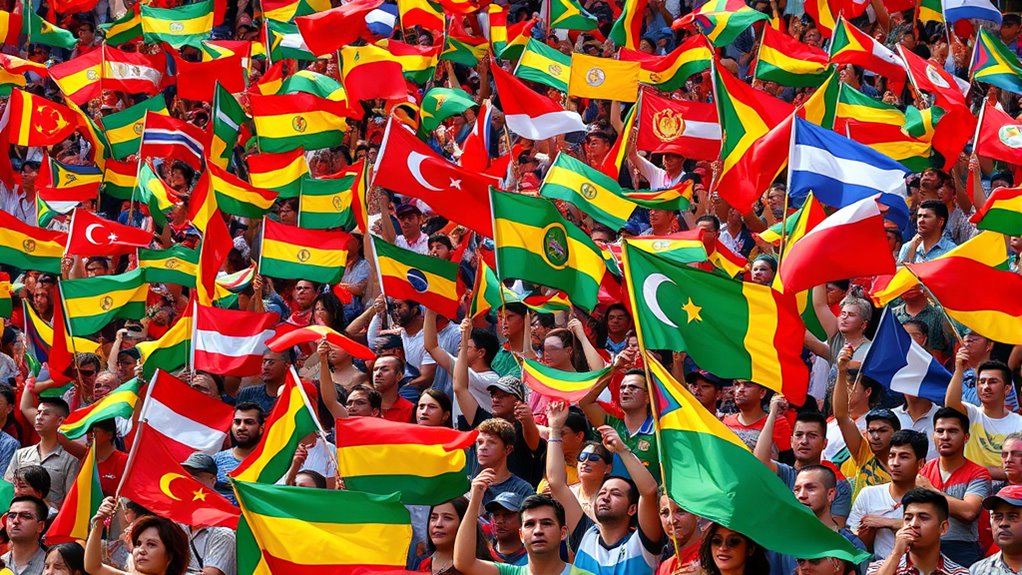
Have you ever wondered what the colors of fans and flags reveal about different cultures? Each hue carries a story, a set of beliefs, or a historical meaning that’s deeply rooted in a culture’s identity. When you look at a flag or a fan, you’re not just seeing a splash of color—you’re glimpsing a visual language that communicates cultural symbolism and color significance. These colors are carefully chosen and hold power; they can evoke pride, honor, mourning, or hope, depending on their context.
In many cultures, red is a prominent color and often symbolizes passion, strength, or good fortune. For example, in China, red is associated with happiness and prosperity, so it’s commonly seen during festivals and celebrations. In the Philippines, red on the flag represents bravery and valor. Conversely, in Western countries like the United States, red can symbolize courage and sacrifice, especially when linked to patriotic symbols. The color’s significance varies widely but always carries emotional weight.
Blue, on the other hand, often signifies tranquility, loyalty, or spirituality. In many Middle Eastern flags, blue reflects the divine and the heavens, emphasizing spiritual connection. In Western traditions, blue is frequently associated with trust and stability, which is why it’s prevalent in corporate logos and national symbols. Fans from different regions also incorporate blue to convey calmness or a sense of peace, reflecting the values they hold dear.
Green is another color with rich cultural symbolism. In Islamic cultures, it’s regarded as a sacred color, representing paradise and renewal. The Irish flag’s green symbolizes hope and the lush landscape of Ireland. In many Asian countries, green indicates growth, fertility, or harmony within nature. When you see fans or flags featuring green, it often conveys a message of vitality and renewal, resonating with the cultural emphasis on connection to the natural world.
Yellow or gold frequently embodies wealth, power, or enlightenment. In many Asian flags, like that of China, gold signifies prosperity and good fortune. In Africa, yellow can symbolize hope and the richness of the land. These colors are often used to evoke positivity and success, making them popular choices for fans and flags meant to inspire pride.
Understanding the cultural symbolism behind these colors helps you appreciate the deeper meanings embedded in fans and flags. They’re more than mere decorations—they’re expressions of identity, history, and collective values. Recognizing cultural symbolism behind these colors allows you to see the stories behind each hue, enriching your connection to diverse cultures around the world.
Frequently Asked Questions
How Do Flag Colors Influence National Identity?
Flag colors influence your national identity by embodying cultural symbolism and historical significance. When you see specific colors, they remind you of your country’s values, struggles, and heritage. For example, red can symbolize bravery, while green represents hope. These colors foster pride and unity, connecting you emotionally to your nation’s story and identity. Your recognition of these colors strengthens your sense of belonging and shared cultural roots.
Are There Universal Meanings for Certain Colors in Flags?
You’ll find that some flag colors share universal meanings through cultural symbolism and color psychology. For example, red often signifies courage or sacrifice, while green can represent growth or hope. Although these interpretations can vary, many countries adopt similar symbolism to convey shared values. Recognizing these common themes helps you understand how nations communicate their ideals visually, fostering a sense of unity through the strategic use of color in flags.
How Do Fans Incorporate Flag Colors Into Their Apparel?
Did you know that 65% of fans wear flag colors to show national pride? You incorporate flag colors into your apparel by choosing shirts, scarves, or accessories that reflect your country’s cultural symbolism. This trend not only boosts team spirit but also makes a bold fashion statement. By blending cultural symbolism with current fashion trends, you create a unique and spirited look that celebrates your heritage and supports your team.
What Are the Most Common Color Combinations in World Flags?
The most common color combinations in world flags include red, white, and blue, symbolizing patriotism, peace, and strength. These combinations often reflect flag color symbolism and cultural color variations across nations. You’ll notice many flags use these colors to convey unity and identity. By understanding these patterns, you can better appreciate how flags represent cultural values and historical meanings through their color choices.
How Do Flag Colors Vary in Sports Fan Cultures Globally?
You’ll notice that in sports fan cultures worldwide, colors reflect regional symbolism and influence fan merchandise trends. Fans often wear team colors that symbolize pride, tradition, or local identity, creating a vibrant atmosphere. These colors can vary widely, from bold reds and blues to specific shades linked to regional symbolism. By embracing these hues, fans express loyalty, and merchandise trends shift to match evolving regional tastes and cultural significance.
Conclusion
As you explore the vibrant tapestry of fans and flags, remember that colors carry stories beyond borders. They whisper tales of hope, pride, and unity, subtly weaving connections between strangers. Embrace these hues as gentle reminders that beneath our differences, there’s a shared desire for connection and understanding. In the end, it’s the quiet beauty of these colors that softly unites us, inviting you to see the world through a more compassionate, colorful lens.