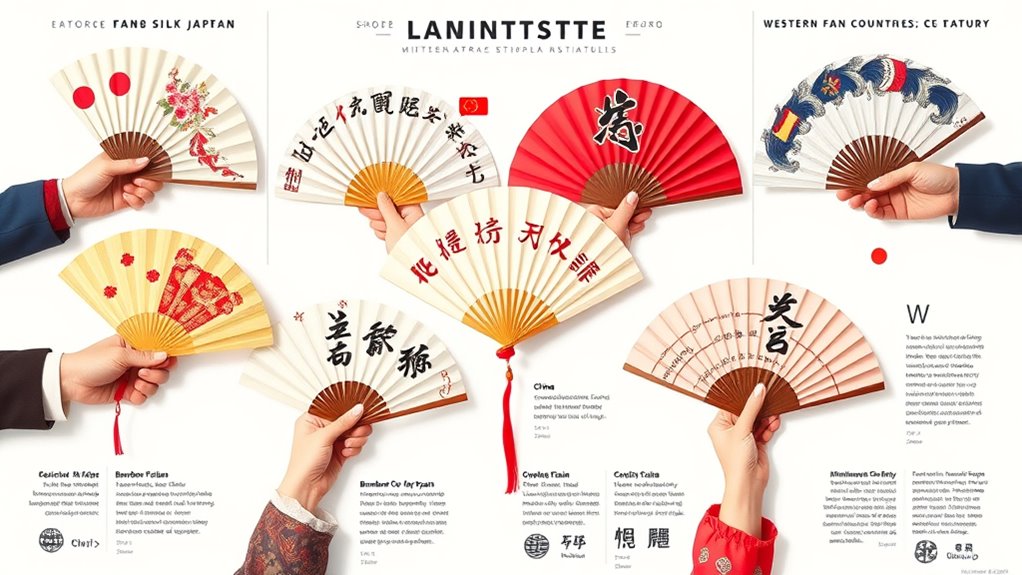

Fan etiquette varies widely across cultures, from how you wave flags and banners to how you applaud and cheer. Respectful gestures, body language, and traditional greetings like bows or handshakes help you connect positively with others. Use noise makers considerately, dress appropriately, and observe silence during ceremonies. Embracing these customs shows respect and fosters enjoyable celebrations everywhere. If you want to understand these differences deeply, there’s plenty more to explore below.
Key Takeaways
- Respect local gestures, such as bowing or handshakes, which vary widely across cultures to show respect or camaraderie.
- Understand different applause styles—gentle, loud, rhythmic—that symbolize enthusiasm or respect depending on the country.
- Follow specific flag and banner etiquette, ensuring respectful waving and display to honor cultural sensitivities.
- Recognize silence and noise levels during ceremonies or sports events to demonstrate reverence or enthusiasm appropriately.
- Dress in culturally appropriate attire, including team colors and traditional garments, to show support and respect during celebrations.
Celebrating With Flags and Banners

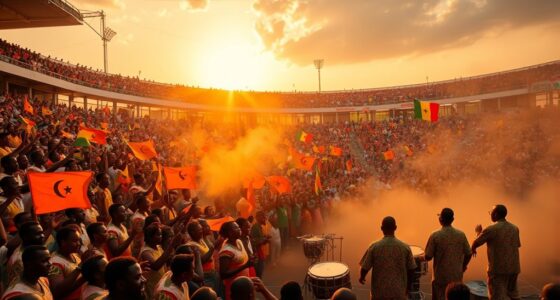
Have you ever wondered why fans wave flags and banners during major events? It’s a powerful way to show support and unity. Flag waving isn’t just about color; it’s a visual expression of pride for your team or country. When you display banners, you’re creating a vibrant atmosphere that energizes the crowd. Banner displaying often features team slogans, player names, or national symbols, making your message clear and impactful. These acts of celebration help foster a sense of belonging among fans and communicate your enthusiasm. Whether you’re holding a flag or a banner, your active participation elevates the event’s excitement. Respectful flag waving and banner displaying are essential parts of fan etiquette, contributing to a positive and spirited environment. Additionally, understanding fan etiquette ensures that celebrations remain respectful and enjoyable for everyone involved.
Applauding and Cheering Styles
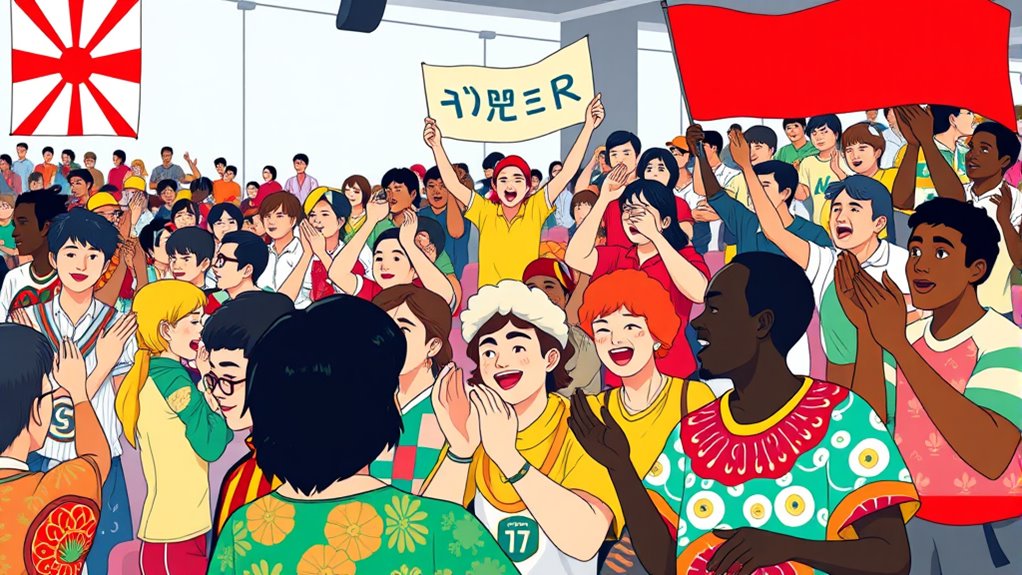
Across cultures, the way you applaud and cheer varies widely, from specific clapping techniques to vocal exclamations. You might notice different sounds, rhythms, or gestures that carry cultural meaning. Exploring these styles reveals how applause reflects respect, enthusiasm, and social norms worldwide.
Clapping Techniques Around World
Clapping techniques vary markedly around the world, reflecting cultural norms and social contexts. In some countries, like Japan, applause etiquette emphasizes modesty and restraint, with slow, gentle claps. In contrast, parts of Africa and Latin America feature energetic, thunderous applause that engages the entire audience. Cheering traditions shape how audiences express appreciation, whether through rhythmic clapping or loud ovations. Understanding these differences helps you respect local customs and avoid social faux pas. Here’s a comparison of common clapping styles:
| Region | Clapping Style | Cultural Context |
|---|---|---|
| Japan | Slow, soft, restrained | Formal events, concerts |
| USA | Fast, enthusiastic, loud | Sports, concerts |
| Africa | Rhythmic, vigorous clapping | Celebrations, festivals |
| Europe | Moderate, polite applause | Theatre, classical events |
| Latin America | Energetic, continuous cheering | Sports, concerts |
A better understanding of these customs can enhance cross-cultural communication and show respect for local traditions.
Vocal Cheers and Shouts
Vocal cheers and shouts are powerful ways audiences express enthusiasm and support during performances and events. Your vocal cheers can energize performers and create a lively atmosphere. Different cultures have unique shouting customs; some encourage loud, coordinated chants, while others prefer quieter, more subdued vocal expressions. In certain countries, shouting the performer’s name or specific phrases shows admiration. In others, whistling or stomping might accompany cheers. It’s important to understand local customs to avoid offending others or disrupting the event. Your enthusiasm through vocal cheers demonstrates your appreciation, but always be mindful of the setting and audience. Respecting shouting customs ensures your support is positive and culturally appropriate, helping everyone enjoy the experience. Additionally, actively engaging in creative practice can enhance your ability to communicate support through vocal expressions and shared enthusiasm.
Cultural Significance of Applause
Applause and cheering styles carry deep cultural meanings that go beyond simple expressions of approval. They reflect unique applause customs and symbolism that vary worldwide. In some cultures, loud, enthusiastic clapping shows shared excitement, while in others, subtle hand gestures convey respect. Understanding these differences helps you appreciate the cultural significance behind applause. For example:
| Culture | Applause Customs | Applause Symbolism |
|---|---|---|
| Japan | Gentle, rhythmic clapping | Respect and humility |
| USA | Loud, energetic applause | Enthusiasm and support |
| Spain | Clapping with whistles | Excitement and celebration |
| China | Slow, measured applause | Formality and admiration |
| Brazil | Rhythmic, samba-style clapping | Joy and community spirit |
Knowing these nuances enriches your understanding of fan etiquette across cultures. Additionally, the global entertainment industry significantly influences how fans express their appreciation in various settings.
Respectful Silence in Ceremonial Events
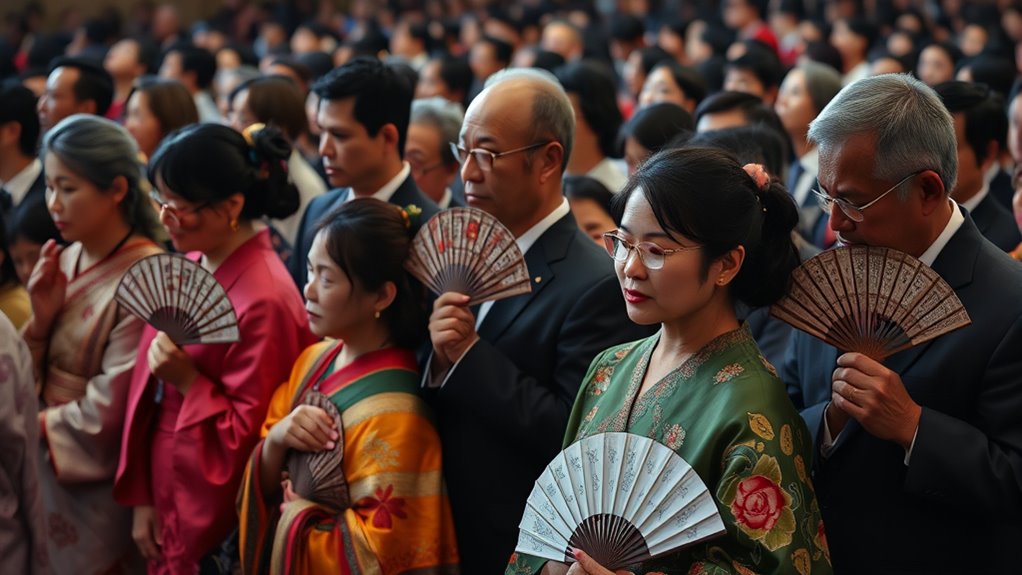
In many cultures, maintaining respectful silence during ceremonial events is a sign of reverence and appreciation. It shows your understanding of quiet reflection and upholds ceremonial decorum. During these moments, your silence helps create an atmosphere of reverence and focus. To honor this tradition, consider these practices:
- Turn off or silence your phone to avoid disruptions
- Refrain from talking or whispering during key moments
- Avoid unnecessary movements that could distract others
- Keep your attention focused on the ceremony
- Show respect through your posture and demeanor
- Being mindful of cultural silence practices demonstrates your respect for diverse traditions.
Gestures and Body Language Norms
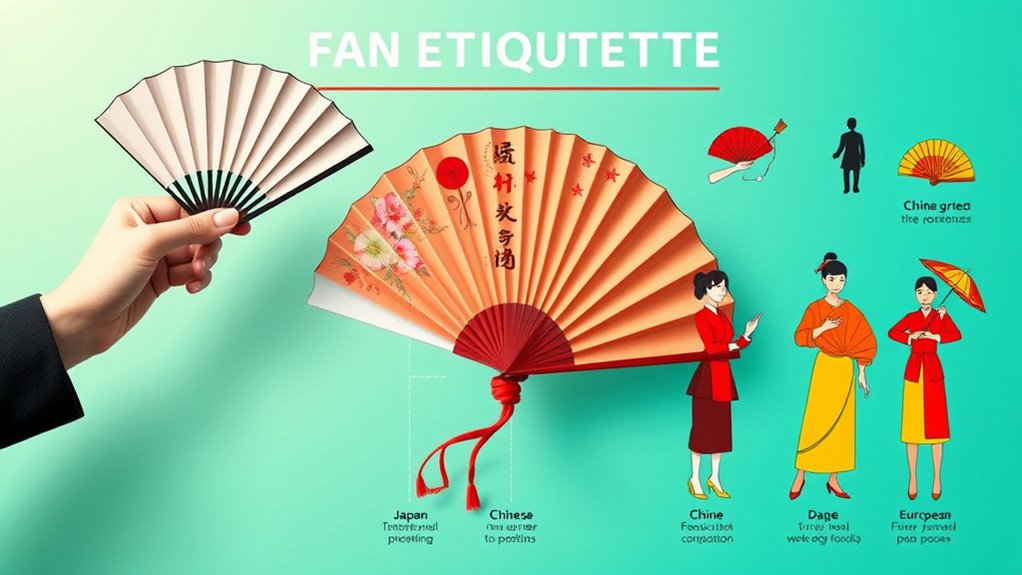
Understanding and respecting gestures and body language norms is essential when attending ceremonies across different cultures. Your gestures and body language can communicate respect, enthusiasm, or even offense. For example, a simple nod might mean agreement in one culture, but could be seen as dismissive elsewhere. Being mindful of these cues shows your cultural awareness. Here’s a quick guide:
| Gesture/Body Language | Meaning in Culture A | Meaning in Culture B |
|---|---|---|
| Thumbs up | Approval | Insult |
| Eye contact | Confidence | Disrespect |
| Bowing | Respect | Formality |
Pay attention to local gestures and body language norms to foster positive interactions and avoid misunderstandings. Additionally, understanding cultural norms around gestures can significantly enhance your communication effectiveness.
Acceptance and Sportsmanship Practices
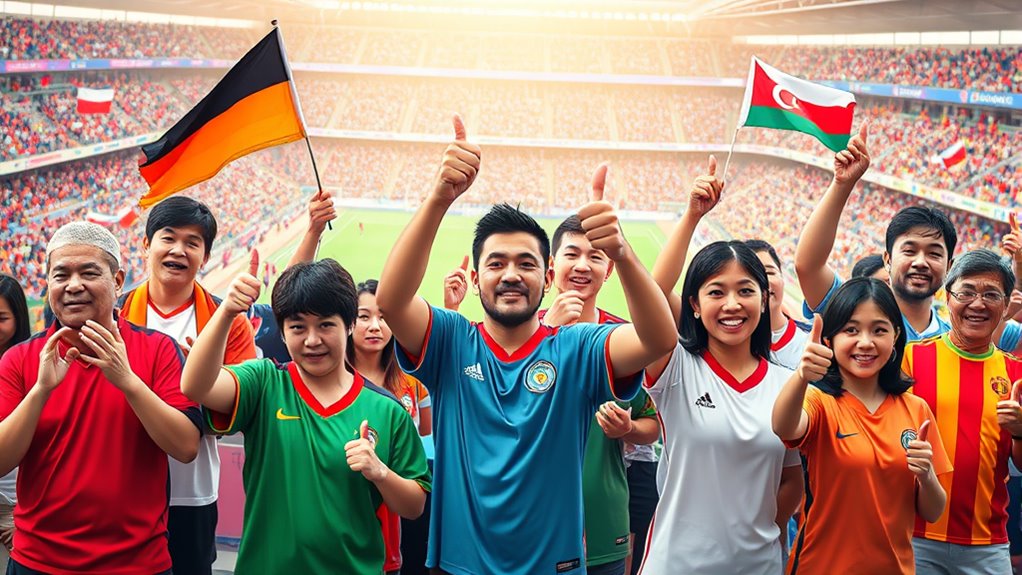
Showing acceptance and good sportsmanship during ceremonies demonstrates respect for all participants and helps create a positive atmosphere. As a fan, your attitude can influence others and reflect your loyalty to your team. Embrace rivalry sportsmanship by celebrating victories graciously and accepting defeats without hostility. Respect opposing fans, even during intense moments, to foster camaraderie. Remember that true fan loyalty extends beyond cheering; it involves supporting fair play and positive conduct. Here are some ways to demonstrate good sportsmanship:
- Congratulate opponents after a game
- Avoid trash-talking or offensive gestures
- Celebrate your team without belittling others
- Respect referees’ decisions
- Keep your enthusiasm respectful and controlled
- Practice respectful conduct in all interactions to promote unity and respect across cultures, strengthening the spirit of the game.
Fan Behavior in Stadiums and Arenas

Maintaining proper behavior in stadiums and arenas is essential to ensuring an enjoyable and respectful environment for all attendees. When participating in fan chants, remember to keep your enthusiasm positive and inclusive, avoiding offensive language or aggressive behavior. Cheering loudly is great, but it shouldn’t drown out others or disrupt the game. Interacting with mascots should be friendly and respectful—avoid intrusive actions or overstepping boundaries. Respect the space of fellow fans, and follow venue rules regarding noise levels and conduct. Avoid trashing seats or belongings, and be mindful of your surroundings. Your respectful attitude helps create a lively yet welcoming atmosphere, making the experience enjoyable for everyone involved. Good fan behavior reflects positively on you and your team. Additionally, being aware of fan etiquette helps promote a safe and enjoyable environment for all spectators.
Rituals and Traditional Greetings

You’ll notice that greetings like bowing and handshakes vary widely across cultures, each carrying unique meanings. These rituals often reflect respect, friendship, or social hierarchy, making them more than simple gestures. Understanding these differences helps you connect better and show proper etiquette wherever you go.
Bowing and Handshakes
Bowing and handshakes serve as important gestures of respect and greeting in many cultures, each carrying its own significance and etiquette. Understanding bowing gestures and handshake customs helps you navigate social situations respectfully.
- In some cultures, a slight bow shows humility, while a deep bow indicates high respect.
- Handshake customs vary: firm grips are common in Western countries, but some Asian cultures prefer a softer touch.
- Maintain eye contact during handshakes to show confidence and sincerity.
- In certain regions, bowing replaces handshakes altogether.
- Always observe local cues—avoid overly aggressive gestures or prolonged bows, which might offend.
- Being aware of affiliate disclosures and privacy policies can also enhance your understanding of cultural norms in digital interactions.
Cultural Greeting Variations
Cultural greeting rituals vary widely around the world, reflecting each society’s values and social norms. As a fan, you might notice different cultural gestures used to show respect or friendliness. In some countries, fan handshakes are common, often involving firm grips or unique variations that symbolize camaraderie. Other cultures prefer gestures like bowing, nodding, or placing a hand over the heart. These customs can differ even within regions, so it’s important to observe and adapt. Understanding these traditions helps you connect respectfully with fans from diverse backgrounds. Recognizing the significance behind each gesture ensures you avoid miscommunication or unintentional offense. Additionally, participating in virtual hackathons can be a way to learn about and experience different cultural approaches to collaboration and greetings in a digital environment. Embracing these variations enriches your experience and deepens your appreciation of different fan cultures worldwide.
Ritual Significance and Meaning
Understanding the rituals behind traditional greetings reveals the deep meanings they carry within different cultures. These gestures often embody ritual symbolism and express cultural meaning beyond simple politeness. For example, a bow in Japan signifies respect, while a handshake in Western countries symbolizes agreement. Recognizing these differences helps you appreciate their significance. Additionally, many of these greetings can vary depending on the context and relationship, reflecting cultural nuances that are important to understand for effective intercultural communication.
Use of Noise Makers and Musical Instruments
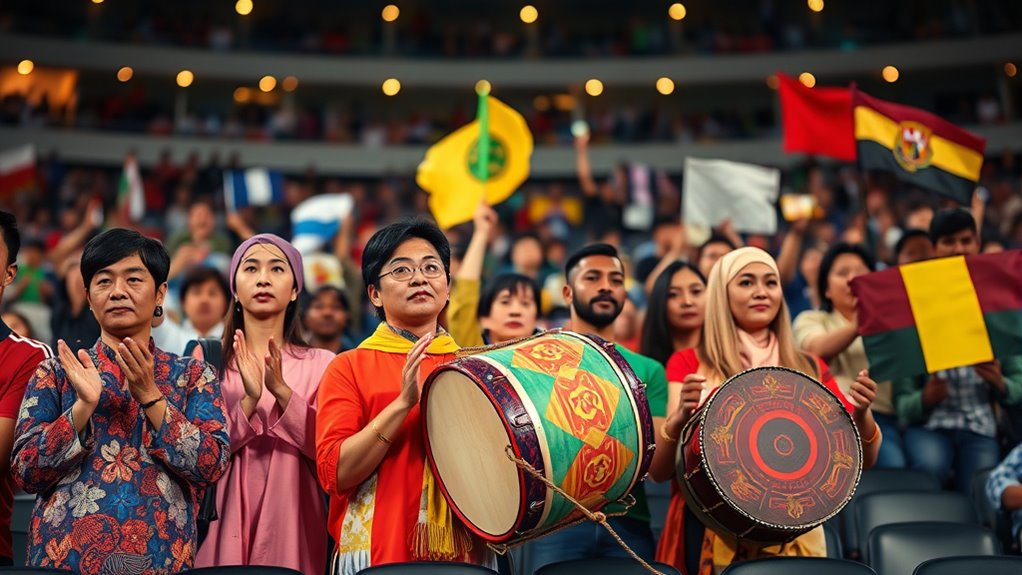
Using noise makers and musical instruments during celebrations can energize the atmosphere, but customs vary widely across cultures. You should be mindful of noise maker etiquette, which often involves knowing when and how loudly to use them. In some cultures, loud clapping or banging drums is encouraged, while others prefer quieter celebrations. Musical instrument customs also differ; in certain regions, instruments like drums or horns are central to the event, and their use is highly coordinated. Respect local traditions by observing how locals incorporate noise makers and instruments. Avoid disrupting the event’s flow or offending others with excessive noise. Understanding these cultural nuances guarantees you participate respectfully, honoring the significance of the celebration while contributing to the lively atmosphere. Additionally, awareness of industry trends can help you adapt your participation to fit the specific context of the event.
Dress Codes and Symbolic Attire
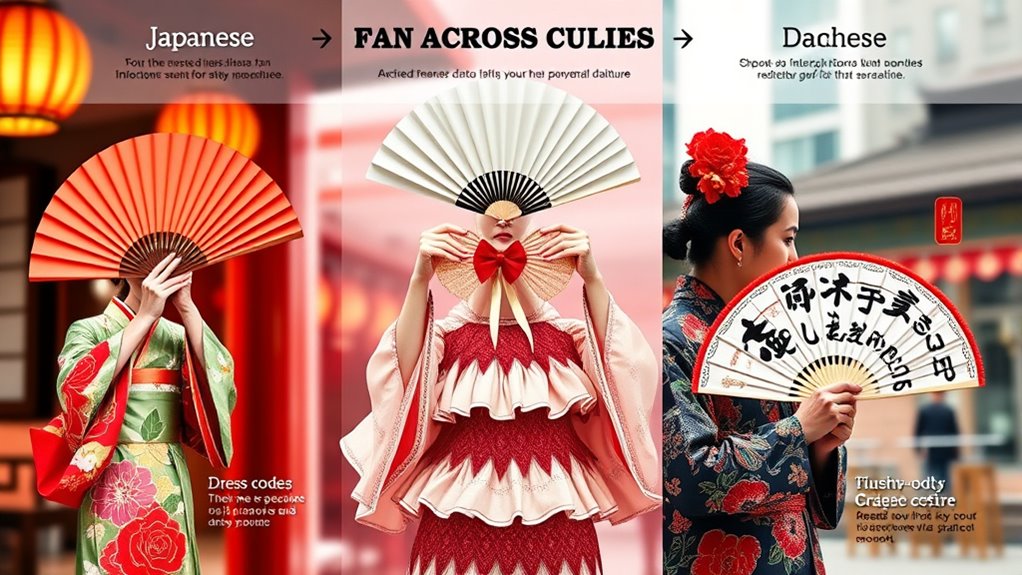
Have you ever wondered why certain outfits are expected at specific celebrations? Dress codes and symbolic attire are key parts of fan etiquette across cultures. Attire symbolism often reflects respect, tradition, or allegiance. Understanding dress expectations helps you blend in and honor local customs. For example:
- Wearing team colors to show support
- Donning traditional garments during cultural festivals
- Avoiding inappropriate clothing that disrespects customs
- Adding accessories with cultural significance
- Following specific guidelines for formal or informal events
- Selecting appropriate tire pressure for comfort and safety during outdoor festivities
These dress choices convey respect and connection to the event’s meaning. Recognizing attire symbolism ensures you participate appropriately and avoid misunderstandings. Respectful dress is a universal sign of appreciation and solidarity in fan environments worldwide.
Digital and Social Media Fan Engagement
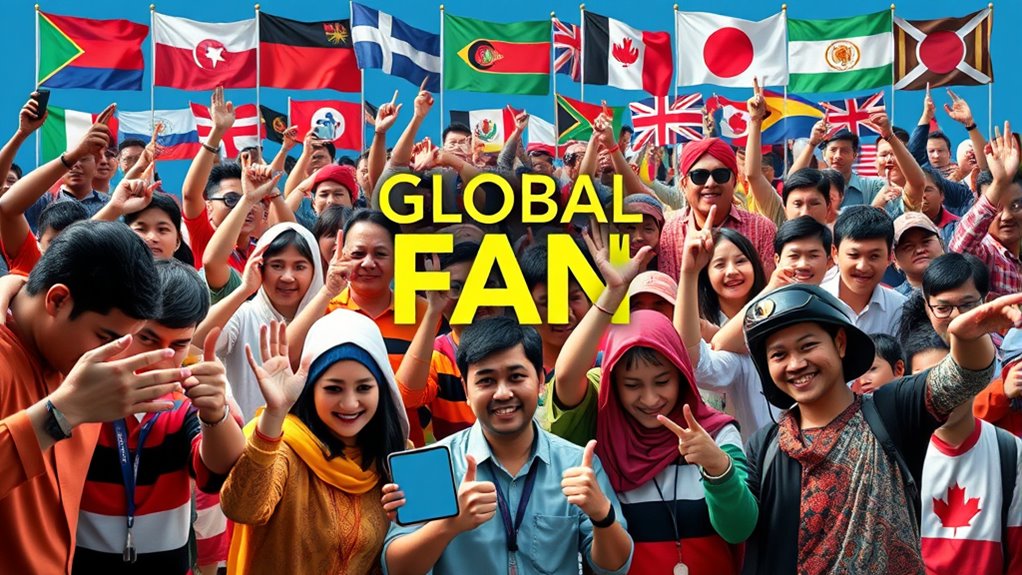
When engaging with fans online, it’s important to respect boundaries and avoid overstepping personal space. You should aim to contribute positively and respectfully, fostering a welcoming environment. Sharing thoughtful content helps build genuine connections and shows your appreciation for your community. Being aware of support hours can also help you plan the best times to interact and ensure your questions are answered promptly.
Respect Online Boundaries
Respecting online boundaries is essential when engaging with fans on digital and social media platforms. Maintaining clear online boundaries shows you value fan respect and helps prevent misunderstandings. To honor these boundaries, consider these key practices:
- Avoid oversharing personal information about yourself or others
- Respond professionally, even when faced with negative comments
- Don’t pressure fans for personal details or interactions
- Respect fans’ privacy by not sharing their comments or messages without permission
- Limit direct messaging to appropriate contexts and avoid spamming
- Recognize the importance of emotional distance in maintaining healthy interactions and preventing unintended emotional entanglements.
Engage Positively Respectfully
Engaging positively and respectfully on digital and social media platforms helps build genuine connections with fans. Your fan manners and respectful gestures show appreciation without crossing boundaries. When commenting or replying, keep your tone friendly and considerate. Avoid negative or confrontational language, as it can harm the community. Recognizing diverse perspectives fosters inclusivity and respect. Here’s an emotional snapshot of respectful engagement:
| Respectful Behavior | Impact on Community |
|---|---|
| Sending kind comments | Creates a welcoming environment |
| Avoiding insults | Maintains a positive space |
| Appreciating others | Builds mutual respect |
| Respecting privacy | Shows genuine respect for boundaries |
Furthermore, understanding community standards is essential to ensure your interactions remain appropriate and supportive.
Share Thoughtful Content
Sharing thoughtful content on digital and social media platforms allows fans to contribute meaningfully to the community. By sharing insightful posts, photos, or videos, you foster positive fan interactions and support team spirit. When engaging online, consider the importance of stadium etiquette even in digital spaces—respect others’ opinions and avoid offensive language. To make your contributions stand out, try these approaches:
- Share memorable game moments with respectful comments
- Highlight players’ achievements positively
- Avoid spreading rumors or unverified information
- Celebrate diverse fan perspectives inclusively
- Engage with others’ content thoughtfully and politely
Frequently Asked Questions
How Do Different Cultures Interpret Respectful Fan Behavior?
Different cultures interpret respectful fan behavior through various fan gestures and stadium conduct. You might find that in some countries, cheering loudly and waving flags shows support, while others prefer quiet admiration. Respectful behavior varies, so you should observe local customs—such as avoiding overly aggressive gestures or disruptive noise. By understanding these cultural differences, you guarantee your actions are respectful and appreciated, creating a positive experience for everyone involved.
What Are Common Fan Etiquette Mistakes Worldwide?
You should be aware that common fan etiquette mistakes worldwide include inappropriate fan gestures and disruptive stadium behavior. Sometimes, fans forget to respect personal space or cheer loudly at the wrong moments, which can annoy others. Avoid excessive chanting or waving flags in a way that blocks views. By staying mindful of these behaviors, you help create a more enjoyable atmosphere for everyone, regardless of the cultural norms you’re familiar with.
Are There Universal Rules for Cheering Loudly?
Did you know that 78% of fans believe cheering loudly is essential for a great game? While there’s no strict universal rule for cheering customs, maintaining good fan decorum means respecting others’ space and avoiding excessive noise. You can cheer passionately, but always stay mindful of the environment. By balancing enthusiasm with courtesy, you contribute positively to the game atmosphere, no matter where you’re cheering from.
How Do Cultural Norms Influence Fan Dress Codes?
Cultural norms greatly influence fan dress codes, shaping what you wear to show support. In some cultures, traditional dress and specific color symbolism are essential—like wearing bright red in China to symbolize good luck, or donning national colors during events. You’re encouraged to respect these customs, so your attire aligns with local traditions and meanings, enhancing your connection and showing cultural appreciation through your fan wardrobe choices.
What Are the Consequences of Disrespectful Fan Actions Internationally?
Imagine the ripple effect of disrespect—your sportsmanship violations can spark tensions, harm fan safety protocols, and create international conflicts. When you ignore cultural norms, you risk facing angry crowds, bans, or even violence. Respecting local fan etiquette isn’t just polite; it’s essential for harmony. Your actions influence everyone’s safety and enjoyment, reminding you that good sportsmanship transcends borders, fostering unity rather than division across cultures.
Conclusion
Understanding fan etiquette across cultures is like decoding a vibrant tapestry—each thread revealing unique traditions and shared passions. By respecting diverse celebrating styles, gestures, and dress codes, you become part of a global community united through enthusiasm. Embrace these differences, for they’re the colors that make the world’s fandoms truly kaleidoscopic. When you honor these customs, you don’t just watch a game—you become part of a story woven with respect, passion, and connection.