TL;DR

Get sports gear delivered free — and shop member deals
- Fast, free delivery on millions of items
- Access to Prime Big Deal Days deals on October 6–7
- Prime Video, Amazon Music and more included
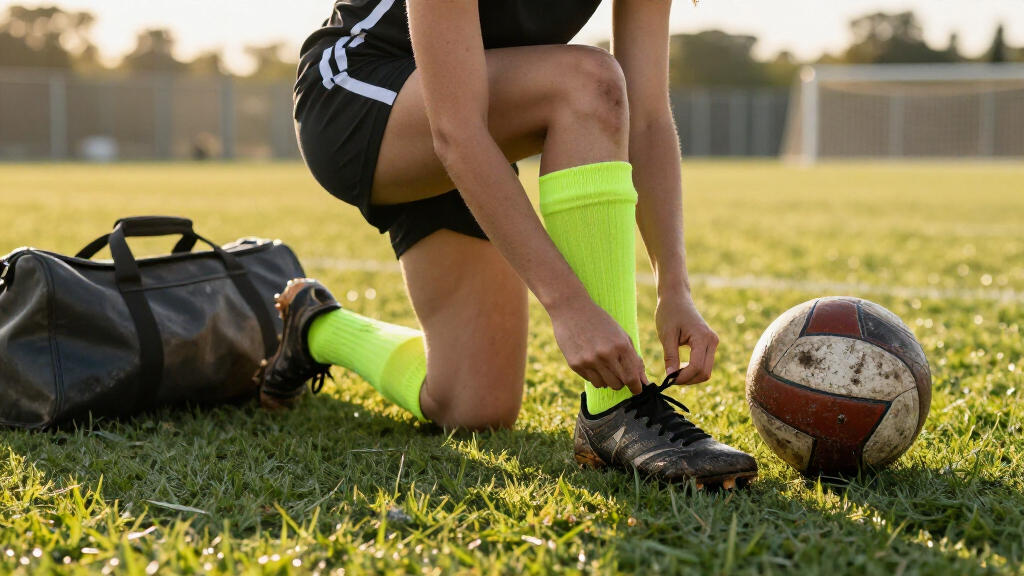
Outdoor football gear comes down to four essentials: firm-ground boots matched to your surface, a properly sized ball, weather-appropriate layers, and shin guards you’ll actually wear. Cheap gear rarely causes bad games — wrong gear does. Match your boots to your surface and build up training load gradually to avoid injury.
Your boots are lying to you. If you bought screw-in studs because they looked professional, and you play on a dry municipal pitch that’s basically concrete with grass paint on it, you’ve been running on pegs all season. That ankle ache? Probably not your ankles. Probably your gear.
Outdoor football is one of the cheapest sports to start and one of the easiest to over-spend on. Walk into any sports store and you’ll face a wall of boots ranging from $30 to $300, balls from $15 to $160, and enough “performance apparel” to outfit a Champions League squad. Most of it won’t make you better. A few pieces genuinely will.
This guide covers what actually matters: boots matched to your surface, a ball you can control in any weather, layers that keep you playing through winter, and the protection that keeps you off the physio table. Real numbers, real tradeoffs, no sponsor talk.
Pick boots by surface first: FG for firm grass (~80% of players), AG for turf, SG only for genuinely soft, wet pitches.
Butyl-bladder training balls ($30–$60) hold pressure 3–4x longer than latex match balls and survive rough surfaces — the smart buy for most players.
Never wear cotton as a base layer; a snug synthetic or merino base layer is the highest-value cold-weather purchase.
Shin guards are the only injury-reducing gear in football and are mandatory under the Laws of the Game — fit them to cover shin to below the knee.
A complete quality kit costs $150–$200 in this order: boots, shin guards, ball, base layers, accessories — skip replica jerseys and flagship boots.
How to Pick Boots That Match Your Pitch (Not Your Ego)
Outdoor football boots should be chosen by surface first, price second. The stud pattern — not the brand, not the price tag — determines grip, comfort, and injury risk. A $60 boot with the right sole beats a $250 boot with the wrong one every single time.
Here’s the surface decoder most beginners never get told:
| Sole type | Surface | Best for |
|---|---|---|
| FG (Firm Ground) | Natural grass, mostly dry | ~80% of outdoor players |
| SG (Soft Ground) | Wet, muddy, soft grass | Winter leagues, wet climates |
| AG (Artificial Grass) | 3G/4G turf | Tuesday-night leagues on turf |
| FG/AG hybrid | Both, alternately | Players who mix surfaces weekly |
The classic mistake: buying SG screw-in studs for a firm summer pitch. Longer studs sink unevenly on hard ground, locking your foot while your knee keeps rotating. That mechanism — foot planted, knee twisting — is a leading cause of non-contact ACL and ankle injuries in amateur football.
Fit matters more than features too. Football boots should fit snugly with about a thumb’s width of space at the toe — tighter than running shoes, never painful. Leather uppers stretch about half a size; synthetic uppers barely stretch at all. Buy synthetics true to size.
Rule of thumb: if you can’t decide between two surfaces, buy the FG/AG hybrid. It gives up a little grip on each and saves you from a second pair.
The One Ball Spec That Changes How You Play
A football’s size and construction matter more than its brand. Adults play with a size 5 ball (circumference 68–70 cm), and the construction type determines how it behaves in rain, cold, and over a full season of abuse.
There are three tiers, and the differences are physical, not marketing:
- Match balls ($100–$160): thermal-bonded seams, latex bladder. True flight, soft touch, but latex loses air in days and the ball hates gravel.
- Training balls ($30–$60): machine-stitched or hybrid, butyl bladder. Holds air for weeks, survives concrete. The sweet spot for 90% of players.
- Pvc street balls ($10–$20): fine for the park, heavy when wet, deadens your first touch.
Here’s the spec almost nobody checks: butyl bladders retain pressure roughly three to four times longer than latex. If you play once or twice a week, that’s the difference between a ball that’s ready and a ball that needs pumping every session.
A real example: my Sunday league switched from a cheap PVC ball to a mid-tier training ball two seasons ago. Sudden death from long throws dropped noticeably — partly better players, mostly a ball that didn’t balloon every time someone hit it from 30 yards. Cheap balls fly like they’re angry at you.
One more thing: check the FIFA Quality Pro or IMS stamp if you want guaranteed consistency. It’s a real testing standard, not a sticker.
Dress for the Weather You’ll Actually Play In
Outdoor football clothing works on a simple layering principle: a sweat-wicking base, optional insulating middle, and a thin protective outer. Cotton sits nowhere in that system — it absorbs sweat, then turns cold and heavy the moment you stop moving.
Think about a January match: you’re boiling in the first half, then you sub off and the sweat chills against your skin within minutes. A polyester or merino base layer moves that moisture outward instead of holding it. That’s the whole trick. No magic fabric, just physics.
- Base layer ($25–$50): tight-fitting synthetic or merino. The non-negotiable winter piece.
- Training jacket ($40–$80): lightweight, water-resistant shell for warm-ups and the bench.
- Gloves and headband: keeper gloves only for keepers; a thin beanie or headband for everyone else below about 40°F (4°C).
- Snood: optional, but genuinely useful in cold wind — and legal in most leagues.
Socks deserve a mention because they’re doing structural work. Proper football socks are thicker at the sole and hold shin guards in place. If yours slide down every ten minutes, that’s a fit problem, not a you problem — try a size up or a sock sleeve.
Shin Guards and the Gear That Keeps You Playing
Shin guards are the single piece of football equipment proven to reduce injury, and most recreational players either skip them or wear ones two sizes too small. FIFA’s Laws of the Game make them mandatory — not as bureaucracy, but because a stud to an unprotected shin can fracture the tibia.
You have two real options:
- Slip-in guards: lightweight, cheap, need sock sleeves or tape. Better for speed of play.
- Ankle-guard versions: heavier, with padded stirrups protecting the ankle bones. Better if you get kicked a lot or you’re returning from an ankle injury.
Ankle sprains account for roughly 20–30% of all football injuries, according to sports medicine research — so that extra ankle padding isn’t paranoia, it’s arithmetic.
Fit rule: the guard should cover most of your shin from just above the ankle to below the knee, and stay put when you run. If it rotates, it’s protecting nothing.
The best gear investment isn’t the flashiest one — it’s the one that keeps you available for next week’s match.
Two honorable mentions: a water bottle (dehydration measurably wrecks decision-making after 60 minutes), and a small pump with a needle, because someone always forgets one.
Build Your Kit Without Wrecking Your Budget
A complete, quality outdoor football kit costs about $150–$200 if you buy in the right order. Spend on what touches the ground and your body; save on everything else. Here’s the priority order:
- Boots matched to your surface ($60–$100): the highest-impact purchase. Wrong studs = injury risk.
- Shin guards ($15–$30): cheapest injury insurance in sport.
- A mid-tier training ball ($30–$50): buy one good one, not three bad ones.
- Two base layers ($50–$70 total): so you always have a dry one.
- Sock sleeves and accessories ($10–$20): the finishing touches.
Notice what’s missing: replica jerseys, $250 boots, and branded training pants. Replica shirts are fan gear — lovely, but they’re fashion cut, not athletic cut. Wear what moves.
Mid-range boots from the major brands frequently share outsoles with their flagship models — the difference is mostly upper material and weight, maybe 40–60 grams. Unless you play competitively, you will not feel that difference. You will feel $190 saved.
One fitness note, because gear and body work together: if you’re new or returning after a break, add training load gradually — the 10% rule of increasing weekly volume is a reasonable starting point — and consider a few sessions with a qualified coach to fix movement patterns before they become habits. The best boots in the world can’t out-run a preventable injury.
Frequently Asked Questions
Can I wear firm-ground boots on artificial turf?
Occasionally, yes — but it’s not ideal. FG studs are slightly longer and grip too aggressively on turf, which stresses knees and ankles. If you play on 3G/4G turf regularly, buy AG-specific boots or an FG/AG hybrid. The hybrid is the practical choice if you split your week between grass and turf.
How much should I spend on my first pair of football boots?
Between $60 and $100 gets you a durable boot that shares its outsole with flagship models. Below $40 you usually get poor stud placement and stiff uppers that blister. Above $150 you’re paying for weight savings of 40–60 grams that beginners won’t notice. Prioritize fit and the correct sole type over brand tier.
Do I really need shin guards for casual kickabouts?
Yes. Shin guards are mandatory in organized football under the Laws of the Game, and for good reason — a misplaced stud or block tackle to an unprotected shin can cause a tibial fracture. Even in casual games, a $15 pair of slip-in guards weighs almost nothing and removes the most common contact injury from the table.
What size football do adults use?
Adults play with a size 5 ball (68–70 cm circumference, 410–450 g). Size 4 is for ages 8–12 and size 3 for younger kids and futsal-style play. For outdoor adult play, look for FIFA Quality Pro or IMS certification if you want guaranteed flight and bounce consistency.
How do I keep warm playing football in winter without overheating?
Layer thin, not thick. Wear a tight synthetic or merino base layer under your kit, add a lightweight jacket for warm-ups, and remove it before kickoff. Avoid cotton entirely — it holds sweat and chills you when you stop moving. A headband or thin beanie below about 40°F (4°C) covers the rest, since you lose heat fastest through your head during low-intensity periods.
Conclusion
Strip away the marketing and outdoor football gear comes down to one principle: match the equipment to the surface and the body, then stop shopping. Right studs for your pitch, right ball for your schedule, right layers for your winter, and shin guards that stay put. That’s the whole list.
Next time you lace up, look down. If your boots match the grass beneath them, you’ve already won the part of the game that happens before kickoff.
NFL season / tailgating Picks
team gear
As an affiliate, we earn on qualifying purchases.