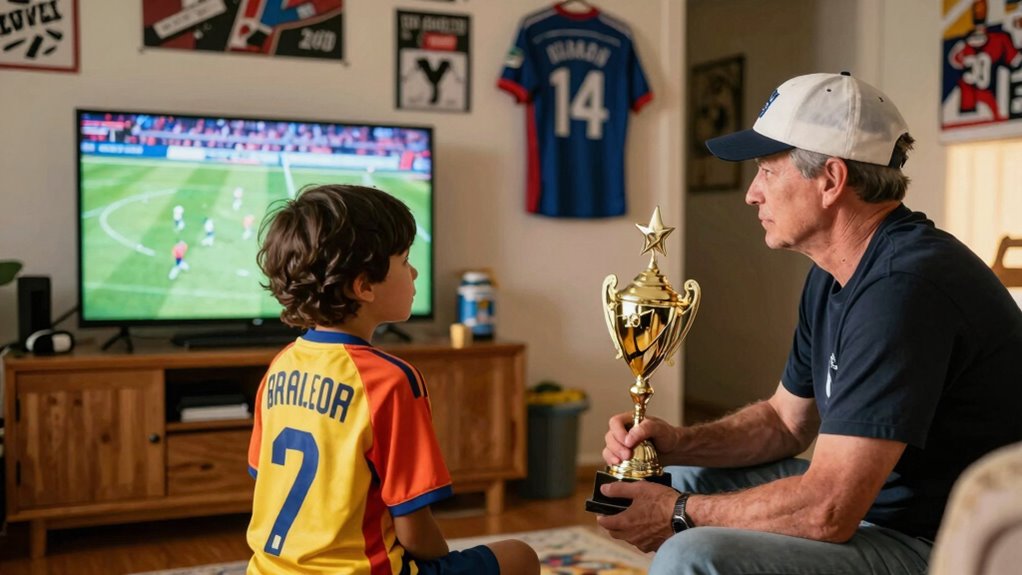

Jealousy over sports often shows up in mixed households because it’s tied to personal pride and identity. When family members support different teams, tensions can simmer beneath the surface. Celebrations and losses trigger strong emotions like envy, rivalry, or resentment. Loyalty feels deeply personal, making arguments feel like personal challenges. Understanding these feelings can help you manage them better, and if you keep exploring, you’ll discover ways to foster harmony amid the rivalry.
Key Takeaways
- Strong team loyalty links personal identity to sports, causing jealousy when family members support opposing teams.
- Celebrations and victories evoke intense emotional responses, leading to envy or pride-driven resentment.
- Fantasy leagues deepen personal investment, fueling jealousy when family members outperform or criticize each other.
- Supporting different teams can create subtle rivalries and tension within household relationships.
- Recognizing emotions as normal fosters understanding, helping households navigate sports-related jealousy harmoniously.

Living in a mixed household where family members support different sports teams can sometimes spark feelings of jealousy or rivalry. It’s natural to feel a twinge of envy when you see someone close to you passionately celebrating their team’s victories, especially if your own team isn’t doing as well. This is often intensified by the way each person’s sense of identity and loyalty gets tied to their team. When you cheer for one team and your family member cheers for another, those differences can create subtle tensions, even if no one intends it. You might find yourself wishing your favorite team had more fan support at home or feeling annoyed when someone dismisses your team’s chances. These feelings are common, but they’re also rooted in deeper aspects of team loyalty and personal pride. Understanding the emotional impact of team loyalty can help you navigate these moments more smoothly.
Supporting different teams at home can spark subtle tensions rooted in loyalty and pride.
Fantasy leagues add another layer to this dynamic. If you’re part of a fantasy league, your investment in players and game outcomes becomes even more personal. When your fantasy team outperforms or underperforms, you naturally want validation. If a family member’s team is winning or their player makes a crucial play, you might feel a pang of jealousy, especially if you’ve been rooting for the same team but are now competing against each other in fantasy. It’s easy to get caught up in the competitive spirit, but it can also lead to underlying resentment, especially if you start to compare your success or failure to theirs. These feelings can create a subtle rivalry that threatens to overshadow the enjoyment of the sport itself. Recognizing the emotional connection we have with our teams can help in managing these complex feelings. Sometimes, sharing your perspectives about team rivalries can also open up opportunities for understanding and connection rather than division.
Your team loyalty shapes your emotional experience. When your allegiance is strong, any victory feels personal, and losses can feel like personal setbacks. If your family members support the opposing team, you might find yourself subtly resenting their joy during a game or feeling defensive when they tease your team. This isn’t about the sport itself but about the way loyalty becomes intertwined with personal identity. It’s natural to want to defend your team’s honor and feel proud of their achievements, but when that pride turns into envy or jealousy, it can cause friction in what should be a supportive environment.
Ultimately, these feelings of jealousy or rivalry aren’t signs of a broken household—they’re indicators of how deeply sports and team loyalty can influence us. Recognizing that these emotions are normal helps you navigate them better. By understanding that everyone’s passion comes from a genuine place, you can foster a more accepting atmosphere at home. Celebrate each other’s favorites, share your own victories, and remember that the love of the game should bring people closer rather than drive them apart.
sports fan household tension relief products
As an affiliate, we earn on qualifying purchases.
As an affiliate, we earn on qualifying purchases.
Frequently Asked Questions
How Can Parents Foster Healthy Sports Rivalries in Mixed Households?
You can foster healthy sports rivalries by emphasizing sportsmanship education and maintaining open parental communication. Encourage your children to cheer for their team while respecting others’ favorites. Remind them that winning isn’t everything and that camaraderie matters more. Stay involved by discussing feelings and setting clear boundaries. Your active guidance helps children learn to enjoy rivalries without jealousy, promoting respectful competition and positive relationships in your mixed household.
What Are Common Signs of Sports Jealousy Among Children?
You notice signs of sports jealousy when your child shows favoritism, withdraws during sibling rivalry, or becomes overly competitive. They might boast excessively, sulk after losses, or criticize others’ sports skills. These behaviors reflect their struggle with sports competition and sibling rivalry, revealing underlying feelings of insecurity, resentment, or longing for recognition. Recognizing these signs helps you address their emotions and foster healthier, more balanced sibling relationships.
How Does Sports Jealousy Impact Sibling Relationships?
Sports jealousy can strain sibling relationships by fueling emotional rivalry and sibling competition. You might notice tension during games or when achievements aren’t equally celebrated. This jealousy can create feelings of resentment, making it harder for siblings to bond. To reduce this, encourage shared interests, praise individual strengths, and promote teamwork. Address feelings openly, helping your children see that supporting each other’s successes strengthens their relationship rather than tearing it apart.
Are There Age-Specific Strategies to Address Sports Jealousy?
Yes, there are age-specific strategies to address sports jealousy. For younger kids, focus on jealousy management by emphasizing teamwork and personal growth rather than winning. For teens, encourage open conversations about sports rivalry feelings and validate their emotions. Tailor your approach to their developmental stage, helping them build confidence and sportsmanship. This targeted approach helps reduce jealousy, fosters healthy sibling relationships, and promotes a positive attitude towards sports competition.
How Can Coaches Support Children Experiencing Sports Jealousy?
You can support children experiencing sports jealousy by addressing sports rivalry and sibling competitiveness openly. Encourage them to focus on personal growth and teamwork instead of comparison. Celebrate their unique strengths and emphasize effort over winning. As a coach, foster a positive environment where every child feels valued, and remind them that everyone improves at their own pace. This helps reduce jealousy and promotes healthy, supportive relationships among teammates.
Conclusion
Just like Icarus flying too close to the sun, sports jealousy can threaten your household’s harmony. But remember, even in the chaos, there’s room for understanding and growth—like the steady roots of an ancient oak. By acknowledging these feelings, you can turn rivalry into respect and competition into connection. Embrace the journey, knowing that every challenge is an opportunity to build stronger bonds—because, in the end, love and unity always outshine fleeting jealousy.