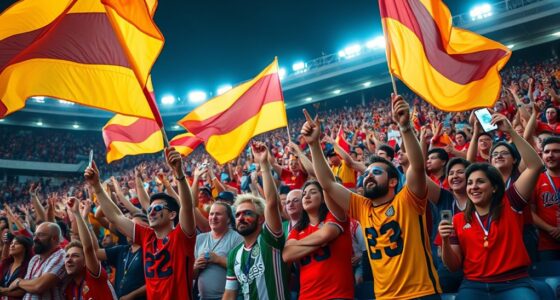

When clubs feel like family, you start to see your team as more than just a group of players; you assign it human qualities, making it like a living entity with motives and emotions. This anthropomorphizing deepens your loyalty, turning victories into personal wins and losses into setbacks. You may even defend the club passionately, viewing it as a close friend. Exploring how this emotional connection shapes your loyalty will reveal even more about your bond with your team.
Key Takeaways
- Anthropomorphizing teams assigns human qualities, making clubs feel like personal friends or family members.
- Fans develop loyalty and emotional bonds by viewing teams as entities with motives and personalities.
- Shared spaces and symbols, like wall organizations, reinforce the perception of the team as a close-knit community.
- Emotional support and celebrations strengthen the sense of team as a family, blurring lines between fandom and personal relationships.
- Believing teams care about fans’ happiness fosters deeper connections, viewing club successes and failures as personal experiences.
When you anthropomorphize teams, you assign human qualities and personalities to groups of players or organizations, making them seem like individuals with motives, emotions, and intentions. This tendency allows you to see your favorite club not just as a collection of athletes, but as a living entity with a personality, struggles, and aspirations. It’s easy to develop a sense of team loyalty when you start perceiving your team as more than just a sports franchise. You begin to believe that they share your values, your passion, and your hopes, creating a deep emotional attachment. This emotional connection transforms watching a game from a simple pastime into a personal experience. When your team wins, it feels like a victory for a close friend or family member, not just a team on the scoreboard. Conversely, losses feel like personal setbacks, fueling frustration or disappointment because you see them as failures of someone you care about deeply. Recognizing wall organization as a way to foster team spirit can further deepen this connection, emphasizing the importance of shared spaces and collective identity.
This emotional attachment isn’t just about rooting for a team; it’s about feeling connected to a community that shares your enthusiasm and identity. You might find yourself defending the team against critics or celebrating their successes as if they were your own. That’s the power of anthropomorphizing — it blurs the line between fandom and personal relationship. Over time, this attachment can become so strong that you start to believe the team has intentions or motives similar to yours. You might think they’re fighting hard because they want to make you proud or because they genuinely care about their fans’ happiness. This perception deepens your emotional bond, making the team a symbol of your loyalty and a source of comfort or pride.
Frequently Asked Questions
How Does Anthropomorphizing Affect Team Performance?
Anthropomorphizing boosts team performance by increasing emotional investment, making members feel more connected. When you see your team as a family, leadership dynamics shift positively, encouraging trust and collaboration. This emotional bond motivates members to excel, as they care deeply about their collective success. However, it’s essential to balance this perception so that personal feelings don’t overshadow objective goals, ensuring the team remains focused and effective.
Can Team Anthropomorphism Lead to Favoritism?
Yes, team anthropomorphism can lead to favoritism bias because you might develop emotional loyalty toward certain members or groups, causing you to favor them over others. This bias can distort your judgment, making you overlook contributions from less favored members. While it strengthens bonds, it risks creating unfair dynamics within the team, so you should be aware of how emotional loyalty influences your perceptions and decisions.
What Psychological Benefits Does Team Bonding Provide?
Team bonding fosters emotional connection and trust building, which boost your overall morale and collaboration. When you bond with teammates, you feel more supported and understood, reducing stress and increasing motivation. This shared emotional connection creates a positive atmosphere, making it easier to communicate and work together effectively. Ultimately, strong team bonds enhance your sense of belonging, leading to better performance and a more enjoyable, cohesive team experience.
Are There Risks in Treating Teams Like Families?
Like a knight facing dragons, you might think treating teams like families is brave, but it can be risky. Hierarchical dynamics may blur authority, causing confusion or favoritism. Emotional investment can lead to bias, making tough decisions harder. If the team’s bond becomes too personal, it might hinder objectivity and accountability. Always balance warmth with professionalism to prevent emotional entanglements from undermining team effectiveness.
How Does Anthropomorphizing Influence Fan Loyalty?
When you anthropomorphize teams, you deepen emotional attachment and reinforce your identity with the club. This personal connection makes you more loyal, as you see the team as part of your family. It’s easier to stay committed during tough times because your feelings are intertwined with the team’s success. Ultimately, this emotional bond boosts fan loyalty, making you more invested and likely to support the club long-term.
Conclusion
When you see your favorite team as more than just players on a field, they become like family members you cheer for through thick and thin. This emotional bond turns victories into shared celebrations and defeats into collective heartbreaks. By anthropomorphizing your team, you give it a heartbeat, a soul, making every game feel personal. Remember, it’s this human connection that transforms mere sports into stories you’ll carry in your heart forever.