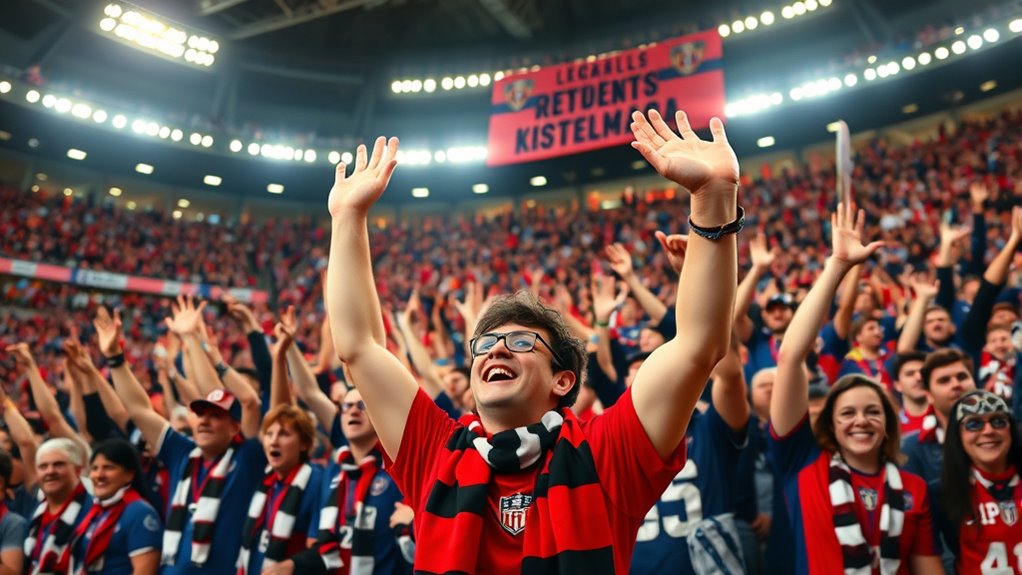

Social Identity Theory explains how you develop a strong sense of belonging as a fan by connecting with a team or community. Through shared traditions, rituals, and group activities, you build cohesion and loyalty. Stereotypes about rivals and external groups further reinforce your identity and trust in your team. Your feelings of attachment and group dynamics drive your behavior and strengthen your loyalty, making your fan experience deeply rooted. If you explore more, you’ll uncover how these processes shape your passion even further.
Key Takeaways
- Social Identity Theory explains how fans derive a sense of belonging through group membership and shared group identity.
- Fans develop stereotypes of rivals, reinforcing “us” versus “them” distinctions and strengthening group cohesion.
- Deepening attachment increases ingroup favoritism and biases, promoting loyalty even during setbacks.
- Shared rituals and traditions foster emotional bonds, enhancing solidarity and commitment within fan groups.
- Group cohesion and perceptions help maintain positive self-image, influencing fan behavior and attitudes towards outsiders.
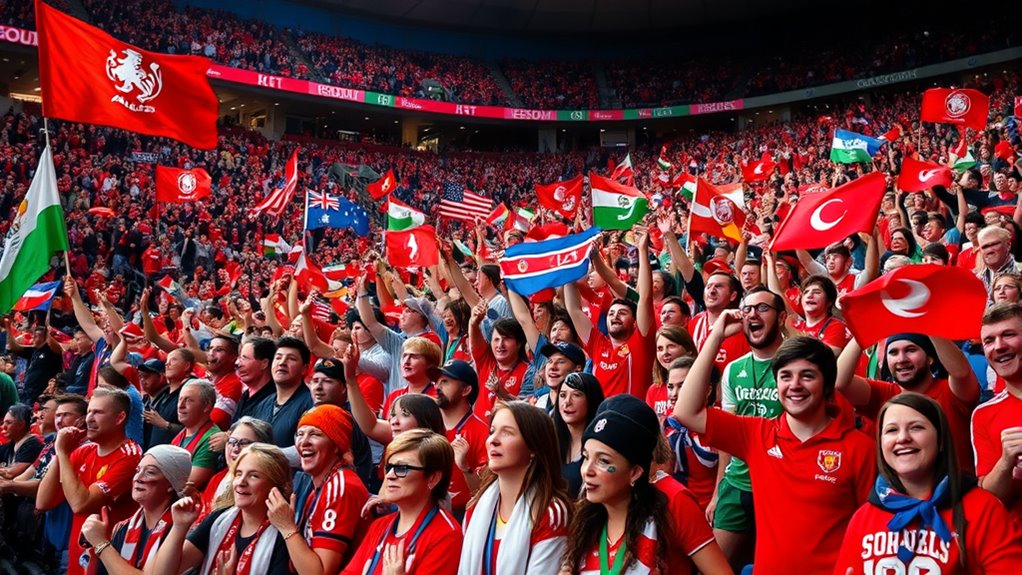
Social Identity Theory explains how fans develop a sense of belonging and loyalty to their favorite teams or brands. When you become part of a fan community, you start to see yourself as connected to others who share your passion. This connection isn’t just about liking a team; it’s about feeling like you’re part of a group that has its own identity. As you engage with fellow fans, group cohesion begins to strengthen. You share rituals, chants, and traditions that unify everyone. These shared experiences create a sense of solidarity, making you feel like you’re part of something bigger than yourself. The more involved you become, the tighter this bond grows, reinforcing your loyalty even during tough times or losses. This sense of belonging fuels your commitment and keeps you coming back.
Within these groups, stereotype formation often takes hold. As a fan, you might develop perceptions about rival teams or opposing fans that simplify complex realities into clear-cut categories. For example, you might see rival teams as “the enemy” or fans of other teams as less loyal or less deserving of respect. These stereotypes help solidify your group identity by distinguishing “us” from “them,” making your loyalty feel even more justified. They serve as mental shortcuts that reinforce your sense of belonging, especially when facing criticism or negative commentary from outsiders. Stereotyping also fosters in-group favoritism, where you see your team and fellow fans as superior or more deserving, which further enhances group cohesion. It’s a way for you to defend your community and maintain your positive self-image within the group.
As your attachment to the group deepens, these stereotypes often become more ingrained. They can influence how you interpret events and interact with others outside your group. For example, when your team wins, you might attribute success to your team’s skill and unity, while blaming external factors or opponents for losses. This bias strengthens your loyalty and reinforces your perception of your group’s superiority. Still, it’s important to recognize that stereotype formation isn’t inherently negative; it’s a natural part of social identity processes that help people feel connected and validated. However, it can also lead to misunderstandings or conflicts if stereotypes become overly rigid or negative. Overall, social identity theory shows how group cohesion and stereotype formation are powerful tools that shape your sense of belonging and loyalty as a fan, driving your behaviors and attitudes toward your team and its rivals.
Frequently Asked Questions
How Does Social Identity Theory Influence Fan Loyalty?
Social Identity Theory influences your fan loyalty by strengthening your sense of group cohesion and identity salience. When you identify with a team, you feel more connected and committed, making you more likely to support them through wins and losses. This sense of belonging boosts your emotional investment, encouraging ongoing loyalty because you see the team as part of your self-image and community.
What Role Does Group Membership Play in Fan Behavior?
Group membership considerably shapes your fan behavior by fostering group cohesion and increasing identity salience. When you’re part of a group, you feel a stronger connection to others who share your interests, which boosts your commitment and loyalty. This sense of belonging encourages you to participate more actively, support your team passionately, and uphold the group’s values, reinforcing your identity as a dedicated fan and strengthening your overall engagement.
Can Social Identity Theory Explain Rivalries Between Fans?
Yes, social identity theory explains rivalries between fans by showing how group loyalty fuels group polarization and intergroup conflict. You might think rivalries are just about sports, but they also stem from strong in-group bonds and differentiation from out-groups. This intensifies emotions and rivalry, making conflicts more personal and deeply rooted in identity. Recognizing this helps you understand why rivalries can escalate beyond just games.
How Does Fan Belonging Impact Mental Health?
Fan belonging can positively impact your mental health by boosting emotional resilience through a sense of community support. When you feel connected to fellow fans, you’re more likely to experience reduced stress and improved well-being. However, it can also have negative effects if rivalries lead to hostility or exclusion. Overall, feeling part of a fan community offers emotional stability, but it’s important to maintain healthy boundaries for your mental health.
What Strategies Do Fans Use to Strengthen Their Group Identity?
You strengthen your group identity by engaging in fan rituals like chanting, wearing team colors, or attending games regularly. These acts foster group cohesion, making you feel more connected to fellow fans. Sharing experiences during these rituals boosts your sense of belonging and loyalty. You also celebrate team wins together, reinforcing your collective identity and deepening your emotional bond within the fan community.
Conclusion
Understanding social identity theory helps you see how fan belonging creates a bridge across differences, like threads weaving a vibrant tapestry. You become part of a larger story, where your passion fuels collective pride and connection. Remember, your sense of belonging isn’t just a flicker; it’s a fire that warms the entire community. Embrace it, for in this shared flame, you find more than just a team—you find yourself.