

When your favorite player gets injured, it can hit you emotionally hard, making you feel disappointed, frustrated, or sad. You might feel a personal connection that feels disrupted, as your loyalty and support are deeply tied to their presence on the field. Watching them sidelined challenges your resilience, but it also shows the strength of your support. Keep going, because understanding how to handle these feelings can help you stay connected and supportive through setbacks.
Key Takeaways
- Injuries cause disappointment and sadness due to personal emotional investment in players.
- Supporting injured players demonstrates loyalty and resilience during setbacks.
- Watching favorites sidelined challenges emotional resilience and can evoke feelings of frustration.
- Viewing injuries as part of athletic growth fosters appreciation for players’ perseverance.
- Enduring support during injuries deepens loyalty and strengthens the fan-player connection.
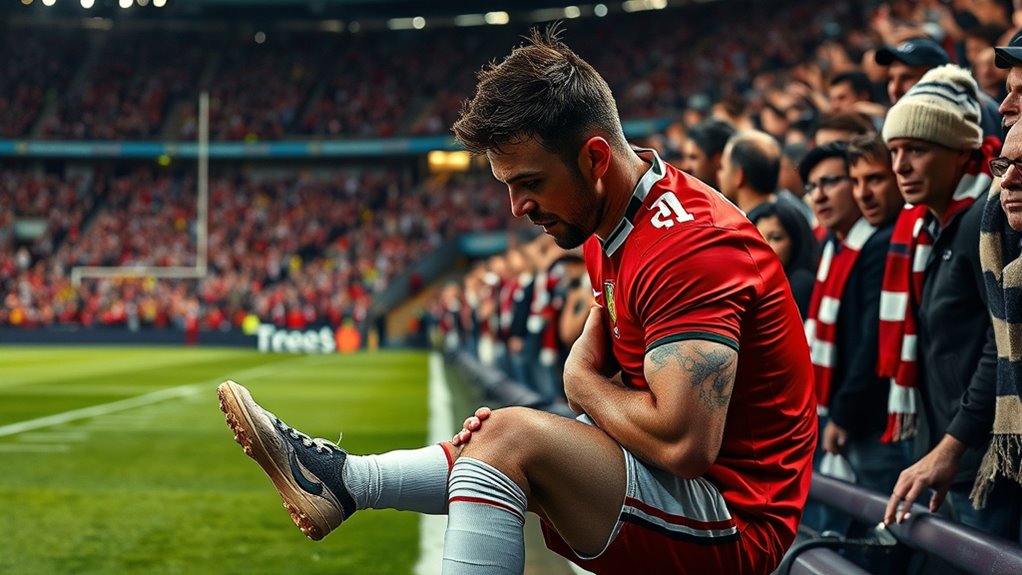
When your favorite players suffer injuries, it can feel like a personal setback, disrupting your connection to the game. You’ve invested time, emotion, and perhaps even a sense of identity in their performances. Their absence on the field or court can evoke feelings of disappointment, frustration, or sadness. It’s natural to feel this way because, over time, you develop a sense of loyalty to these athletes. Their dedication, skill, and resilience inspire you, and their setbacks feel like yours. But this emotional response also tests your emotional resilience—your ability to cope with setbacks and maintain perspective. Recognizing that injuries are part of sports helps you rebuild your connection and preserve your passion for the game, even during tough times.
Injuries test our loyalty and resilience, but embracing setbacks deepens our passion for the game.
When a player you admire gets injured, your initial reaction might be disappointment or even anger. You might question why such a talented athlete has to face this hardship, especially when they’ve worked so hard to excel. However, understanding the importance of player loyalty can help you stay committed to supporting your favorite athletes through thick and thin. Loyalty isn’t just about cheering when they win; it’s about standing by them when they face adversity. This mindset encourages you to appreciate their resilience and the effort they put into recovery. It reminds you that injuries are temporary and that true loyalty involves supporting them as they return to their best form.
Your emotional resilience is tested when you see your favorite players sidelined. It can be difficult to watch them struggle or miss out on vital games. But instead of letting disappointment take over, try to shift your focus to their journey of recovery. Celebrate their determination, and remind yourself that setbacks are part of athletic growth. This perspective not only helps you cope but also deepens your appreciation for their strength and perseverance. Your emotional resilience grows as you learn to manage your feelings, understanding that your support can make a difference in their recovery process.
Ultimately, injuries to favorite players challenge your loyalty and resilience, but they also offer an opportunity to deepen your connection to the sport. By staying committed and supportive, you reinforce your emotional resilience and demonstrate that your loyalty goes beyond victories. It’s about standing by them through setbacks and celebrating their eventual return. This unwavering support enriches your experience as a fan and reminds you that true loyalty isn’t just about admiration during the good times—it’s about endurance, understanding, and unwavering support during the tough times too.
Frequently Asked Questions
How Do Fans Cope Emotionally After a Player’s Injury?
When your favorite player gets injured, you cope by embracing fan grief and focusing on emotional resilience. You might talk with fellow fans, share memories, or follow the player’s recovery journey to stay connected. Redirect your energy into supporting the team or exploring new interests. Remember, it’s okay to feel upset, but staying positive and resilient helps you manage your emotions and remain a dedicated fan through tough times.
What Support Systems Exist for Fans Affected by Injuries?
You can find support through fan communities, both online and offline, where members share their feelings and offer encouragement. These groups help boost your emotional resilience by providing a safe space to express your emotions. Attending team events, talking with fellow fans, or even seeking counseling can also help you cope. Remember, you’re not alone, and connecting with others who understand your experience can make a big difference.
Can Injuries to Favorite Players Impact Team Morale?
They say, “A chain is only as strong as its weakest link,” and injuries to your favorite players can definitely affect team morale. When key players face injuries, it tests the emotional resilience of the team and challenges their unity. Player loyalty is vital during these times, inspiring others to step up. Your support can boost morale, helping the team stay focused and motivated despite setbacks.
How Do Players Mentally Recover From Injuries?
You can recover mentally from injuries by focusing on player resilience and emotional healing. It’s important to stay positive, set small goals, and work closely with mental health professionals or sports psychologists. Visualizing your comeback, maintaining a support system, and practicing mindfulness help rebuild confidence. Remember, recovery isn’t just physical; nurturing your mental strength is key to returning stronger and regaining your competitive edge.
Are There Long-Term Emotional Effects on Fans After Major Injuries?
You might feel a lasting sense of loss, disappointment, and decreased excitement after a major injury to your favorite player. These long-term emotional effects challenge your player loyalty and test your emotional resilience. You might find yourself questioning your connection, feeling more distant, or experiencing a lingering sadness. Yet, over time, your resilience can help rebuild your enthusiasm, and renewed loyalty can emerge, strengthening your bond despite the setbacks.
Conclusion
When your favorite players face injuries, it’s not just a physical setback—it’s an emotional earthquake. Remember, resilience rises from the rubble of disappointment. Stay supportive, stay strong, and let hope heal your heart. Every setback serves as a stepping stone, shaping strength and sparking spirit. In moments of misery, find motivation. Keep faith, keep cheering, and trust that time teaches, transforms, and turns tears into triumphs. Your unwavering support’s worth the wait.