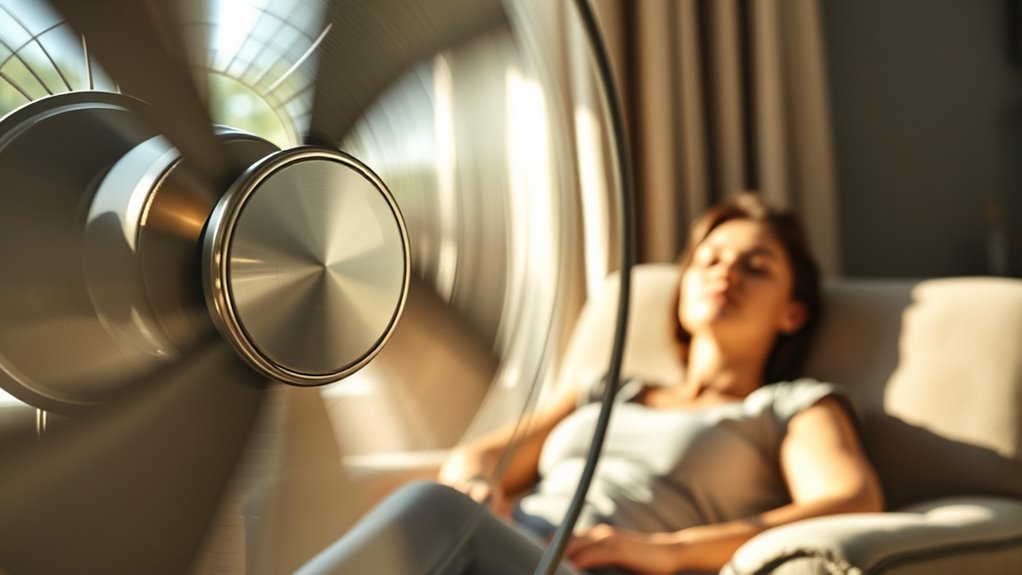

Using a fan at high intensity can dry out your skin, eyes, and nasal passages, increasing irritation and making you more prone to infections. Strong airflow may also cause respiratory discomfort and interfere with your sleep by creating drafts and noise. To stay comfortable and healthy, it’s best to keep fan settings moderate and avoid direct airflow. If you’re curious about how to optimize your fan use for better health, there’s more to discover below.
Key Takeaways
- Excessive fan intensity causes skin, eye, and nasal dryness, increasing irritation and infection risk.
- High airflow can disrupt respiratory health by drying airways and causing discomfort.
- Strong fans may interfere with sleep quality, leading to restlessness and fatigue.
- Proper fan positioning and moderate settings promote better air circulation without drafts.
- Adjusting fan speed based on body signals helps prevent health issues like headaches or chills.

Fan intensity can considerably impact your physical health, especially if you’re exposed to strong or prolonged airflow. When a fan runs at high speed, it creates vigorous air circulation that can influence how your body responds. While good air circulation helps keep a room fresh and prevents stuffiness, excessive airflow can lead to unintended health issues. For instance, sitting directly in front of a powerful fan for hours might cause dryness in your skin, eyes, and nasal passages. This dryness can make you more susceptible to irritation or infections over time. Additionally, constant exposure to rapid airflow can disrupt your body’s natural moisture balance, leading to discomfort and potential respiratory problems.
Another critical aspect affected by fan intensity is sleep quality. When you sleep, your body relies on a stable environment to rest properly. Too much airflow can interfere with this stability, making it harder to fall asleep or stay asleep throughout the night. A strong fan blowing directly on you can cause your muscles to tense up or trigger muscle stiffness, which disrupts restful sleep. Moreover, the noise generated by high-speed fans might prevent you from reaching deeper sleep stages, leading to fatigue during the day. The uneven air circulation caused by high fan settings can also create drafts that chill you excessively, causing your body to work harder to maintain a comfortable temperature. This extra effort can wake you up or make sleep less restorative, affecting your overall health.
It’s essential to find a balance when using a fan. Moderate airflow promotes air circulation without creating drafts or causing discomfort. Proper air circulation helps remove indoor pollutants, reduce humidity, and improve overall air quality, all of which support better health. When it comes to sleep, keeping the fan at a lower or medium setting and positioning it at an angle away from your face can help maintain a comfortable environment. This way, you benefit from fresh air circulation while minimizing the risks of dryness and sleep disturbance. Additionally, being aware of fan safety tips can help prevent accidents or health issues related to improper use. Remember, the key is to listen to your body: if you notice dryness, headaches, or sleep issues, consider adjusting your fan’s intensity or position. By doing so, you can enjoy the benefits of a well-ventilated space without compromising your health.
Frequently Asked Questions
Can Fan Intensity Affect Sleep Quality?
Yes, fan speed can affect your sleep quality. If the fan speed is too high, it may create excessive airflow, leading to discomfort and disrupted sleep. Conversely, a gentle airflow from an appropriate fan speed can improve airflow comfort and help with temperature regulation, promoting better sleep. Adjusting the fan to a moderate speed ensures ideal airflow and a more restful night, enhancing your overall sleep quality.
Is High Fan Speed Safe for Children and Elderly?
Imagine a powerful breeze swirling around your child or elderly loved ones—high fan speed can be safe if used carefully. For child safety, keep the fan away from their reach and guarantee no loose cords pose risks. For elderly comfort, set the fan to a moderate speed to prevent drafts that might cause chills or discomfort. Always monitor their reactions and adjust settings for ideal safety and comfort.
Can Prolonged Fan Use Cause Respiratory Issues?
Prolonged fan use can cause respiratory issues if it stirs up airborne particles like dust, pollen, or mold, which irritate your lungs. Additionally, fans can lower indoor humidity levels, leading to dry air that worsens respiratory discomfort. To reduce risks, keep your space clean, regularly change filters, and consider using humidifiers alongside fans. This helps maintain a healthier environment while staying cool.
Does Fan Noise Influence Mental Health?
Think of fan sound as a gentle breeze that can sometimes turn into a relentless storm. The noise disturbances from your fan can impact your mental health, causing stress or anxiety if it’s loud or constant. While a soft hum might help you relax, persistent or disruptive noise can make it harder to focus or sleep, affecting your overall well-being. Pay attention to how your fan noise makes you feel and adjust accordingly.
Are There Health Risks Linked to Oscillating Fans?
Oscillating fans can pose health risks if their blade design or airflow patterns cause uneven air distribution or excessive drafts. Poorly designed blades might generate sharp airflow changes, leading to discomfort or respiratory issues, especially for those with allergies or asthma. To stay safe, choose fans with smooth airflow patterns and balanced blade design, and avoid positioning fans directly at face level for extended periods. Proper maintenance helps minimize potential health risks.
Conclusion
So, next time you get caught up in fan intensity—whether cheering wildly or obsessively checking updates—remember it might be doing more harm than good. You chase fleeting excitement, ignoring your own well-being. Ironically, that very passion could be draining your health, leaving you more exhausted than fulfilled. Maybe it’s time to cool down, find balance, and realize that sometimes, the biggest fan of your health is simply knowing when to step back.