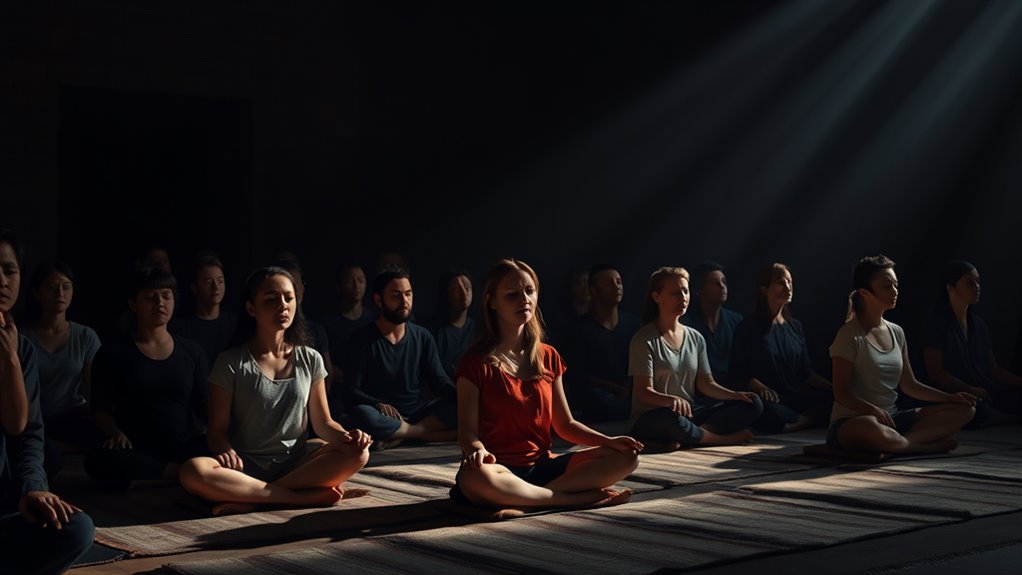

Repeated chants create rhythms that influence your emotional state. By reciting patterns—whether calming or energetic—you can shift mood and foster emotional resilience. Familiar phrases and steady beats act as anchors, reducing anxiety and boosting motivation. Over time, these repetitions embed positive associations in your subconscious, rewiring your responses. This psychological effect helps you regulate emotions more effectively. Keep exploring how different patterns can shape your mental and emotional well-being.
Key Takeaways
- Repeated chants create rhythmic patterns that influence emotional states, promoting relaxation or motivation depending on the pattern.
- Consistent chanting embeds positive words in the subconscious, leading to mood improvements and reduced anxiety over time.
- Familiar, soothing chant patterns serve as emotional anchors, helping individuals regain calm during stressful situations.
- Incorporating well-being techniques with chanting enhances neurochemical responses, supporting emotional resilience and stability.
- The neurophysiological effects of chanting modulate neurotransmitter activity, fostering psychological well-being and balanced moods.
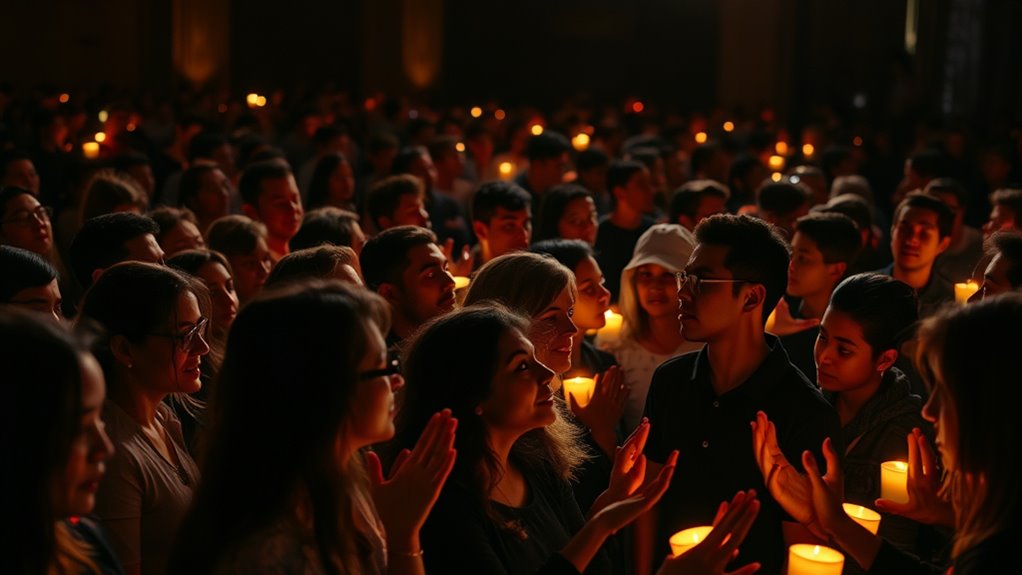
Repeated chants have a powerful effect on your mood, shaping how you feel and respond in various situations. When you engage in chanting, you’re not just repeating words; you’re creating a rhythm that influences your emotional state. The emotional influence of chants stems largely from their patterns—repetitive sequences that your mind and body begin to associate with specific feelings. For example, a calming chant pattern can promote relaxation, while an energetic one might boost your motivation. This connection is rooted in how your brain processes rhythm and repetition, making chanting a tool to modulate your mood intentionally.
As you adopt certain chant patterns, you start to notice shifts in your emotional landscape. When you repeat a comforting phrase, like “I am calm” or “I am strong,” those words become embedded in your subconscious. Over time, the emotional influence of these patterns can lessen anxiety, elevate your mood, or foster a sense of empowerment. The key lies in consistency; the more you practice a particular chant pattern, the more your brain associates it with the emotional state you’re aiming for. This creates a feedback loop where your mood improves as your mind becomes conditioned to respond positively to the chant.
Chant patterns can also serve as anchors during stressful moments. When faced with uncertainty or tension, recalling a familiar, soothing chant can ground you. The rhythmic repetition acts as a calming anchor, helping you regain emotional balance. *Additionally*, the structure of the chant—such as a steady beat or a specific cadence—can enhance its effectiveness. Some patterns are designed to increase energy, while others promote serenity, depending on your needs. The versatility of chant patterns means you can tailor your emotional influence to different situations, making chanting a flexible psychological tool.
Furthermore, incorporating mood regulation techniques into your practice can amplify the benefits of chanting by creating more intentional emotional shifts. You might not realize it, but the words you choose to repeat and their pattern can shape your perception of reality. Repeating positive affirmations through specific chant patterns rewires your emotional responses over time, fostering resilience and emotional stability. By consciously selecting and practicing these patterns, you gain control over how external events influence your internal state. The act of chanting creates a mental rhythm that influences neurotransmitter activity, often resulting in improved mood and reduced stress. Overall, understanding and harnessing the emotional influence of chant patterns empowers you to cultivate a more balanced, resilient mindset in everyday life.
Frequently Asked Questions
Can Chanting Influence Long-Term Personality Traits?
Chanting can influence your long-term personality traits by leveraging neuroplasticity through meditation and cognitive reinforcement. When you regularly engage in chanting, you reinforce positive thought patterns and emotional responses, gradually rewiring your brain. This consistency helps shape traits like resilience, patience, and optimism over time. So, with dedicated practice, chanting doesn’t just impact your mood temporarily but can lead to enduring personality changes.
How Do Individual Differences Affect Chanting’s Psychological Impact?
Of course, your unique neurodiversity considerations and individual temperament shape how you experience chanting’s psychological impact. If you’re easily overstimulated, chanting might feel like a soothing balm or a chaotic circus. Conversely, if you thrive on routine, it could boost your mood. So, embrace your quirks, and tailor your chants to match your personality—after all, one size rarely fits all in the domain of psychological well-being.
Are There Specific Chants That Improve Mental Health More Effectively?
Yes, certain chants can more effectively improve your mental health through chanting relaxation. For example, calming mantras like “Om” or affirmations focused on peace and positivity help reduce stress and promote emotional well-being. When you choose chants that resonate with you personally, you’re more likely to experience their calming effects, making your practice a powerful tool for mental health improvement. Tailoring chants to your needs enhances their effectiveness.
What Role Does Cultural Background Play in Chant Perception?
Your cultural background greatly influences how you perceive chants, as cultural significance shapes their meaning and emotional impact. You might find certain chants more powerful due to their roots in your traditions, enhancing their role in musical expression. This cultural connection helps you engage more deeply, making the experience more meaningful. Recognizing these differences allows you to appreciate how diverse backgrounds contribute to unique perceptions and emotional responses to chants.
Can Repetitive Chanting Cause Psychological Dependence?
Repetitive chanting can indeed pose an addiction risk, as it may lead to dependency potential over time. You might find yourself craving the calming or euphoric feelings associated with the chant, making it hard to stop. While not everyone develops dependency, frequent use can reinforce psychological attachment, increasing the likelihood of reliance. Be mindful of how often you engage, and seek balance to avoid potential dependence.
Conclusion
Just like a melody that sticks in your mind, repeated chants can shape your mood over time. When you harness their power intentionally, they become a guiding wind, steering your emotions in a positive direction. Remember, your mind is a garden—what you repeatedly plant through chants can grow into a vibrant, uplifting landscape. So choose your words wisely, and let the rhythm of positive thoughts be the sunshine that nurtures your well-being.