Immersive sound engineering and 360° audio place you right in the middle of the action by creating lifelike environments that surround you completely. Using techniques like binaural recording and spatial audio, sound reacts to your head movement and position, making experiences more realistic whether you’re listening through headphones or speakers. This technology is used in gaming, virtual reality, and movies to deepen your immersion. Keep exploring to discover how these innovations can transform your listening experiences even further.
Key Takeaways
- Immersive sound engineering creates realistic 3D audio environments using spatial audio and binaural recording techniques.
- Binaural recording captures sound with ear-level microphones, enhancing directional perception when played through headphones.
- 360° audio extends immersive experiences across multiple speakers or headsets, enveloping the listener in a full surround sound field.
- Real-time adjustments account for listener head movements and orientation, maintaining authentic sound localization and interaction.
- Combining spatial and binaural techniques enables lifelike virtual environments, revolutionizing applications in entertainment, VR, and gaming.
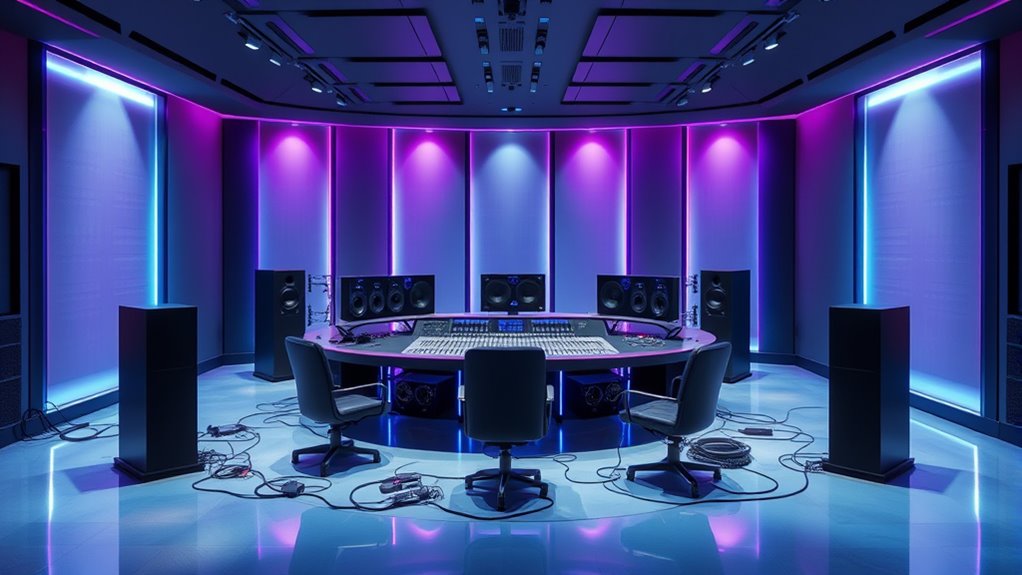
Have you ever wondered how modern sound systems create such realistic and enveloping audio experiences? The secret lies in the advancements of immersive sound engineering, particularly through techniques like spatial audio and binaural recording. Spatial audio transforms traditional sound into a three-dimensional experience, allowing you to perceive sounds as if they’re coming from specific points around you. This technology uses complex algorithms to simulate how sound waves behave in real space, so when you’re wearing headphones or listening through a specialized speaker setup, the audio feels like it surrounds you completely. Binaural recording takes this a step further by capturing sound exactly as your ears would hear it in real life. Using two microphones placed at the same distance and angle as human ears, binaural recordings record the subtle differences in sound timing and intensity that your brain uses to locate sources. When you listen to binaural audio through headphones, the effect is stunning—you can pinpoint the direction of individual sounds with uncanny accuracy, creating an almost tangible sense of presence.
These innovations are revolutionizing how we experience music, movies, virtual reality, and even gaming. Instead of simply hearing sound from a single channel or a stereo pair, you’re immersed in a meticulously crafted environment where every footstep, whisper, or instrument appears to come from a specific place. The magic behind this lies in the way spatial audio mimics how our ears naturally perceive sound in the real world. It accounts for head movements and positional changes, so the audio dynamically adjusts to your orientation, making the experience feel incredibly authentic. Binaural recordings, often created using specialized microphones or post-production techniques, enhance this realism by capturing the nuances of how sound interacts with your head and ears. When these recordings are played back through headphones, it’s as if you’re transported to the scene itself, with sounds seamlessly moving around you. Additionally, advancements in sound synthesis allow for the creation of customized soundscapes, further enriching immersive environments.
Immersive sound engineering also leverages the power of 360° audio, which extends this concept to multiple speakers or immersive headsets. This technique ensures that you’re not just passively listening but actively surrounded by sound, whether in a concert hall simulation or a virtual environment. The combination of spatial audio and binaural recording makes the experience even more convincing. You don’t just hear the sound; you feel like you’re part of the scene. This technology continues to evolve, promising even richer, more lifelike encounters in entertainment and beyond.
Frequently Asked Questions
How Does 360° Audio Enhance Listener Engagement?
360° audio enhances your listener engagement by boosting spatial perception, making sounds feel like they come from all around you. This creates a more realistic and immersive experience, drawing you deeper into the content. As a result, you feel emotionally immersed, connecting more strongly with the story or environment. The surround sound environment keeps your attention focused and heightens your overall enjoyment, making the experience memorable and impactful.
What Equipment Is Necessary for Immersive Sound Production?
Imagine assembling a spaceship with a tangle of wires—your equipment needs to be just as precise. You’ll require high-quality microphones, headphones, and speakers, along with software for spatial calibration and sound field synthesis. These tools help you craft an authentic, enveloping soundscape. Don’t forget a calibration room—without it, your sonic universe will be more “space debris” than immersive experience. Proper gear guarantees your audio truly surrounds and engages your audience.
Can Immersive Sound Be Experienced on Standard Headphones?
Yes, you can experience immersive sound on standard headphones, but they have limitations. Headphone limitations, like stereo-only output, can create immersive sound barriers, making it harder to perceive the full 360° experience. To get the best immersive sound, consider headphones designed for spatial audio or those with surround sound capabilities. These specialized headphones help break down barriers and deliver a more enveloping auditory experience.
How Does Room Acoustics Affect 360° Audio Quality?
Room acoustics considerably impact your 360° audio experience. Sound absorption reduces unwanted echoes, ensuring clearer, more precise sound, while excessive room reflection can cause muddiness and distort the immersive effect. If your space lacks proper acoustic treatment, you might notice diminished audio quality. To maximize your experience, optimize room acoustics by controlling reflections and absorption, allowing the full potential of 360° audio to come through with clarity and depth.
What Are the Future Trends in Immersive Sound Technology?
You’ll see future immersive sound technology focus on enhancing spatial audio and binaural recording for more realistic experiences. Expect advancements in head-tracking, which adapt sound dynamically as you move, creating even deeper immersion. Wireless, portable devices will make high-quality 360° audio accessible everywhere. Innovations will also incorporate AI to personalize soundscapes, making immersive audio more intuitive, natural, and engaging, transforming how you experience media and virtual environments.
Conclusion
As you plunge into immersive sound engineering, you step into a world where every whisper and thunderclap surrounds you. With 360° audio, feel the vibrations dance through your bones, as if you’re inside the music itself. You become part of the scene, hearing the distant waves crashing or the gentle rustle of leaves all around. It’s not just sound; it’s a gateway to a vivid, living experience that pulls you completely into another reality.