
To prevent dialogue from disappearing during loud moments, start by adjusting your audio settings—enable features like dialogue enhancement or night mode on your TV or sound system. Increase mid-range frequencies with your equalizer to make speech clearer, and consider using external soundbars or headphones with dedicated dialogue modes for better clarity. Ensuring your media uses formats optimized for speech can also help. If you’d like more tips on fine-tuning your audio, keep exploring how to improve your listening experience.

Get sports gear delivered free — and shop member deals
- Fast, free delivery on millions of items
- Access to Prime Big Deal Days deals on October 6–7
- Prime Video, Amazon Music and more included
Key Takeaways
- Enable dialogue enhancement or night mode on your TV or sound system to boost speech during loud scenes.
- Adjust the equalizer to emphasize mid-range frequencies where dialogue typically resides.
- Use external sound systems with dedicated dialogue modes for clearer speech during loud moments.
- Employ headphones with built-in speech enhancement features for consistent dialogue clarity.
- Select media formats optimized for dialogue and adjust audio settings for improved speech intelligibility.
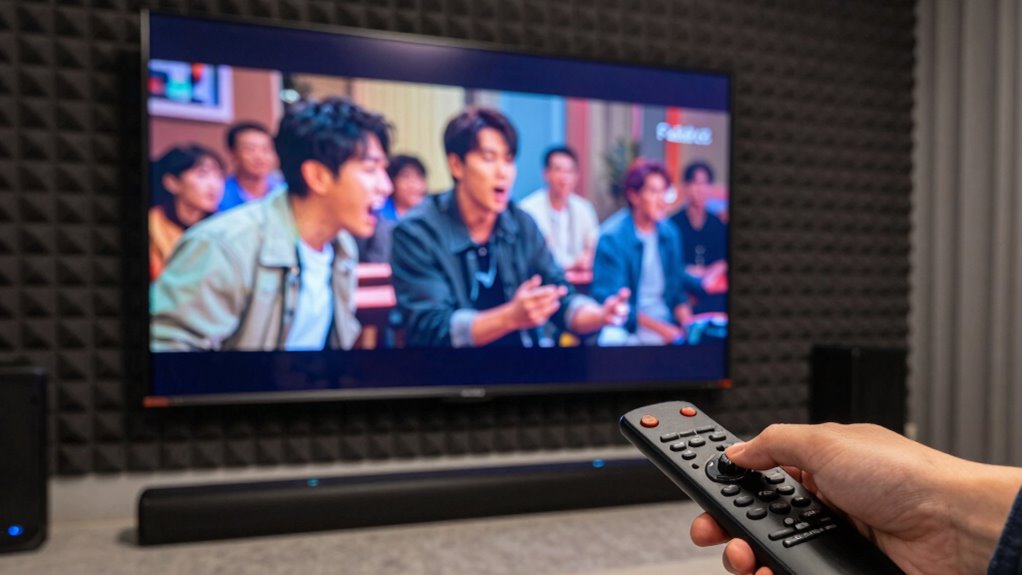
When loud scenes cause dialogue to vanish, it can be frustrating and disrupt your viewing experience. You want to catch every word, but the sudden increase in volume during action or explosion scenes often drowns out the dialogue you’re trying to hear. This issue is usually tied to how audio compression works in your sound system or the media you’re watching. Audio compression is designed to balance loud and quiet sounds, but sometimes it’s not perfect, leading to dialogue becoming less clear when the volume spikes. To fix this, you need to focus on enhancing dialogue clarity, so you can stay engaged without constantly adjusting your volume.
A good starting point is checking your device’s audio settings. Many TVs and sound systems have a feature called “night mode” or “dialogue enhancement.” These modes use audio compression intelligently to boost softer sounds like speech while taming loud noises. Activating these features can considerably improve dialogue clarity during loud scenes. If your device offers an equalizer, adjust it to emphasize mid-range frequencies, where most dialogue resides. Increasing these frequencies can make speech more distinct, even when background sounds are loud.
Another effective method is to use an external sound system, such as a soundbar or home theater receiver with dedicated dialogue enhancement features. These devices often have modes specifically designed to improve speech intelligibility during heavy sound effects or music. When enabled, they help prevent dialogue from being drowned out and ensure you don’t miss important lines. If you’re streaming content or watching movies through apps, check if the app has built-in audio settings that allow you to tweak the audio balance or turn on dialogue enhancement features.
You can also consider using headphones or earphones with built-in audio processing. Many modern headphones have settings that enhance speech frequency ranges, making dialogue clearer regardless of the volume of loud scenes. This option is especially useful if you’re watching late at night or in a noisy environment. Additionally, understanding how audio compression impacts your listening experience can help you make more informed adjustments.
It may also help to explore audio formats available on your media, as some formats are optimized for dialogue clarity and can significantly improve your experience during loud scenes. By adjusting your audio compression settings and utilizing tools designed to boost dialogue clarity, you’ll enjoy a more consistent and immersive viewing experience—no more missing out on important lines when the action heats up.
As an affiliate, we earn on qualifying purchases.
Frequently Asked Questions
Can Background Music Affect Dialogue Clarity During Loud Scenes?
Yes, background music can affect dialogue clarity during loud scenes. It can cause voice masking, where the music drowns out spoken words. To combat this, you should use sound isolation techniques, like equalization, to emphasize dialogue frequencies. Proper mixing guarantees dialogue remains clear, even over loud music. Investing in quality soundproofing or directional microphones can also help maintain clarity, preventing dialogue from disappearing during intense scenes.
What Audio Equipment Best Preserves Dialogue During Loud Moments?
To maintain dialogue during loud moments, use a directional microphone like a shotgun mic to focus on the speaker and reduce background noise. Employ proper microphone techniques, such as close-miking, to capture clear audio. Additionally, apply audio compression during post-production to even out volume levels, preventing dialogue from being drowned out by loud sounds. This combination guarantees your dialogue remains intelligible, even during intense or loud scenes.
How Does Room Acoustics Influence Dialogue Audibility in Noisy Scenes?
Room acoustics greatly influence dialogue audibility in noisy scenes. Sound absorption and acoustic treatment help reduce unwanted reverberations, making speech clearer. By adding materials like foam panels and bass traps, you can control reflections and improve sound clarity. Properly treated rooms guarantee dialogue stays intelligible even during loud moments, preventing speech from fading into background noise. This setup helps maintain consistent audio quality, keeping viewers engaged and ensuring dialogue remains prominent.
Are There Editing Techniques to Prevent Dialogue From Disappearing?
Yes, you can use editing techniques to prevent dialogue from disappearing. Focus on voice isolation to separate dialogue from background noise effectively. Adjust the dynamic range to guarantee dialogue remains clear during loud moments, reducing the volume of loud sounds without affecting speech. Using noise reduction tools selectively helps maintain natural sound while keeping dialogue audible. These techniques ensure your dialogue stays consistent, even in challenging noisy scenes.
Does Speaker Placement Impact Dialogue Clarity During Loud Sounds?
Did you know proper speaker placement can improve dialogue clarity by up to 30%? Yes, speaker positioning and microphone placement greatly impact how well dialogue cuts through loud sounds. Position your speakers and microphones carefully—place microphones close to the speaker’s mouth and avoid blocking them. Adjust speaker angles to direct sound toward the listener’s ears, ensuring dialogue remains clear even during loud moments. Proper positioning makes your audio more intelligible and engaging.
Conclusion
Remember, a problem shared is a problem halved. By adjusting your audio settings or using subtitles, you can keep dialogue clear even during loud scenes. Don’t let the noise drown out what matters most—your understanding. With a little tinkering, you’ll enjoy movies without missing a word. So, stay patient and persistent; sometimes, the solution is just a tweak away. After all, where there’s a will, there’s a way.
NFL season / tailgating Picks
team gear
As an affiliate, we earn on qualifying purchases.