AI systems for camera angles and personalized views analyze scenes in real-time to pick the best perspectives, making your content more engaging and professional. These intelligent tools automatically track subjects, choose ideal shots, and adapt to different content types like concerts or sports, reducing the need for manual operation. They also learn your viewers’ preferences to deliver customized angles, boosting engagement and immersion. Keep exploring to discover how this technology can elevate your content even further.
Key Takeaways
- AI analyzes live scenes to automatically select optimal camera angles, enhancing viewer engagement.
- Personalized AI systems learn viewer preferences to deliver tailored, immersive camera perspectives.
- Automated camera control reduces manual effort, ensuring smooth and professional-quality content production.
- AI enables creative shot variations and dynamic viewpoints without extensive planning.
- Integrating AI improves content quality, aligns with real-time trends, and fosters innovative storytelling.

Imagine harnessing AI to automatically adjust camera angles and deliver personalized views that perfectly suit your preferences. With camera automation, you no longer need to manually switch angles or worry about missing important moments. Instead, intelligent systems analyze the scene in real-time, choosing ideal perspectives that enhance the viewer experience. This technology adapts seamlessly to the content, whether it’s a live concert, a sports event, or a corporate presentation, ensuring every shot feels intentional and engaging. As a result, your audience stays captivated, and their viewer engagement increases considerably.
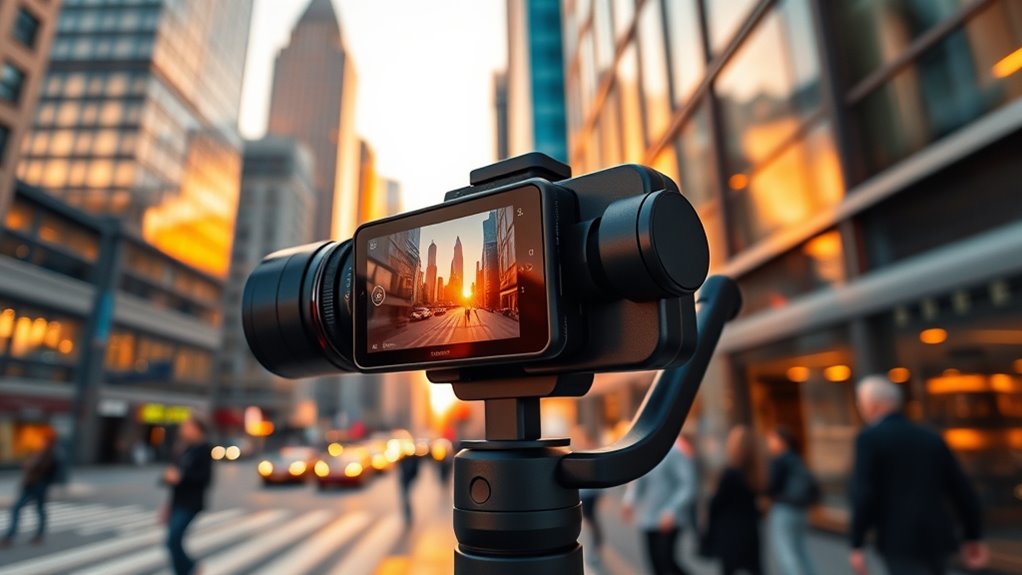
Using AI-driven camera automation simplifies the production process while elevating the quality of your content. Instead of relying on manual operators or static camera setups, the system intelligently tracks movements and adjusts angles to maintain focus on the key subjects. For instance, during a live sports broadcast, AI can identify the ball, players, and action, switching views instantly to give viewers the most exciting perspective. This automation reduces the need for multiple camera operators and minimizes human error, creating a smoother, more professional viewing experience.
Moreover, these personalized views are tailored to individual preferences, which makes your content more immersive. AI can learn what types of shots your audience prefers—be it wide, close-up, or dynamic angles—and automatically deliver those views during a broadcast. This level of customization keeps viewers engaged longer because they feel like the content is designed specifically for their interests. As viewers feel more connected and invested, their engagement levels rise, leading to higher retention and interaction rates.
The integration of AI for camera angles also opens up new creative possibilities. You can experiment with unique shots and perspectives without extensive planning or additional crew. The AI system can generate a variety of viewpoints, providing a dynamic visual experience that keeps your audience interested. Over time, the system can learn viewer preferences, refining its choices to consistently deliver the most engaging and personalized views. This continuous improvement makes your content more compelling and helps you stand out in a crowded media landscape.
In essence, the combination of camera automation and personalized views powered by AI transforms how you produce and present visual content. It not only streamlines workflows but also enhances viewer engagement by making each viewing experience more tailored and immersive. When viewers feel like the content is made just for them, they’re more likely to stay tuned, interact, and share. This technology empowers you to create more engaging, professional, and personalized visual stories with less effort and more impact. Additionally, this approach aligns with the growing trend of hackathons to innovate practical solutions in real-time content creation and automation.
Frequently Asked Questions
How Does AI Determine the Best Camera Angles for Each Scene?
AI determines the best camera angles by analyzing each scene through scene analysis, considering factors like action, emotion, and composition. It predicts angles that enhance viewer engagement by identifying key moments and perspectives that evoke emotions. You’ll notice the AI dynamically adjusts shots to keep the audience hooked, ensuring every scene feels immersive and visually appealing. This process helps create a seamless, engaging viewing experience tailored to each scene’s unique context.
Can Users Manually Override Ai-Selected Camera Views?
You can definitely take the reins and manually override AI-selected camera views. It’s like having a foot in both camps—you get the convenience of AI, but also the control to switch to manual control whenever you want. User override options are usually built into the system, allowing you to adjust angles or perspectives as needed. This way, you’re not stuck with just what AI suggests—you’re the boss of your view.
How Secure Is the Data Used for Personalized Viewing Preferences?
Your data privacy is safeguarded through robust encryption methods that secure your personalized viewing preferences. These encryption techniques ensure your data remains confidential and safe from unauthorized access. Companies often implement additional security measures like regular audits and strict access controls. Rest assured, your information is handled with care, and these security practices are designed to keep your data private while allowing for seamless, personalized viewing experiences.
What Hardware Is Required to Implement AI Camera Angle Systems?
Think of your setup as the eyes and brain of a vigilant guardian. To implement AI camera angle systems, you need high-quality camera sensors that capture detailed visuals and robust processing units that analyze and adapt in real time. These components work in harmony, like a skilled conductor guiding an orchestra, ensuring smooth, personalized views. With the right hardware, your system becomes a seamless extension of your vision, responsive and intelligent.
How Does AI Adapt to Live Event Changes in Real-Time?
You see AI adapt to live event changes through dynamic scene analysis, which constantly evaluates the action as it unfolds. It processes visual data in real time, allowing it to make immediate adjustments to camera angles and views. This real-time adjustment guarantees that the footage stays engaging and relevant, capturing the key moments without delay. By continuously analyzing the scene, AI guarantees seamless, responsive coverage of live events.
Conclusion
As you explore AI for camera angles and personalized views, one thing becomes clear—you’re on the brink of a revolution. The technology’s potential to transform how you experience visuals is immense, but the full impact is still unfolding. Will it enhance your perspective or challenge your expectations? The future holds surprises, and with each breakthrough, you’ll find yourself questioning what’s possible. Stay tuned—what’s coming next might just change everything you thought you knew.