
If you compare Gen Z and Millennials, you’ll see clear differences in how they engage as fans. Millennials tend to stick with Facebook, YouTube, and longer content, valuing authenticity and nostalgia. Gen Z prefers TikTok, Snapchat, and short, interactive videos that thrive on memes and trends. Both value authentic influencers and user content, but Gen Z’s participation is more trend-driven and social activism-focused. Curious to learn exactly how these behaviors shape fan loyalty? Keep exploring for more insights.
Key Takeaways
- Gen Z prefers short, interactive content on TikTok and Snapchat, while Millennials favor longer, curated videos on Facebook and YouTube.
- Millennials value nostalgic themes and traditional media, whereas Gen Z engages more with meme culture and trend-driven platforms.
- Gen Z relies heavily on visual, AR, and meme content for sharing, with peer influence and authenticity being crucial for engagement.
- Millennials prioritize brand loyalty through authentic storytelling and behind-the-scenes content, with a focus on social values.
- Both generations share emotional content driven by humor and nostalgia, but Gen Z emphasizes social activism and purpose-driven engagement.
Demographic Profiles and Digital Engagement

Understanding the demographic profiles of Gen Z and Millennials is essential to grasp how they engage digitally. Your fan identity shapes how each group connects with content, influenced heavily by cultural influences. Millennials, typically born between 1981 and 1996, grew up during the rise of the internet, making them adaptable to multiple platforms. They often seek authentic experiences and value brand loyalty. In contrast, Gen Z, born from 1997 onward, are digital natives with a strong preference for visual and interactive content, influenced by rapid cultural shifts. These differences impact their digital engagement, with Millennials leaning toward established media and Gen Z favoring newer, trend-driven platforms. Recognizing these profiles helps you understand their unique ways of connecting through digital spaces. Additionally, understanding the role of spiritual energy and its influence on overall well-being can deepen insights into how these generations seek authenticity and connection in their digital interactions.
Preferred Content Platforms and Media Consumption Habits

Gen Z and Millennials have distinct preferences when it comes to content platforms and media consumption habits. You’ll notice Gen Z favors platforms like TikTok and Snapchat, where short videos and augmented reality features boost engagement. They thrive on meme culture, sharing and creating viral content quickly. Millennials, however, prefer Facebook, YouTube, and streaming services for longer, more curated content. They’re more likely to watch videos on-demand and engage with community-driven posts. Here’s a quick comparison:
| Aspect | Gen Z | Millennials |
|---|---|---|
| Popular platforms | TikTok, Snapchat | Facebook, YouTube |
| Content style | Short videos, AR filters | Longer videos, curated feeds |
| Meme culture | Central to engagement | Less dominant |
| Media habits | Mobile-first, instant | Multi-device, on-demand |
| Creativity | User-generated, trends | Diverse, nostalgic |
Additionally, both generations are increasingly aware of AI Security measures used to protect their online data and privacy, influencing their trust in digital platforms.
Types of Content That Drive Engagement
Different types of content resonate differently with audiences, shaping how brands and creators drive engagement. For Gen Z and Millennials, certain formats stand out. Nostalgic trends evoke strong emotional responses, reminding audiences of past experiences. Meme culture keeps content fresh and shareable, encouraging participation and virality. Short-form videos capture attention quickly and are highly engaging. Interactive polls and quizzes foster direct interaction. Behind-the-scenes glimpses build authenticity and trust. These content types work because they tap into shared experiences and cultural moments that inspire connection. Whether leveraging nostalgic trends or meme culture, combining these elements with engaging visuals and relatable messaging maximizes impact and keeps audiences coming back for more. Incorporating crochet styles for locs into social media content can also appeal to niche audiences interested in creative self-expression.
Influencer Impact and User-Generated Content
Influencers have become powerful drivers of brand awareness and credibility, especially among Millennials and Gen Z. Their influence hinges on influencer credibility and user-generated authenticity, which resonate deeply with younger audiences. When you see authentic content created by real users or relatable influencers, it feels more trustworthy and genuine. This authenticity enhances engagement and fosters loyalty. To understand this better, consider this table:
| Aspect | Impact | Key Benefit |
|---|---|---|
| Influencer Credibility | Builds trust through relatable personas | Increases product trust |
| User-Generated Content | Offers real-life experiences and honest reviews | Boosts authenticity and engagement |
| Peer Influence | Friends’ recommendations hold weight | Drives word-of-mouth marketing |
| Content Authenticity | Genuine stories over polished ads | Strengthens brand loyalty |
This dynamic shapes how you connect with brands today.
Attitudes Toward Brand Collaborations and Sponsorships
Authenticity and trust built through user-generated content influence how younger audiences perceive brand collaborations and sponsorships. When it comes to brand partnership perceptions, you value transparency and genuine connections. You’re more likely to respond positively if sponsorship authenticity feels real rather than forced. You notice that:
- Authentic collaborations resonate more than scripted ads
- You prefer brands that align with your values
- Sponsored content feels more credible when shared by relatable creators
- Overly promotional partnerships turn you off
- Transparency about sponsorships boosts your trust in the brand
- Recognizing genuine communication enhances your confidence in brand messages.
Participation in Fan Communities and Online Interactions
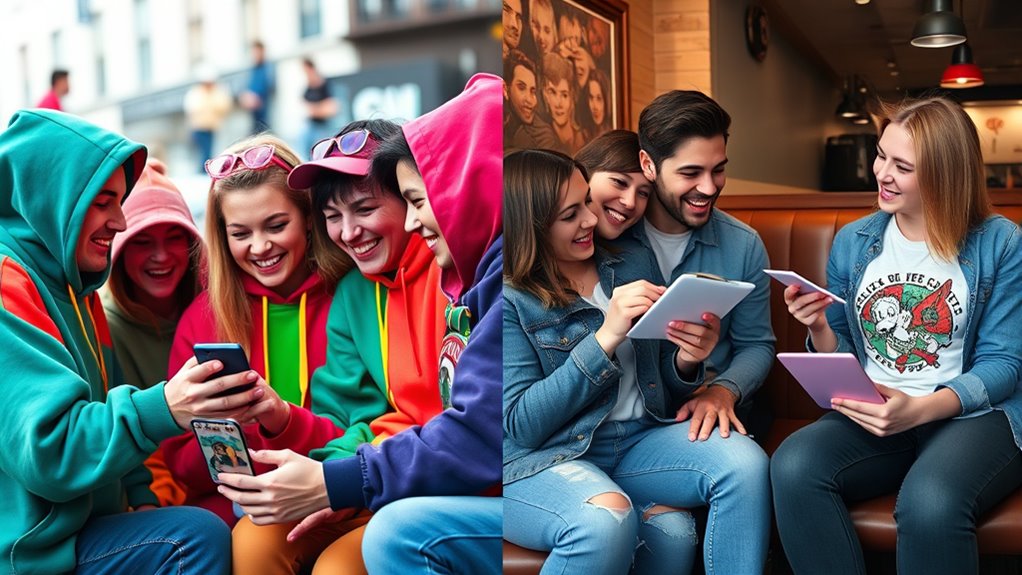
Participating in fan communities and engaging in online interactions play a crucial role in shaping how you connect with brands and fellow fans. Your fan identity often deepens through active involvement in these spaces, where shared interests foster a sense of belonging. Millennials tend to participate in online discussions and fan forums, using these platforms for social connection. Meanwhile, Gen Z is more likely to leverage social media for online activism, turning their passion into movements or causes. These interactions allow you to express your fandom authentically and influence brands through feedback and collective voice. Whether through posting, commenting, or creating content, your participation helps build a dynamic community where your voice matters and your fan identity evolves naturally. Additionally, color accuracy in visual content enhances the overall engagement and authenticity of shared experiences within these communities.
Attitudes Toward Authenticity and Transparency

Because you value honesty and genuine connections, your attitude toward authenticity and transparency critically shapes your engagement with brands and content. Trust issues and perceptions of truthfulness play vital roles in this dynamic. You tend to scrutinize marketing messages, favoring brands that demonstrate realness over polished façades. When content feels authentic, you’re more likely to trust and connect with it. Conversely, if transparency seems lacking, trust issues arise, making you skeptical of claims. You appreciate clear, honest communication, and you’re quick to spot superficiality. Your expectations push brands to be more open about their motivations and practices. Ultimately, authenticity isn’t just a preference—it’s a baseline for your loyalty and engagement. Brands that prioritize transparency and truthfulness see greater trust and stronger connections with you. Additionally, recognizing the importance of AI ethics can influence how you perceive brands that incorporate AI technologies responsibly.
Motivations Behind Content Sharing and Virality
Understanding why you share content and what drives virality reveals a lot about your values and social motivations. When you engage in viral sharing, it’s often rooted in emotional triggers—things that evoke laughter, nostalgia, or empathy. You may share content to connect with others, seek validation, or express your identity. Virality isn’t just about popularity; it’s about creating a ripple effect that resonates emotionally with your audience. Millennials and Gen Z tend to share content that aligns with their personal beliefs or sparks strong feelings. You’re driven by a desire to be seen, understood, or to inspire action. Recognizing these motivations helps you understand why certain posts or videos gain rapid traction and why emotional triggers are key to igniting viral sharing. Additionally, the types of content that go viral often include relatable themes or cultural references, which can be inspired by popular topics like dog names, making the content more engaging and shareable.
Loyalty and Long-Term Fan Commitment

When you share content that resonates emotionally, you’re not just seeking a fleeting moment of connection—you’re also building a sense of loyalty and long-term commitment. This emotional bond strengthens brand loyalty and boosts fan retention over time. To foster this, focus on authentic interactions, exclusive experiences, and consistent engagement. Your actions can create a community where fans feel valued and understood. Incorporating vetted products and trustworthy recommendations can further deepen this trust.
Trends Shaping Future Fan Behaviors

Emerging trends are actively reshaping how future fans engage with brands and content. Nostalgic trends play a significant role, as fans seek comfort and familiarity in a fast-changing world. You’ll notice a desire to reconnect with past eras, influencing content choices and brand loyalty. Social activism also drives future fan behaviors, with audiences expecting brands to take stands on social issues. Fans aren’t just passive consumers—they want to see authentic activism and meaningful involvement. This shift means brands need to align their messaging with social values and incorporate nostalgic elements that resonate emotionally. Additionally, understanding growing and harvesting chia seeds can inspire brands to promote health-conscious and sustainable lifestyles, aligning with the values many fans seek today. As these trends grow, your engagement with brands will likely become more personal and purpose-driven, making it essential for brands to adapt quickly and authentically to meet these evolving expectations.
Frequently Asked Questions
How Do Generations Z and Millennials Differ in Offline Fan Engagement?
You notice that Gen Z and millennials differ in offline fan engagement. Gen Z tends to prefer attending live events and connecting through social media, creating immersive experiences. Millennials, on the other hand, often focus on attending events but also engage via social media to share their experiences. Both generations value authentic interactions, but Gen Z leans more toward digital integration with offline activities, making their engagement more dynamic and tech-driven.
What Role Do Nostalgia and Retro Trends Play in Fan Behaviors?
Nostalgia influence and retro appeal profoundly shape fan behaviors today. You’re drawn to nostalgic content because it evokes familiar feelings and memories, creating a stronger emotional connection. Retro trends attract you with their unique style and authenticity, making experiences feel more genuine. These elements make you more engaged, encouraging you to revisit favorite classics or seek out vintage-inspired products, ultimately deepening your connection to brands, artists, or fandoms.
How Does Peer Influence Affect Fan Loyalty Across Generations?
Peer influence profoundly impacts your fan loyalty by shaping your preferences through social validation and peer pressure. When your friends or social groups support a brand or artist, you’re more likely to stay loyal to them to fit in and gain approval. Across generations, this dynamic encourages consistency in fandom, as social validation reinforces your connection, making you more committed and less likely to switch allegiances, especially when your social circle actively endorses your favorite brands or artists.
Are There Generational Differences in Responses to Brand Activism?
You might think everyone responds the same to brand activism, but that’s far from true. Generational values shape perceptions of activism, making some see it as a hero’s call, while others see it as a marketing ploy. Millennials often value authenticity, while Gen Z demands real action. These differences mean your audience’s reactions are wildly varied, and understanding these nuances could make or break your brand’s connection with each generation.
How Do Cultural Backgrounds Influence Fan Behavior Patterns?
You can see that cultural backgrounds shape fan behavior through cultural identity and language preferences. When you connect with fans from diverse backgrounds, you notice they engage differently based on their cultural values and the language they prefer. You might find that fans with a strong cultural identity respond more passionately to culturally relevant content, while language preferences influence how they interpret and share your message, ultimately shaping their overall engagement.
Conclusion
As you explore these evolving fan behaviors, one thing becomes clear: the future holds unexpected shifts that could redefine engagement entirely. Will brands and creators adapt swiftly enough to these changing motivations? Or will new platforms and trends emerge, reshaping loyalty and authenticity in ways we can’t yet predict? The next chapter in fan culture is unfolding—stay tuned, because what’s coming might just surprise us all.