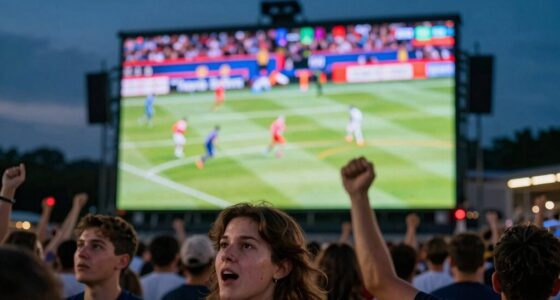
HDR improves your live sports experience by making colors pop, shadows more detailed, and contrast richer, so you see more realistic and vibrant visuals. However, it doesn’t change camera angles or capture moments that aren’t already covered well. Good camera work and storytelling remain essential for a great view. While HDR enhances how gameplay looks, it’s your camera crew’s skill that truly captures the action—discover more about how all these elements come together to impact your viewing.

Get sports gear delivered free — and shop member deals
- Fast, free delivery on millions of items
- Access to Prime Big Deal Days deals on October 6–7
- Prime Video, Amazon Music and more included
Key Takeaways
- HDR enhances image brightness, contrast, and color accuracy, making visuals more vivid and realistic.
- It does not improve camera angles, framing, or coverage, which depend on camera placement and operator skill.
- HDR heightens the realism of stadium lighting, shadows, and backgrounds, improving overall visual immersion.
- It does not affect sound quality, commentary, or other sensory aspects of the live broadcast.
- Effective storytelling and good camera work are essential; HDR complements but cannot replace them.

High Dynamic Range (HDR) technology has become a buzzword in the world of live sports broadcasting, promising to deliver brighter highlights and more detailed shadows. But while HDR can transform what you see on your screen, it doesn’t automatically improve every aspect of the viewing experience. One area where HDR can have a noticeable impact is in how camera angles reveal the game’s intensity. When broadcasters use HDR, the camera captures a broader range of brightness, making close-up shots of players’ faces more vivid and shadows on the field more nuanced. This means you get a clearer sense of the players’ expressions and the subtle movements that might be lost in standard dynamic range. As a viewer, you’ll notice more depth and realism in the images, which can make it feel like you’re right there on the sidelines.
HDR enhances close-up shots and shadows, making game intensity more vivid and realistic for viewers.
However, HDR doesn’t change the fundamental choice of camera angles. If the camera is positioned poorly or doesn’t cover the critical parts of the field, HDR won’t magically improve that perspective. It enhances how the scene’s lighting is rendered, but it still relies on the cameraman’s skill to frame the action effectively. So, if you’re used to watching a game from a certain angle that doesn’t capture the most exciting plays, HDR won’t fix that. Instead, it simply makes whatever angles are chosen look better, with richer colors and more detailed contrast. This can elevate the overall audience experience by making the visuals pop, especially during fast-paced moments with dramatic lighting changes.
That said, HDR’s real strength lies in how it heightens your perception of the game’s atmosphere. Bright stadium lights, sunset backgrounds, or shadows cast by players become more vivid and realistic. This enhanced imagery pulls you deeper into the game, making each play feel more tangible. Still, HDR doesn’t improve the sound quality, commentary, or other sensory elements that contribute to the audience experience. If the camera angles are limited or poorly planned, HDR can only do so much to elevate your viewing. It’s a tool that enhances the visual fidelity but doesn’t replace the importance of good camera work or immersive storytelling. Additionally, the color accuracy provided by HDR ensures that the team’s jerseys and the environment look true to life, enriching the viewer’s engagement.
Furthermore, understanding how HDR technology works can help viewers appreciate the visual improvements and set realistic expectations for live broadcasts. In the end, HDR’s most significant contribution is making the existing footage look better, more lifelike, and more engaging. It’s not a magic fix for every aspect of live sports broadcasting, but when paired with well-chosen camera angles, it can make you feel like you’re right there in the stadium, experiencing every highlight in stunning detail.
HDR compatible live sports streaming device
As an affiliate, we earn on qualifying purchases.
As an affiliate, we earn on qualifying purchases.
Frequently Asked Questions
Does HDR Require Special Equipment to Watch Live Sports?
Yes, HDR requires a proper HDR setup to watch live sports effectively. You’ll need compatible hardware like an HDR-enabled TV or monitor and a device that supports HDR streaming, such as a compatible streaming box or game console. Make certain your viewing equipment matches the required specifications for HDR content. Check the device’s specifications for HDR support to guarantee viewing compatibility, so you can enjoy vibrant, lifelike sports visuals.
How Does HDR Affect the Viewing Experience in Bright Rooms?
Think of HDR as your sports stadium’s spotlight in a bright room. It boosts brightness enhancement and improves color accuracy, making the game vivid and lively despite the glare. You’ll notice sharper contrasts and richer colors, which bring the action closer. While ambient light might still cause some reflections, HDR helps you enjoy dynamic visuals with greater clarity and depth, even in well-lit spaces.
Can HDR Improve Audio Quality During Live Sports Broadcasts?
No, HDR doesn’t improve audio quality during live sports broadcasts. It focuses on enhancing visual aspects like contrast, color accuracy, and brightness. While HDR makes the picture more vibrant and dynamic, it doesn’t affect audio clarity or sound dynamics. To get better audio, you’d need to look for features like Dolby Atmos or higher-quality sound systems, as these directly improve the listening experience during live sports events.
Is HDR Available for All Sports Channels and Streaming Platforms?
Only about 20% of sports channels and streaming platforms currently offer HDR content. You might find that availability varies widely, depending on your provider and location. Content accuracy and your viewer preferences influence which platforms support HDR, so check your favorite service’s offerings. While HDR enhances visuals, not all sports channels or streaming platforms deliver it yet, so it’s worth exploring your options to enjoy the best viewing experience.
Does HDR Impact the Energy Consumption of My TV During Sports Events?
Yes, HDR can slightly increase your TV’s power consumption. The enhanced brightness and contrast require more energy, which impacts energy efficiency, especially during long sports events. However, modern TVs often optimize power consumption through features like auto-brightness adjustments. If energy efficiency is a concern, check your TV’s settings to manage brightness levels or choose models with better power management to balance HDR benefits with lower power consumption during sports viewing.
Conclusion
HDR enhances your live sports experience by brightening highlights, deepening shadows, and enriching colors, making every moment more vivid. But it doesn’t improve the clarity of fast-moving action or eliminate motion blur. So, while HDR heightens your visual enjoyment, it reminds you to appreciate the details it offers and accept the moments it can’t enhance. Embrace the spectacle, appreciate the technology, and enjoy the game—both in what it enhances and what it leaves unchanged.
Fall Picks
fall essentials
As an affiliate, we earn on qualifying purchases.