

When you measure social media sentiment, you’re capturing the collective effervescence that emerges during viral trends. These moments create shared energy and strong emotional responses like outrage, hope, or joy, which shape public opinion. By analyzing posts, reactions, and comments, you can see how emotions ebb and flow within communities. Understanding these emotional currents helps you grasp societal narratives. Keep exploring to uncover how these collective feelings influence public discourse on a larger scale.

Get sports gear delivered free with Prime
- Fast, free delivery on millions of items
- Prime Video, Amazon Music and more included
- Member-only deals all year
Key Takeaways
- Viral trends quickly generate shared emotional energy, known as collective effervescence, influencing public opinion and social cohesion.
- Sentiment analysis tools track emotional shifts in social media data, revealing collective mood and emotional responses over time.
- Positive surges, like pride or solidarity, foster unity, while negative spikes indicate controversy or unrest within online communities.
- Emotional data uncovers underlying societal narratives and behind-the-scenes dynamics shaping public discourse.
- Measuring collective effervescence enhances understanding of how shared emotions drive societal reactions and influence societal change.
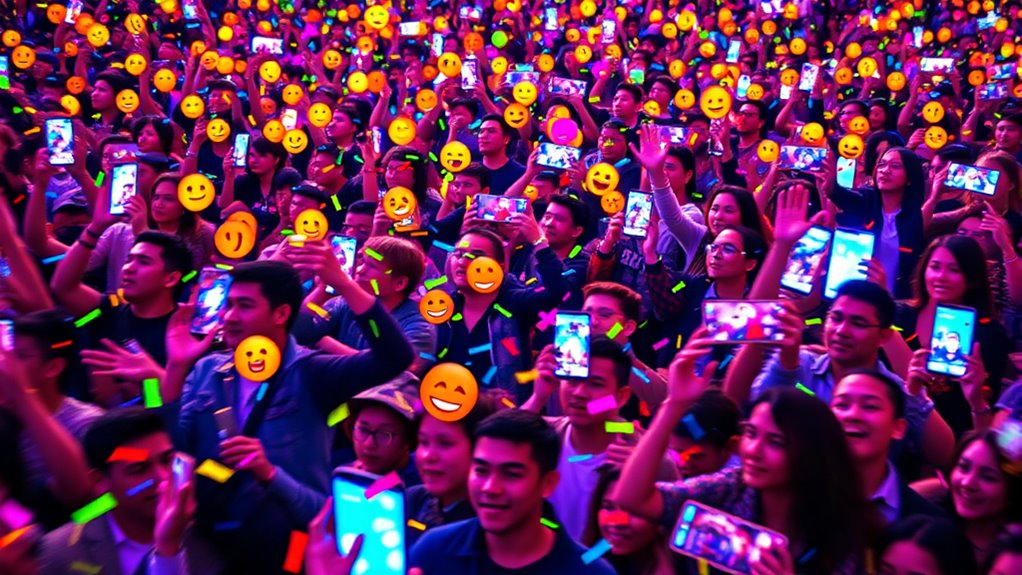
Have you ever wondered how social media shapes public opinion? It’s a powerful force that influences perceptions, attitudes, and even behaviors across the globe. One way it does this is through viral trends—those rapid, widespread phenomena that capture everyone’s attention in a matter of hours or days. When a post, hashtag, or challenge goes viral, it creates a ripple effect, rallying people around a common idea or emotion. But understanding why certain trends explode in popularity isn’t just about counting shares or likes; it’s about delving into emotional analysis to grasp the collective mood. Social media platforms are rich sources of raw emotional data, revealing how people feel about specific issues, events, or figures in real time. This emotional insight helps you understand the collective effervescence that arises during these viral moments—an almost euphoric state of shared energy and excitement that fuels further engagement. Additionally, sophisticated sentiment analysis tools can identify the dominant emotions and track their evolution throughout a trending event.
By analyzing viral trends through emotional analysis, you can uncover the underlying sentiments driving public discourse. For instance, a trending hashtag may be linked to feelings of outrage, hope, joy, or fear. Recognizing these emotions allows you to see how collective sentiment shifts in response to news, cultural shifts, or crises. This process often involves sophisticated sentiment analysis tools that scan social media posts, comments, and reactions to gauge the overall emotional tone. You might notice that during a viral campaign, positive emotions like pride or solidarity surge, creating a sense of unity among participants. Conversely, spikes in negative emotions can signal controversy, unrest, or backlash. These emotional patterns help you understand the ebb and flow of public opinion as it responds to ongoing events.
The power of emotional analysis lies in its ability to decode the emotional fabric of online communities. It enables you to see beyond surface-level metrics like retweets or likes, offering a nuanced view of collective sentiment. When combined with the study of viral trends, emotional analysis reveals how certain content resonates with people’s core feelings, igniting shared enthusiasm or concern. This understanding is vital for anyone aiming to grasp how public opinion is formed and shifted in the digital age. As social media continues to evolve, so does the importance of measuring collective effervescence—those fleeting yet impactful moments of emotional unity that shape societal narratives. Recognizing these emotional currents empowers you to interpret what’s really happening behind the scenes of every trending topic.
social media sentiment analysis tool
As an affiliate, we earn on qualifying purchases.
As an affiliate, we earn on qualifying purchases.
Frequently Asked Questions
How Can Social Media Sentiment Predict Real-World Events?
You can predict real-world events by analyzing social media sentiment, as viral trends and emotional contagion reveal public mood shifts. When people share strong feelings online, it often signals upcoming actions or protests. By monitoring these patterns, you can spot emerging movements or crises early. Emotional contagion spreads enthusiasm or anxiety, helping you anticipate societal responses. This insight allows you to stay ahead of potential developments influenced by collective online emotions.
What Tools Are Best for Measuring Collective Effervescence Online?
You can use tools like Brandwatch or Talkwalker that excel at real-time tracking of social media activity. These platforms analyze user engagement and sentiment to gauge collective effervescence online. They provide instant insights into spikes in excitement and shared emotions, helping you understand how online communities come together during events. By monitoring trending topics and engagement metrics, you can measure the intensity of collective effervescence as it happens.
How Does Sentiment Analysis Account for Sarcasm or Irony?
Sentiment analysis struggles with sarcasm detection and irony recognition because these nuances often invert the literal message. You can improve accuracy by using advanced algorithms trained on sarcasm-labeled data, which learn to identify subtle cues like tone, context, and linguistic patterns. Incorporate machine learning models specifically designed for sarcasm detection, and combine them with contextual analysis to better interpret ironic or sarcastic remarks in social media posts.
Can Social Media Sentiment Influence Public Policy Decisions?
Like a lighthouse guiding ships through stormy waters, social media sentiment can steer public policy decisions. Your online opinions shape public opinion, which policymakers often interpret as collective voices. When a significant portion expresses strong feelings, it influences policy influence, prompting officials to act or adjust strategies. So, your digital expressions aren’t just echoes—they’re signals that can ultimately impact real-world policies affecting communities and nations.
What Are the Ethical Considerations in Analyzing Social Media Emotions?
When analyzing social media emotions, you must consider ethical concerns like privacy and algorithmic bias. Respect users’ privacy by anonymizing data and avoiding intrusive methods. Be aware that algorithms can skew results, reinforcing biases or misrepresenting sentiments. You’re responsible for ensuring your analysis is transparent and fair, avoiding harm or misinterpretation. Balancing insightful analysis with ethical integrity helps maintain trust and promotes responsible use of social media data.
Conclusion
By now, you see how social media sentiment acts like a mirror reflecting our collective heartbeat. It captures the highs and lows of shared experiences, turning digital chatter into a wave of collective effervescence. As you scroll through posts and comments, remember you’re riding this energetic tide—each message adding to the bubbling energy of the crowd. Social media doesn’t just record feelings; it makes them surge, turning individual voices into a roaring chorus of shared emotion.
Halloween Picks
halloween
As an affiliate, we earn on qualifying purchases.