To size your projector screen without regret, start by measuring your room’s dimensions and consider your wall color and material, as these affect reflection and clarity. Aim for a screen about half the distance from your projector to the wall, adjusting based on your projector’s brightness and ambient light. Use painter’s tape to test different sizes, and make sure your seating distance is comfortable and immersive. Keep these tips in mind, and you’ll find the perfect fit. Continue to learn how all factors come together for the best setup.
Key Takeaways
- Measure your room’s dimensions and projector-to-wall distance to determine a suitable screen size.
- Consider room lighting, wall color, and material to select a size that maintains image clarity and minimizes glare.
- Use the 1.5 to 2.5 times screen height rule to find a comfortable viewing distance.
- Test different sizes with painter’s tape or projector zoom before purchasing to ensure proper fit and comfort.
- Balance screen size with room factors and content type for an immersive experience without causing discomfort.
What Size Projector Screen Is Right for My Room?

Choosing the right projector screen size depends on your room’s dimensions and how you plan to use it. Start by considering the screen material, as some materials reflect light better and enhance image clarity, influencing your ideal size. Wall color also plays a critical role; lighter walls reflect more ambient light, which might require a larger or brighter screen to improve picture quality. If your walls are dark or painted with matte finishes, you can opt for a smaller screen without losing image impact. Measure your space carefully, ensuring the screen won’t overwhelm the room or obstruct viewing angles. Remember, a screen that’s too large can cause discomfort, while one that’s too small may reduce immersion. Balance these factors to choose a size that enhances your viewing experience without sacrificing comfort.
Factors That Affect Your Ideal Screen Size (Room, Content, Resolution)
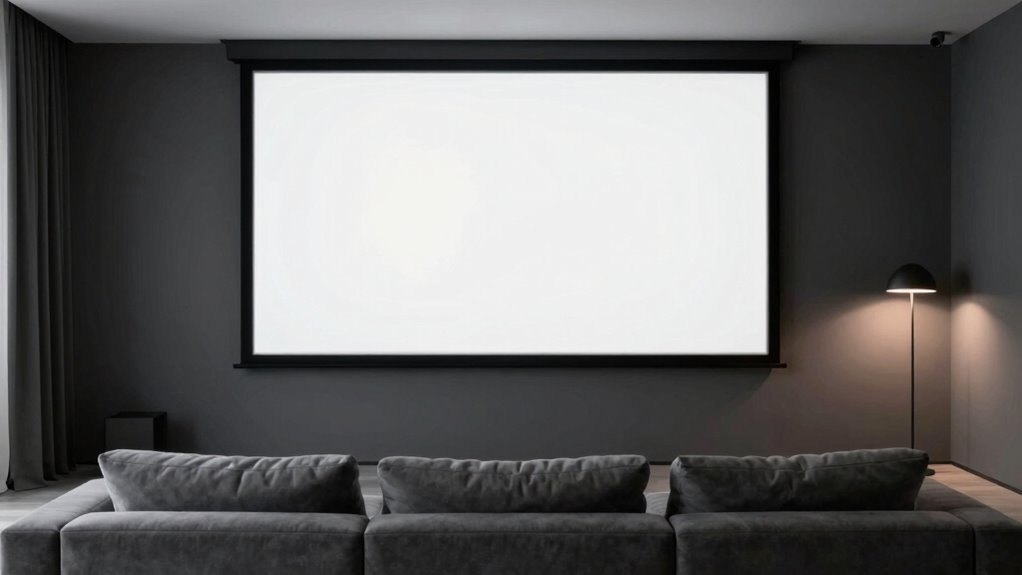
The factors that influence your ideal screen size extend beyond room dimensions to include the type of content you’ll be watching and the resolution of your projector. Content richness, like vibrant movies or detailed presentations, benefits from proper color calibration to guarantee visuals are accurate and immersive. Ambient light also plays a vital role; high levels of ambient light can wash out images on a larger screen, so you might need a smaller size or better lighting control. Conversely, darker rooms allow for larger screens without sacrificing image quality. Remember, a well-calibrated projector and minimized ambient light make it easier to enjoy a larger screen without compromising clarity or color fidelity. Additionally, understanding your digital content can help tailor the screen size to optimize your viewing experience. These considerations help you choose a screen size that maximizes your viewing experience.
How to Calculate Your Perfect Screen Size Using a Simple Formula
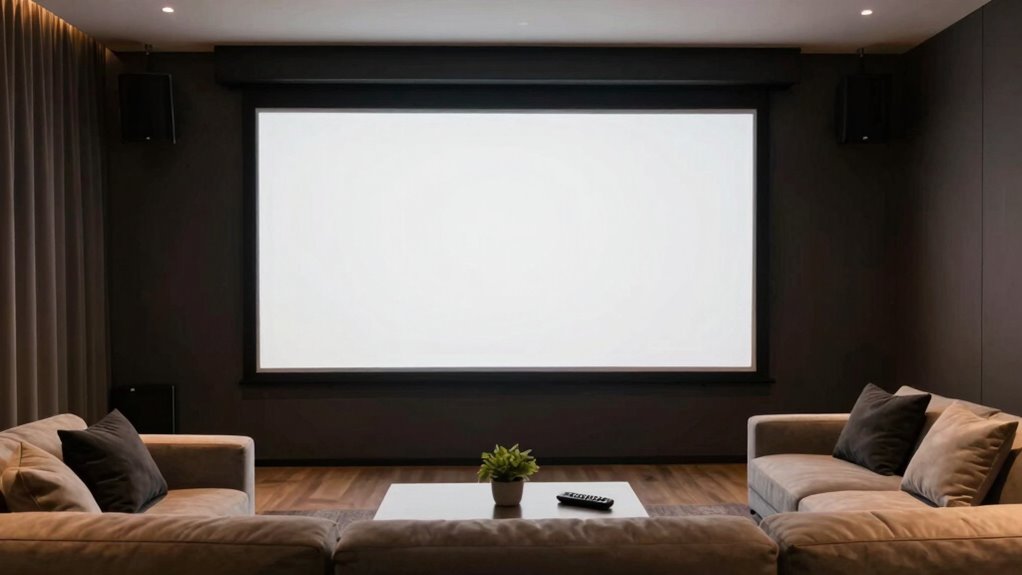
Wondering how to quickly determine the ideal screen size for your room? There’s a simple formula that helps you find the perfect fit based on your projector’s brightness and screen material. First, measure the distance from your projector to the screen. Then, consider these key points:
- Screen size should be roughly half the distance between your projector and the screen for ideal clarity.
- Adjust for projector brightness—brighter projectors can handle larger screens without losing image quality.
- Factor in your screen material—some materials reflect light better, making larger screens more effective even with lower brightness.
Using these steps, you can calculate a screen size that maximizes your viewing experience without regret. Keep your projector’s specs and room dimensions in mind for the best result.
Tips to Visualize and Test Your Screen Size Before Buying

Before committing to a new screen size, it’s essential to visualize how it will look in your room. Start by using your current projector and a tape measure or painter’s tape to outline the desired screen dimensions on your wall. Consider your room’s ambient lighting; a bright room may require a screen material with higher gain or a matte finish to reduce glare. Testing different sizes with a temporary setup allows you to see how the image fills your space and how comfortable it feels for viewing. Use a projector with adjustable zoom or lens shift to simulate different screen sizes, and observe how the projected image interacts with your lighting conditions. This hands-on approach helps you make a confident choice before investing in the perfect screen size.
Balancing Viewing Distance and Screen Size for Comfortable Viewing

Once you’ve outlined your ideal screen size, it’s important to find the right viewing distance to maximize your comfort and picture quality. Too close, and you’ll strain your eyes; too far, and details may be lost. To balance this, consider these points:
- Maintain a distance where your eyes are about 1.5 to 2.5 times the screen height, ensuring clear detail without eye fatigue.
- Adjust for ambient lighting—darker rooms improve color contrast, making images pop, while bright rooms require larger screens to preserve clarity.
- Position seats to minimize glare and reflections, optimizing color contrast and overall image quality.
Frequently Asked Questions
How Does Ambient Light Influence My Projector Screen Size Choice?
Ambient light ensures your projector screen size choice. High ambient glare and bright room conditions make larger screens less effective because excess light reduces contrast and image clarity. To optimize your viewing experience, you should choose a smaller screen in bright rooms or consider blackout curtains and higher lumen projectors. Adjusting your screen size based on room brightness ensures sharp images and immersive viewing, avoiding regret later.
What Are the Best Materials for Different Screen Sizes?
For different screen sizes, choose materials that balance durability and transparency. Larger screens benefit from durable fabrics like PVC or fiberglass, which withstand tension and last longer. Smaller screens can use lightweight materials like vinyl or specialized projection fabrics with high transparency to optimize image clarity. Always consider screen durability to guarantee longevity, and select materials with appropriate transparency to enhance brightness and contrast, giving you the best viewing experience regardless of size.
Can Adjustable Screens Help Optimize Size for Multiple Room Uses?
Like a chameleon adapting to its environment, expandable screens and fixed frame options let you optimize your viewing setup for various room uses. Adjustable screens are perfect for flexibility, accommodating different sizes effortlessly. They help you avoid regrets by providing versatile solutions for movie nights, presentations, or gaming. Whether you choose an expandable screen or a fixed frame, these options guarantee your space adapts seamlessly to your needs, maximizing comfort and clarity.
How Do Different Projector Lumen Ratings Affect Screen Size Decisions?
Higher lumen ratings allow you to use larger screens without sacrificing brightness, especially in well-lit rooms. When choosing screen size, consider screen gain, which affects brightness and clarity, and throw distance, which determines how close the projector needs to be. A brighter projector with high lumen output offers flexibility, letting you increase screen size while maintaining image quality, but always match your projector’s lumen rating to your room’s lighting and screen gain.
What Are Common Mistakes to Avoid When Sizing a Projector Screen?
You should avoid common mistakes like choosing a screen size that doesn’t match your wall color or aspect ratio, which can distort images or reduce contrast. Don’t overlook the importance of matching the screen’s aspect ratio to your projector’s output, and make certain your wall color is neutral to prevent color distortion. Measure your space carefully, and consider how ambient light affects your viewing experience to prevent regrets later.
Conclusion
Now that you know how to size your screen with simple strategies and smart calculations, you’re all set to select a setup that’s perfectly suited to your space. Remember, striking the right balance between brilliance and comfort is key to a mesmerizing viewing experience. So, don’t delay—deliberate, determine, and immerse yourself in your new display. With these tips, you’ll enjoy an ideal, immersive movie marathon or game night every time. Happy viewing!