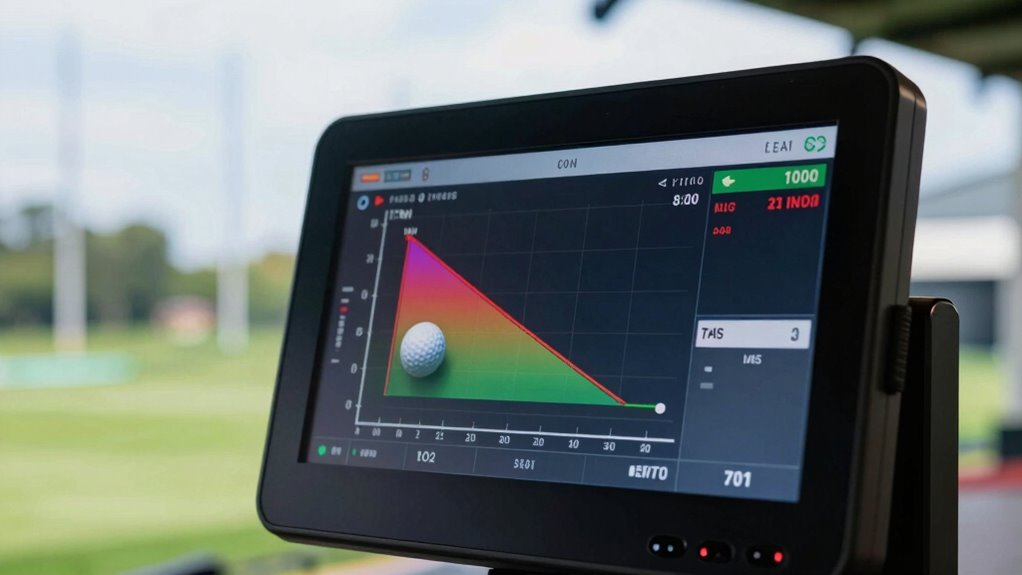

Ball-tracking data in launch monitors shows how your swing impacts each shot. It captures key metrics like ball speed, spin rate, and launch angle to reveal your shot’s distance, control, and flight path. Understanding these numbers helps you identify swing flaws, optimize club settings, and improve consistency. By analyzing this data, you can make informed adjustments. Keep exploring to learn how to use this information to boost your game even further.
Key Takeaways
- Ball-tracking data includes metrics like ball speed, spin rate, and launch angle, which reveal shot characteristics and potential distance.
- Accurate data depends on proper calibration of sensors and equipment setup for reliable measurements.
- These metrics help identify swing flaws and optimize technique for better consistency and performance.
- Data analysis enables tracking progress over time and setting targeted improvement goals.
- Understanding ball-tracking data allows players to make informed adjustments for shot shaping and game strategy.
How Do Launch Monitors Track Ball Data?
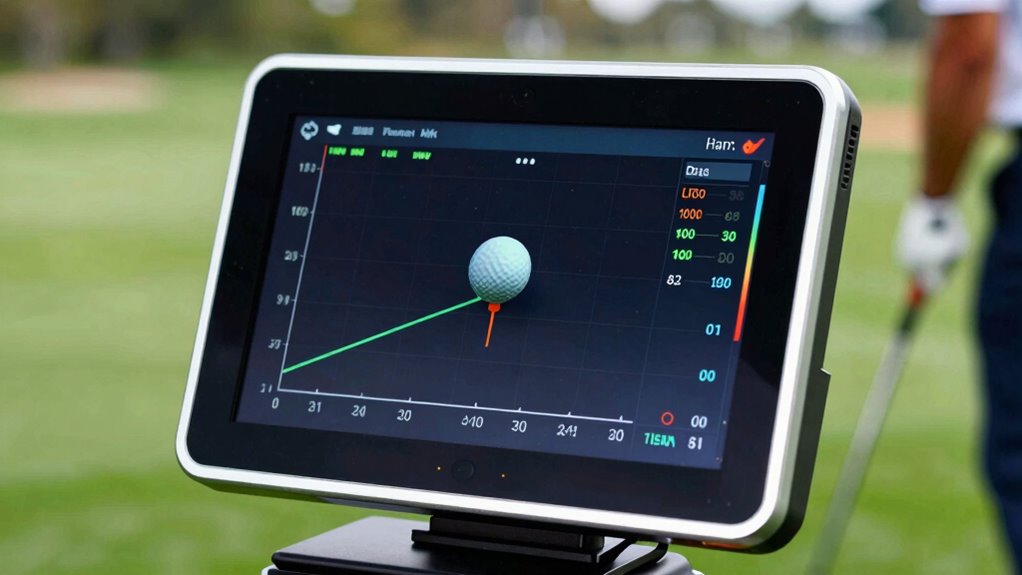
Launch monitors track ball data by using advanced sensors that capture key details about each shot. When you make a golf swing, these sensors analyze how the club interacts with the ball, gathering data like launch angle, spin rate, and ball speed. Proper equipment calibration is vital; it guarantees the sensors measure accurately and your data remains reliable. As you swing, the monitor processes the information in real-time, providing immediate feedback to help refine your technique. The sensors detect even subtle changes in your swing mechanics, which helps identify areas for improvement. By understanding how your golf swing impacts ball data, you can make better adjustments, optimize your equipment, and ultimately improve your game. Understanding how digital concepts are integrated into launch monitors enhances the accuracy and usefulness of the data collected. Incorporating the latest technology ensures that the sensors remain precise and capable of capturing detailed information during each shot.
What Does Ball Speed Tell You About Your Distance?
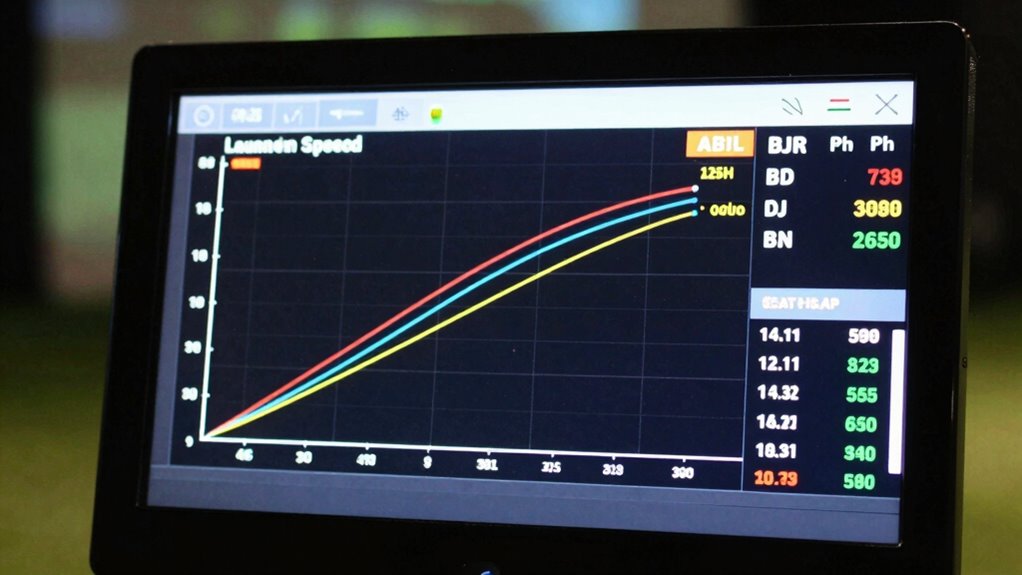
Ball speed is a crucial factor in determining how far your golf ball will travel after impact. Higher ball speeds generally lead to longer shots, but consistency is key. If your ball speed varies, your distances will too, affecting your overall game. Maintaining steady ball speed helps optimize your distance control and allows for better spin rate management. Additionally, understanding Free Floating backyard transformations can help create a relaxing environment for practice and enjoyment. Proper calibration of your launch monitor ensures accurate readings of projector technology and other key metrics, further improving your game analysis. Paying attention to consistent swing mechanics can also significantly impact your ability to maintain steady ball speeds. Recognizing the importance of data accuracy in your launch monitor setup is essential for making reliable adjustments to your game. Ensuring your equipment is properly calibrated can help avoid misleading data and lead to more effective practice sessions.
How Spin Affects Your Shot Shape and Control?

Spin plays a significant role in shaping your shot and giving you control over your ball’s flight. With better spin control, you can influence whether your shot curves left or right, helping you shape shots around obstacles or into specific targets. You can also adjust your swing to optimize spin control for different shot types, further enhancing your performance. The amount and direction of spin directly impact shot shape, making it it’s essential for controlling ball flight. Consistent spin helps improve shot consistency, so your shots follow predictable patterns, reducing errant shots. When you understand how to manage spin, you can fine-tune your swing to produce desired shot shapes and maintain control under different conditions. Additionally, understanding the private equity landscape and sector trends can help you make more informed decisions about your game and investments. Recognizing the importance of spin in shot shaping allows players to adapt their techniques to various course conditions, ultimately elevating their overall game. Ultimately, mastering spin allows you to better manipulate your ball’s flight, giving you greater precision and confidence on the course. A solid grasp of spin dynamics can also aid in developing more effective practice routines to improve overall consistency, especially when combined with understanding how different dog breeds respond to training techniques.
How Launch Angle Changes Ball Trajectory?
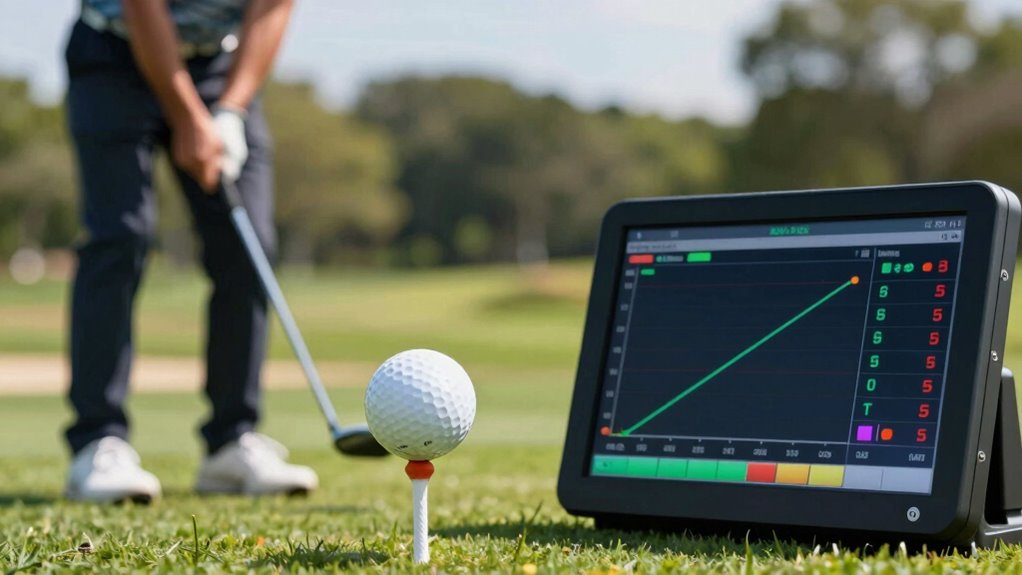
Have you ever wondered how changing the angle at which your club strikes the ball impacts its flight? Your launch angle plays a vital role here. A higher launch angle generally sends the ball on a higher trajectory, increasing carry distance but potentially reducing roll. Conversely, a lower launch angle keeps the ball flatter, which might be useful for control or in windy conditions. Spin rate interacts with launch angle, affecting how the ball behaves in flight—more spin can keep the ball airborne longer, especially with a higher launch angle. If you increase your launch angle without adjusting spin rate, your shots may balloon or lose accuracy. Understanding how launch angle influences ball trajectory helps you optimize your swings for desired distances and accuracy. Incorporating holistic SEO strategies into your practice can also help you better understand and utilize data for overall improvement. Recognizing the impact of ball flight data can lead to more precise adjustments and better performance. Additionally, understanding how launch monitor technology analyzes ball-tracking data can provide deeper insights into your swing mechanics. Knowing how these data points interact allows for more tailored and effective training strategies. Being aware of how data interpretation works is crucial for making meaningful improvements from your launch monitor readings.
Using Data to Spot and Fix Swing Flaws?
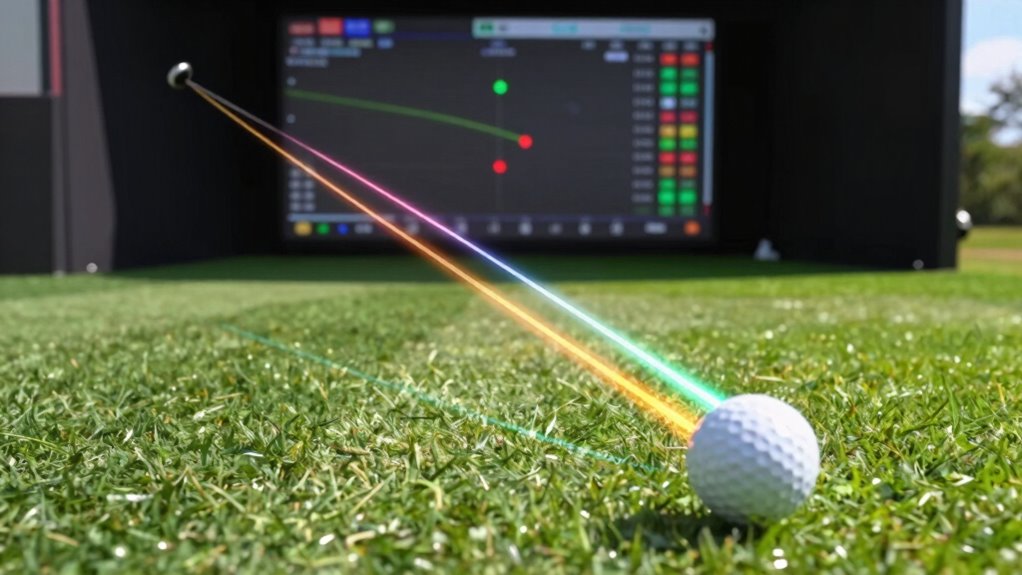
Using data from launch monitors allows you to identify swing flaws that might otherwise go unnoticed. By analyzing metrics like swing mechanics, you can pinpoint issues such as poor path, face angle, or swing plane errors. This detailed feedback helps you understand where your swing deviates from ideal mechanics. To guarantee accurate insights, it’s essential that your equipment is properly calibrated; incorrect calibration can lead to misleading data. Proper equipment calibration is crucial, as even small errors can significantly impact your data accuracy, leading to more effective swing improvements. Once you identify flaws, you can work on specific adjustments to improve consistency and performance. For example, if data shows an open clubface at impact, you can focus on correcting your grip or wrist position. Being aware of how your data collection process works helps in making better-informed adjustments for ongoing progress. Additionally, understanding the importance of accurate data can help you avoid misinterpretations that might otherwise hinder your development. Incorporating knowledge about essential oils for swing health can also promote overall well-being, which may indirectly support better performance.
Tips to Use Launch Monitor Data During Practice?

To get the most out of launch monitor data during practice, you should set clear, specific goals for each session. Focus on key aspects of your golf swing, such as ball speed, launch angle, or spin rate, and track how your adjustments influence these metrics. Before practicing, ensure your equipment is properly calibrated for accurate readings, as miscalibration can lead to misleading data. Use the monitor to validate changes you make to your swing, rather than guessing or relying solely on feel. Keep a record of your sessions to identify patterns and progress over time. Remember, consistent equipment calibration and targeted goals will help you interpret data effectively, making your practice sessions more productive and focused. Additionally, understanding electric bike conversion kits can inspire innovative ways to enhance your cycling experience beyond golf practice. Proper filter sizing/flow is also essential to ensure your equipment operates efficiently and provides accurate data during your sessions. Incorporating connected fitness technology can further improve your ability to analyze and adjust your training based on real-time insights.
How to Improve Your Ball Spin and Launch Conditions?
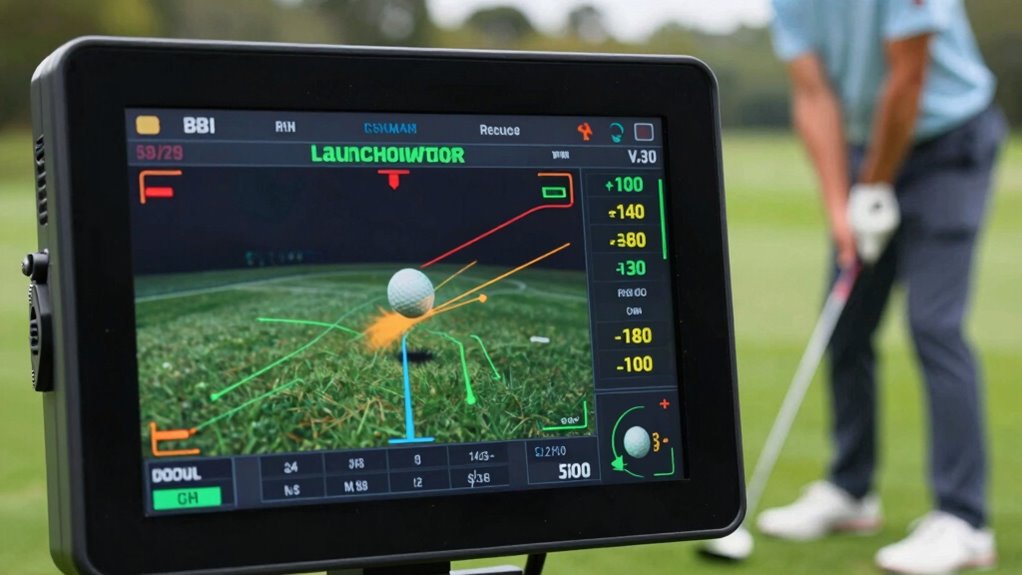
Improving your ball spin and launch conditions starts with understanding how your swing and equipment influence these metrics. Adjusting your grip pressure can help control spin; a lighter grip often promotes more spin, while a firmer grip reduces it. Additionally, selecting the right club loft is vital—higher lofts generate more launch and spin, ideal for maximizing carry. To enhance these factors, consider the following:
- Refine your grip pressure to find the balance that promotes desired spin without sacrificing control.
- Experiment with club loft adjustments to achieve ideal launch angles for your swing speed.
- Monitor your swing path and angle of attack to consistently produce the desired spin and launch conditions.
Frequently Asked Questions
How Accurate Is Ball-Tracking Data Across Different Weather Conditions?
Ball-tracking data’s accuracy can vary with weather impact, especially in conditions like rain, fog, or strong wind. These elements can interfere with sensors, reducing data reliability. You might notice less precise measurements during adverse weather, so it’s best to use launch monitors in stable conditions for the most accurate results. Keep in mind, weather impact can compromise the consistency and dependability of ball-tracking data.
Can Launch Monitors Predict Shot Outcomes Before Impact?
Launch monitors can’t predict shot outcomes before impact with complete certainty, but they provide valuable golf swing analysis to help you understand potential results. They analyze data like ball speed, launch angle, and spin to offer realistic projections. Proper equipment calibration is essential for accuracy, ensuring the data reflects your actual swing. While not foolproof, these insights guide your adjustments and improve your game over time.
What Role Does Club Data Play Alongside Ball Data?
Think of a club fitting session where your swing analysis shows a slight fade, but your ball data indicates a draw trajectory. Club data, like club speed and face angle, work with ball data to refine your shot. This combined info helps you optimize club selection and setup. By analyzing both, you get an all-encompassing understanding, leading to better shot consistency and more effective club fitting, improving your overall game.
How Does Ball-Tracking Data Vary Between Different Golf Swing Types?
You’ll notice that ball-tracking data varies with your swing type, especially in swing consistency and shot shape. For a smooth, repeatable swing, data shows consistent launch angles and spin rates, leading to predictable shot shapes. If your swing is more variable, these metrics fluctuate, causing inconsistent shot shapes. Recognizing these patterns helps you adjust your swing for better consistency and desired shot shapes, ultimately improving your game.
Are There Limitations to Using Launch Monitor Data for Real-Game Scenarios?
Launch monitor data has limitations for real-game scenarios because swing adjustments and equipment calibration can vary. You might see different results outdoors due to environmental factors like wind or course conditions, which the monitor doesn’t account for. Additionally, equipment calibration needs regular checks to guarantee accuracy. While helpful for analysis, relying solely on this data for swing adjustments can be misleading unless you consider these factors and practice in real-world conditions.
Conclusion
Think of launch monitor data as your compass on the golf journey. It guides you through the maze of swings and shots, illuminating where adjustments are needed. Embrace this tool as a mirror reflecting your progress and potential. With each session, you’re carving a clearer path toward your best game—transforming raw data into a shining beacon that steers you toward mastery and confidence on every fairway.