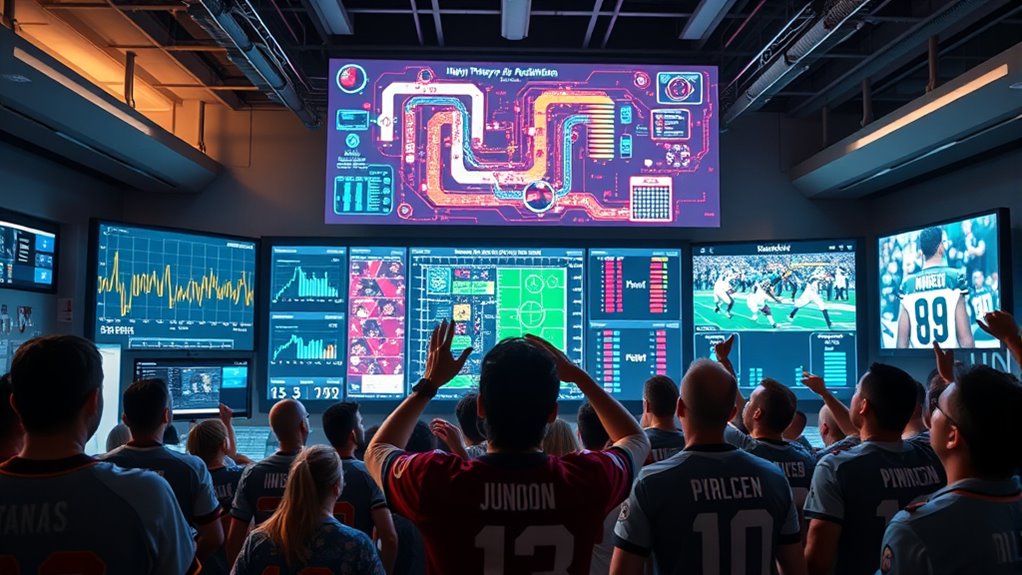

Machine learning helps you predict injuries by analyzing player data, sensor insights, and biomechanical patterns, allowing proactive prevention and tailored training. It also enhances fan engagement by providing real-time updates, strategic narratives, and behind-the-scenes insights that build stronger connections. Coaches use ML to simulate scenarios and make smarter decisions during games. Exploring these innovative approaches can open new possibilities for improving team health and creating a more immersive fan experience—continue to discover how these technologies are transforming sports today.
Key Takeaways
- Machine learning analyzes player data to identify injury risk patterns and enable proactive injury prevention strategies.
- Real-time sensor and wearable data help detect early signs of overexertion, reducing injury rates.
- Predictive analytics forecast player absences’ impact on game outcomes, managing fan expectations effectively.
- Data-driven simulations support strategic coaching decisions and in-game tactical adjustments.
- Enhanced fan engagement is achieved through transparent insights, behind-the-scenes content, and strategic storytelling.

Machine learning is transforming how teams predict injuries and manage fan expectations, providing data-driven insights that were previously impossible. As a coach or team analyst, you can now analyze vast amounts of player performance data to identify subtle patterns that signal increased injury risk. These insights help you refine coaching strategies, tailoring training loads and recovery protocols to individual athletes. By understanding how specific movements, fatigue levels, or game demands affect player performance, you can develop smarter approaches that reduce injury chances. This proactive stance not only keeps your players healthier but also ensures your team remains competitive throughout the season.
Machine learning helps coaches predict injuries and optimize training for healthier, more competitive teams.
With machine learning, you’re empowered to make more informed decisions. Instead of relying solely on intuition or traditional statistics, you leverage algorithms that process real-time data from sensors, video analysis, and wearable devices. These tools can detect early signs of overexertion or biomechanical issues before they develop into serious injuries. For example, if a player’s gait or muscle activation patterns change subtly after a series of games, the system alerts you to intervene with rest or targeted therapy. This proactive approach to injury prevention is a game-changer, allowing you to adjust training intensity based on individual risk profiles rather than broad averages. Additionally, understanding the role of data-driven insights can help teams develop personalized training programs that further reduce injury risk.
Fan expectations are equally impacted by machine learning advances. You can now predict how different scenarios—such as player absences, injury recoveries, or team performance trends—will influence game outcomes and audience engagement. By analyzing historical data, social media activity, and ticket sales, you can craft narratives that resonate with fans, setting realistic expectations and building anticipation around upcoming matches. This data-driven storytelling enhances fan loyalty and creates a more immersive experience, as they feel connected to the strategic decisions made behind the scenes.
Furthermore, machine learning models help you evaluate coaching strategies by simulating potential outcomes based on various in-game decisions. You can test different lineups or tactical adjustments to see which options maximize player performance and minimize injury risk. This iterative process allows you to optimize your game plans in real time, adapting to evolving circumstances during matches. As a result, you’re not just reacting to events—you’re actively shaping them, ensuring your team’s success while managing fan enthusiasm with greater precision.
Ultimately, embracing machine learning means you’re at the forefront of sports innovation. You gain a competitive edge by safeguarding your players’ health, enhancing performance, and engaging fans with accurate, compelling insights. It’s a powerful tool that transforms the way you approach coaching strategies, injury prevention, and fan interaction, making your team smarter, healthier, and more connected than ever before.
Frequently Asked Questions
How Accurate Are Machine Learning Models in Injury Prediction?
Machine learning models can be quite accurate in injury prediction, especially when you consider player fitness and injury recovery data. They analyze patterns that help you identify high-risk situations early. However, their accuracy isn’t perfect, as injuries can be unpredictable. You should use these models as a helpful tool rather than a definitive answer, continuously updating them with new data to improve their reliability in predicting injuries.
Can Machine Learning Predict Specific Player Injuries?
Think of machine learning as a seasoned coach studying a player’s biomechanics to prevent injuries. It can predict specific injuries by analyzing patterns in movement data, past injuries, and workload. For example, if a player’s biomechanics show signs of strain, the model flags a high risk of hamstring injury. While not perfect, this approach helps teams personalize injury prevention strategies and keep players healthier throughout the season.
How Does Fan Expectation Data Influence Injury Prediction Models?
Fan expectation data influences injury prediction models by incorporating fan sentiment and crowd behavior, which can impact player stress levels and performance. When models recognize heightened fan enthusiasm or negative sentiment, they adjust risk assessments, considering the psychological pressure players face. This helps create more accurate predictions by accounting for external factors that affect player health, ultimately allowing teams to better prevent injuries and manage player well-being under varying fan influences.
What Ethical Concerns Exist With Using AI in Sports Injury Prediction?
You should be aware that using AI in sports injury prediction raises ethical concerns like data privacy, where players’ personal health info must be protected. There’s also the risk of bias, which can lead to unfair treatment or inaccurate predictions. To address these issues, you need to focus on bias mitigation strategies and guarantee strict data privacy measures, fostering fair and responsible AI use in sports.
How Do Injury Prediction Models Adapt to New Sports Data?
You might wonder how injury prediction models stay accurate as new sports data emerges. They continuously adapt by retraining with recent player recovery information and updated performance metrics, ensuring predictions remain relevant. This process involves balancing data privacy, so sensitive player details are protected while refining the model’s accuracy. As new trends and injuries surface, your models evolve, providing better insights and safeguarding athlete well-being.
Conclusion
By harnessing machine learning, you can revolutionize injury prevention and better understand fan expectations. Imagine a future where injuries are predicted early, and fans feel more connected than ever. Are you ready to embrace these innovations and transform the game? With these tools at your fingertips, you have the power to shape a safer, more engaging sports experience. The question is: are you ready to take the leap into this exciting future?