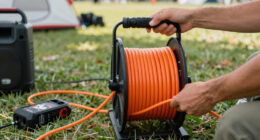
To choose between powered speakers and passive systems, consider your setup’s space, budget, and what you need for flexibility. Powered speakers are easier to set up, portable, and include built-in amps, making them ideal for small venues or personal use. Passive systems offer more customization but require extra equipment like external amplifiers. If you want to find the best fit for your needs, keep exploring the details to make an informed decision.
Key Takeaways
- Consider your setup space, portability needs, and whether a simple all-in-one system or customizable components are preferable.
- Evaluate if wireless connectivity and ease of use are priorities, favoring powered speakers with built-in wireless options.
- Assess sound quality requirements and ensure proper matching of components in passive systems for optimal clarity.
- Account for your budget, including initial costs and potential long-term expenses for additional equipment.
- Decide based on installation type—compact, portable powered speakers for small venues or larger passive setups for permanent installations.
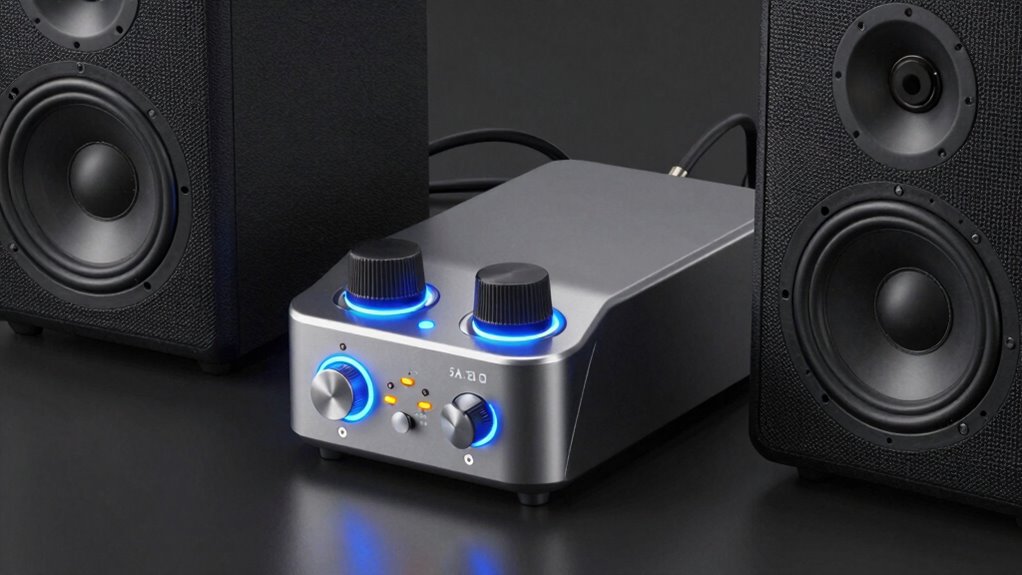
When selecting audio equipment for your setup, understanding the difference between powered speakers and passive systems is essential. Powered speakers come with built-in amplifiers, making them straightforward to set up and ideal for those who want a simplified, all-in-one solution. Passive systems, on the other hand, require separate amplifiers and external wiring, giving you more flexibility to customize your system. Your choice depends on your specific needs, space, and experience level.
Wireless connectivity plays a significant role in modern audio setups. If you prioritize ease of use and minimal cabling, powered speakers often come equipped with Bluetooth or Wi-Fi capabilities. These features allow you to connect devices wirelessly, reducing clutter and making setup quick and hassle-free. Passive systems typically lack built-in wireless options, meaning you’ll need to connect them through wired connections to external amplifiers, which may limit mobility and convenience but can sometimes offer more stable, high-quality audio transmission.
Acoustic clarity is another critical factor to consider. Powered speakers are designed to deliver clear, balanced sound in most environments because their internal amplifiers are optimized for the speaker drivers. They often feature built-in equalizers or tone controls, helping you fine-tune sound quality on the fly. Passive systems, however, rely heavily on the quality of the external amplifier you choose. If you opt for passive speakers, you’ll need to select an amplifier that complements their specifications to ensure maximum acoustic clarity. Proper matching of components becomes vital here; otherwise, you risk distortion or uneven sound. Additionally, the compatibility of components is crucial when setting up passive systems to prevent potential issues.
Your physical space also influences your decision. Powered speakers are usually more compact and portable, making them ideal for small venues, presentations, or personal use. If you need a flexible setup that can be moved easily, powered speakers with wireless connectivity are advantageous. Conversely, passive systems are often used in larger, more permanent installations where you might want to customize the sound system extensively. They can be integrated into larger arrays, giving you more control over sound distribution and coverage. Additionally, speaker configuration plays a role in how well your system performs in various environments.
Budget considerations matter too. Powered speakers typically cost more upfront because they include built-in amplification and wireless features. However, they can save you money and effort on additional equipment. Passive systems might have a lower initial cost but require investing in separate amplifiers and cabling, which can add up over time. Think about your long-term needs and whether the convenience of powered speakers outweighs the flexibility and potential cost savings of passive systems.
Ultimately, your choice hinges on balancing ease of use, sound quality, space, and budget. If you want a simple, portable, and wireless-ready solution with clear acoustic performance, powered speakers are the way to go. If you prefer a customizable, expandable setup that can be tailored to larger venues, passive systems may be better suited. Weigh these factors carefully to make an informed decision that suits your specific needs.

Alto TX410 350W 10" Powered PA Speaker
- Powerful 350W Bi-Amplified Sound: Delivers robust audio with clear clarity
- Rich, Clear Audio Output: Cuts through noise with detailed sound
- Easy Setup and Operation: Includes simple controls and mounting options
As an affiliate, we earn on qualifying purchases.
As an affiliate, we earn on qualifying purchases.
Frequently Asked Questions
Which System Offers Better Sound Quality for Live Performances?
For live performances, powered speakers generally offer better sound clarity because they have built-in amplifiers optimized for the speaker’s design. This integration often results in clearer sound and consistent volume levels. Additionally, powered speakers tend to be more durable and easier to set up, making them a reliable choice for live settings. You’ll appreciate how their sound quality and durability enhance your performance, giving your audience a richer listening experience.
How Do Maintenance Requirements Differ Between Powered and Passive Speakers?
You’ll find that maintenance requirements differ significantly between powered and passive speakers. Powered speakers need regular checks on their internal power supplies and cooling systems, which can affect speaker durability over time. Conversely, passive speakers require you to guarantee external amplifiers and wiring stay in good condition, focusing on power supply maintenance outside the speaker. Both demand routine upkeep, but passive systems often involve more external component checks.
Can I Upgrade Components Easily in Passive Systems?
You can upgrade components more easily in passive systems because they offer better upgrade flexibility. Since passive speakers rely on external amplifiers and crossovers, you just need to guarantee component compatibility when upgrading. This allows you to swap out or upgrade individual parts like drivers or crossover components without replacing the entire system. In contrast, powered speakers usually have integrated components, making upgrades more difficult and often requiring a full replacement.
What Are the Initial Cost Differences Between the Two Options?
Powered speakers usually cost more upfront because they include built-in amplifiers, which means you pay for brand compatibility and higher power consumption. Passive systems tend to be cheaper initially since you buy separate speakers and amplifiers, but you’ll spend more on installation and matching components. If you want a simpler setup with fewer compatibility worries, powered speakers might be worth the extra cost.
Are Powered Speakers More Suitable for Outdoor Events?
Of course, powered speakers are perfect for outdoor events—said no one ever. You’ll find them more suitable for indoor venues, thanks to their portability and self-contained design. They’re easy to set up and ideal for quick setups, but outdoor environments demand more rugged, versatile options. If you want reliable sound in open spaces, passive systems with external amps might actually serve you better than powered speakers.
Conclusion
Ultimately, choosing between powered speakers and passive systems is like selecting the right brush for a masterpiece—each has its own finesse. If you want simplicity and integrated amplification, powered speakers are your trusted allies. But if you crave flexibility and customization, passive systems offer endless possibilities. Consider your space, budget, and future needs. Remember, the perfect sound setup is a well-tuned instrument, ready to turn your auditory dreams into reality.