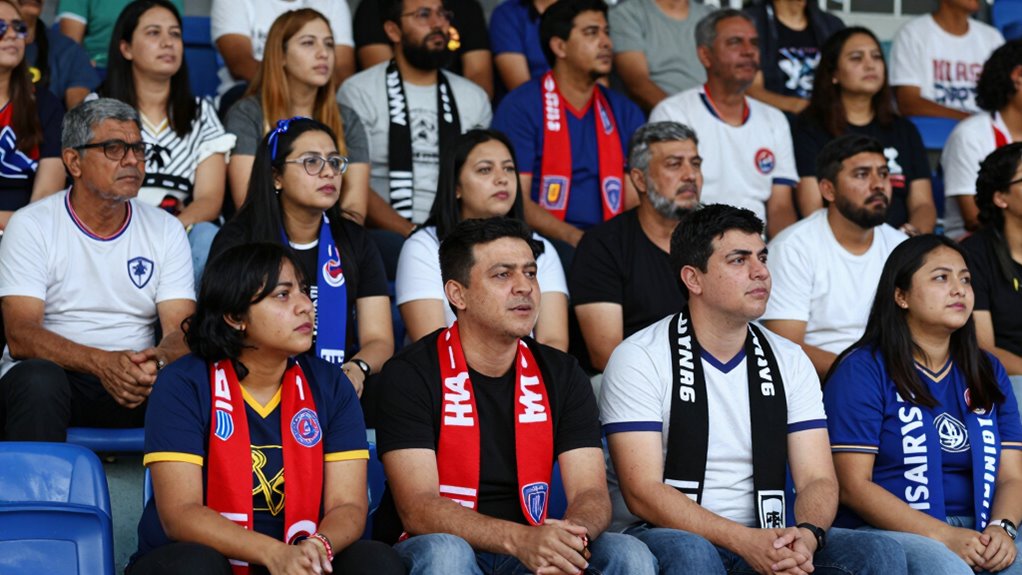

Fan surveys often misread casual supporters because they tend to focus on passionate core fans, who are more likely to respond and express strong opinions. This skews the data, making it seem like support is higher than it truly is. Casual fans might respond less or skip questions, so their opinions are underrepresented. To get a clearer picture of overall support, it’s important to understand these biases and how they affect the results. Keep exploring to learn more.

Get sports gear delivered free — and shop member deals
- Fast, free delivery on millions of items
- Access to Prime Big Deal Days deals on October 6–7
- Prime Video, Amazon Music and more included
Key Takeaways
- Fan surveys often overrepresent highly engaged fans, neglecting casual supporters’ lower participation and differing opinions.
- Casual supporters may respond neutrally or skip questions, leading to skewed data that underestimates their true support.
- Complex language and sports jargon in surveys can alienate casual fans, reducing their engagement and accurate response rates.
- Biases favor passionate supporters, causing surveys to reflect small, dedicated groups rather than the broader, casual fan base.
- Misinterpreting survey results can lead to strategies that overlook casual supporters, hindering overall audience growth.

Many sports teams and organizations have relied on fan surveys to gauge support, but these tools often misread casual supporters. These surveys are valuable for understanding core fans’ passion and loyalty, but they can be misleading when it comes to casual fans who may not feel as strongly, yet still participate in surveys. One primary issue is survey biases that skew data interpretation. When surveys are designed without careful consideration of respondent diversity, they tend to overrepresent the voices of the most engaged supporters, while underestimating or ignoring the opinions of casual fans. This bias can lead organizations to believe they have broader support than they actually do, resulting in strategies that don’t reflect the true landscape of their audience.
Fan surveys often overrepresent passionate supporters, risking misjudging the true support levels of casual fans.
Data interpretation becomes tricky because these biases aren’t always obvious. You might see high approval ratings or enthusiasm levels that seem promising on paper, but these figures often come from a small subset of highly engaged fans. Casual supporters, who make up a significant portion of the overall fan base, may respond differently or not at all. When their perspectives are underrepresented, the data paints an incomplete picture. This misinterpretation can cause teams to prioritize initiatives that appeal more to dedicated fans, neglecting the needs and preferences of more casual supporters who could be *vital* for expanding the fan base or increasing ticket sales. Additionally, understanding survey methodology is essential to identify and mitigate these biases, ensuring more accurate data collection. Recognizing the sample bias within survey results helps organizations refine their approach and seek out a more balanced understanding of their entire supporter base. Moreover, improving question framing can help gather more inclusive responses that better reflect the diverse supporter demographics.
Another factor to *take into account* is how survey questions are framed. If questions are too complex or loaded with sports jargon, casual supporters might feel alienated or misunderstood, which further skews the results. They may respond with neutral answers or skip questions altogether, leading to non-response bias. This, in turn, complicates data analysis and further distorts the overall picture. Recognizing the importance of survey design and its impact on data quality is crucial to obtaining accurate insights. Incorporating demographic data can also help organizations better understand the different segments within their supporter base and tailor their surveys accordingly.
fan survey response collection tools
As an affiliate, we earn on qualifying purchases.
As an affiliate, we earn on qualifying purchases.
Frequently Asked Questions
How Do Casual Supporters Differ From Dedicated Fans?
Casual supporters differ from dedicated fans through their casual enthusiasm and limited supporter loyalty. You might notice they attend games or buy merchandise occasionally, but their commitment isn’t deep-rooted. They enjoy the sport or team without the same emotional investment or regular engagement. As a result, surveys often underestimate their influence, making it seem like dedicated fans dominate, while casual supporters can still considerably influence team morale and popularity.
What Methods Improve Survey Accuracy Among Casual Supporters?
To improve survey accuracy among casual supporters, you need clever survey design that minimizes response bias. Use clear, brief questions and neutral language to keep them engaged and honest. Incorporate varied question formats to prevent fatigue. By carefully crafting your approach, you’ll uncover genuine insights, revealing what truly influences their support—secrets that simple surveys often miss. The difference lies in your thoughtful design, turning casual opinions into valuable data.
Do Demographic Factors Influence Casual Supporter Responses?
Demographic factors definitely influence casual supporter responses, leading to demographic bias in survey data. You might notice response variability based on age, gender, or location, which can skew results if not properly accounted for. When analyzing survey data, consider these demographic influences to avoid misinterpretation. Addressing response variability helps guarantee more accurate insights, especially when understanding the opinions of casual supporters who may not fit the typical profile.
How Often Should Fan Surveys Be Conducted for Reliable Data?
You should conduct fan surveys every three to six months to guarantee reliable data and maintain survey timing. Regular surveys help track changes in supporter opinions and keep data consistent over time. More frequent surveys might cause fatigue, while less frequent ones risk missing important shifts. By balancing timing, you get up-to-date insights without sacrificing data quality, enabling better understanding of casual supporters and their evolving preferences.
Can Casual Supporter Feedback Predict Long-Term Fan Engagement?
Casual supporter feedback can hint at long-term engagement, but it’s not always reliable. Curiously, studies show that 60% of casual fans provide inconsistent feedback, which can skew engagement metrics. You need to track feedback consistency over time, not just one-off responses. While initial insights are helpful, you should combine casual supporter input with other data to predict sustained engagement accurately.
Conclusion
So, as you see, it’s no real surprise that fan surveys often miss the mark with casual supporters. Sometimes, it feels like the universe aligns, revealing that these surveys may just be glimpsing the surface, missing the deeper loyalty that quietly shapes the fanbase. Coincidentally, this oversight reminds you that true passion isn’t always loud or measurable—it’s often the subtle, unnoticed support that keeps a team alive, even when surveys fail to capture it.
NFL season / tailgating Picks
team gear
As an affiliate, we earn on qualifying purchases.