
Fan photography rights often conflict with broadcast rights held by event organizers and broadcasters. While you can capture your favorite moments, sharing or publishing images without permission might infringe on copyrights or violate event policies. Broadcast rights control what footage is shown publicly, and unauthorized sharing could lead to legal issues. To understand how to enjoy events responsibly while respecting these rights, keep exploring how laws and policies shape fan participation and image use.
Key Takeaways
- Broadcast rights are typically owned by event organizers or broadcasters, restricting public sharing of footage and images.
- Fan photography may be permitted for personal use but often requires permission to share or publish content legally.
- Content restrictions aim to protect broadcast rights and prevent unauthorized use or commercial exploitation of event images.
- Digital technology and social media amplify sharing, but rights holders enforce restrictions through licensing and legal measures.
- Fans must balance enthusiasm with respect for copyright and broadcast rights to avoid infringement and legal issues.
The Legal Foundations of Fan Photography

Understanding the legal foundations of fan photography is essential because it determines what you can and can’t do when capturing images at live events. Fan consent plays a vital role; some venues or performers may require permission before you take photos, especially if you plan to publish or share them. Additionally, intellectual property rights protect the images you take, meaning the event or performer might hold copyrights over certain elements, like stage design or performances. This means you can’t automatically assume you own the rights to your photos. Being aware of these legal boundaries helps you avoid potential disputes or violations. Moreover, some events have specific support hours during which you can seek clarification on photography policies, making it important to plan accordingly. Respecting fan consent and understanding intellectual property laws ensures you capture and share images responsibly, staying within the law while enjoying your fan experience.
Rights Held by Event Organizers and Broadcasters
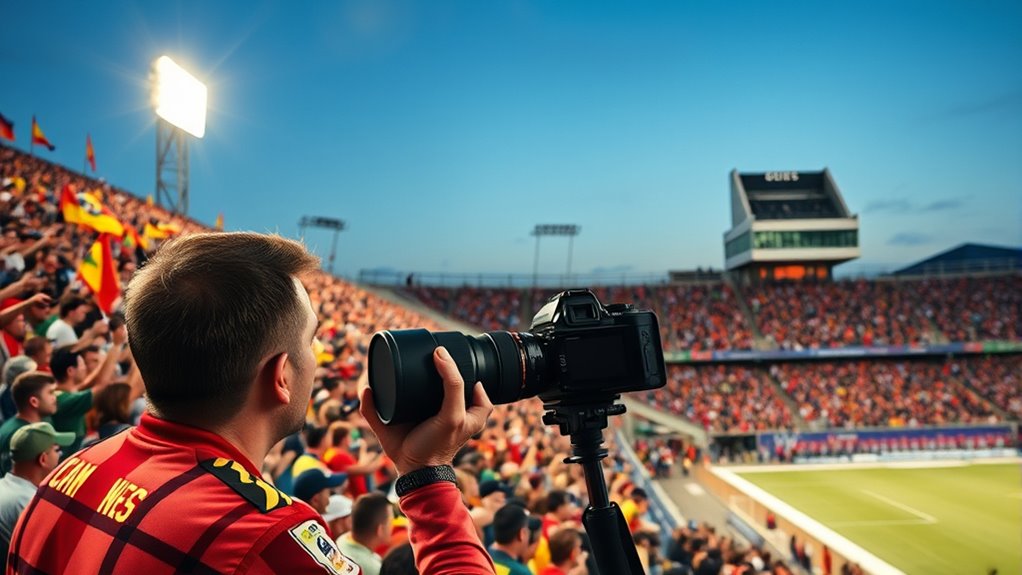
As an attendee, you should understand that event organizers and broadcasters often hold rights to the photographs taken during events. They also control broadcast transmission and can restrict public display of images. Knowing who owns these rights helps you navigate what you can share or use afterward. Additionally, awareness of security vulnerabilities in new technologies can help you better understand the potential risks associated with image sharing and broadcasting.
Ownership of Photographs
When it comes to photographs taken at sporting events, ownership rights are typically held by the event organizers or broadcasters rather than the individual photographers. This means your photos often become part of fan memorabilia, used to promote or archive the event. Photography ethics come into play, as rights are usually assigned to protect the commercial interests of the organizers and broadcasters. You might be allowed to take pictures for personal enjoyment, but you usually can’t claim ownership or sell these images without permission. This legal stance ensures the event’s branding and broadcasts remain under the control of the rights holders. Additionally, copyright laws generally clarify that the rights are reserved by the rights holders, reinforcing the importance of respecting these boundaries. As a fan, understanding these ownership rules helps you respect the boundaries set by organizers and avoid infringing on their rights.
Broadcast Transmission Rights
Broadcast transmission rights are primarily held by event organizers and broadcasters, giving them exclusive control over how the live footage is distributed and shown. This control impacts fan engagement by shaping what audiences see and hear during events. As a fan, your ability to capture and share photos is limited because broadcasters often restrict camera use to ensure broadcast quality and protect their rights. Photography ethics also come into play, as unauthorized images can interfere with broadcast operations or violate privacy expectations. Organizers and broadcasters aim to maintain a consistent viewing experience while protecting their rights. By holding broadcast transmission rights, they regulate the flow of live footage, balancing commercial interests with fan engagement, all while enforcing rules that uphold the integrity of the broadcast.
Public Display Permissions
Event organizers and broadcasters hold the authority to control how images and footage are displayed publicly, whether during the event or afterward. This means they set the rules for fan etiquette and photography ethics, ensuring that sharing or broadcasting images aligns with their policies. You should respect restrictions on displaying images in certain contexts or platforms, especially if they involve sensitive moments or copyrighted footage. By understanding these public display permissions, you help maintain respectful interactions and avoid infringing on broadcast rights. Remember, even if you capture great shots, sharing them without permission can lead to legal issues. Always check event guidelines and honor any restrictions, demonstrating proper fan etiquette and supporting the rights held by organizers and broadcasters. Additionally, understanding the broadcast rights involved helps you better navigate what is permissible when sharing event content.
Types of Content Fans Typically Capture and Share
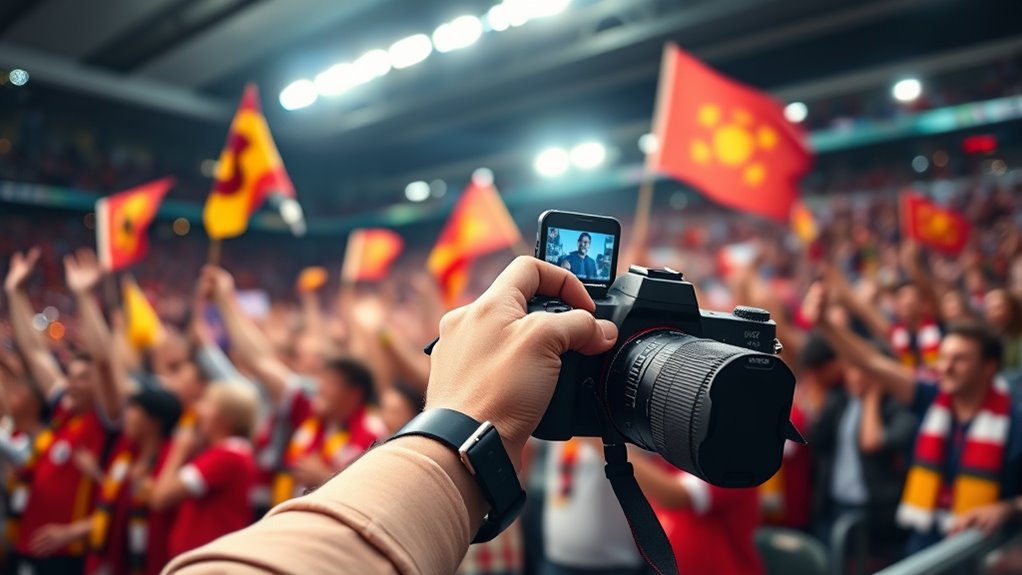
Fans often focus on capturing and sharing moments that highlight the excitement and atmosphere of a live event. You might record the energy of the crowd, close-ups of fan memorabilia, or the stunning visuals of the venue. Common content includes photos of:
Fans love sharing the vibrant energy, memorabilia, and stunning venue visuals that capture the thrill of live events.
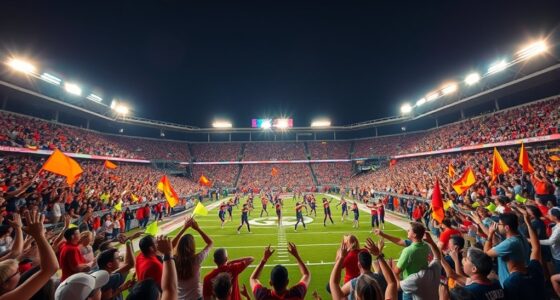
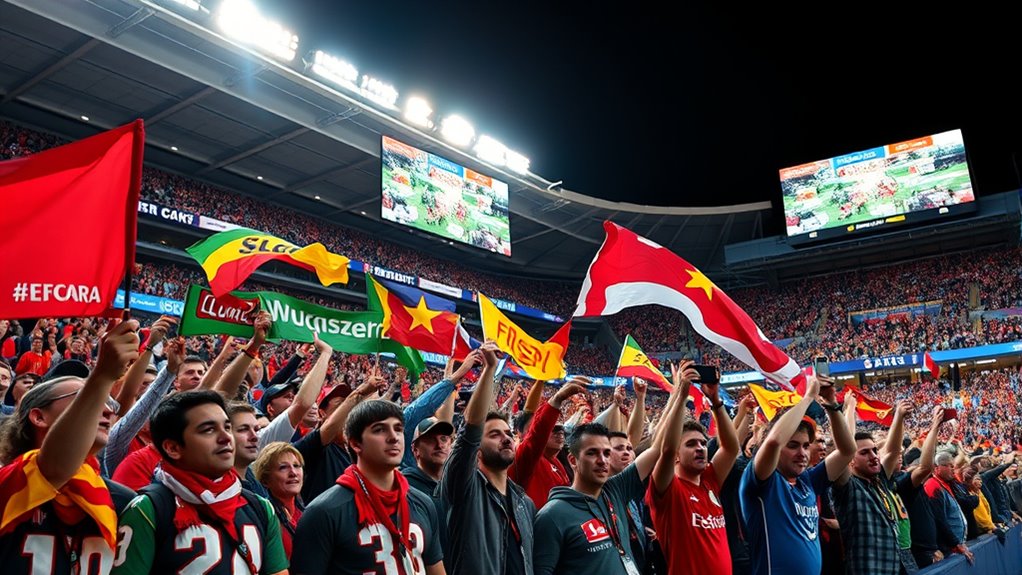
- Iconic stadium views and crowd reactions
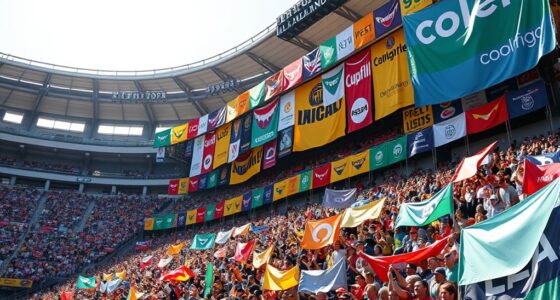
- Fan memorabilia like jerseys, banners, and signs
- Audio snippets capturing stadium acoustics and chants
These types of content reflect your experience and enthusiasm, often emphasizing the event’s vibrant atmosphere. Sharing images of fan memorabilia and the stadium acoustics helps others feel connected to the moment. Additionally, it’s important to understand content restrictions and rights when sharing media to avoid copyright issues. Remember, while capturing these moments, you’re documenting your personal experience, but it’s essential to respect content restrictions and rights when sharing.
How Broadcast Rights Are Enforced and Protected
Broadcast rights are protected through legal enforcement mechanisms that prevent unauthorized use. Licensing and permits are essential tools used to regulate who can broadcast content legally. Understanding these protections helps you see how broadcasters defend their rights and maintain control over their content. Additionally, the use of projector technology ensures that visual quality meets broadcast standards, further safeguarding the integrity of transmitted content.
Legal Enforcement Mechanisms
To effectively safeguard broadcast rights, rights holders rely on a range of legal enforcement mechanisms that actively deter unauthorized use and guarantee compliance. These include pursuing legal action against infringers, issuing cease-and-desist orders, and working with enforcement agencies. Such measures help protect against unauthorized broadcasts and digital piracy. Additionally, rights holders monitor online platforms for unauthorized fan photography and ticket resale activities that could compromise their rights or fan privacy. They may also enforce broadcast restrictions through digital watermarking and licensing agreements. Cookies are also employed to track and analyze online activity, ensuring the detection of potential infringements and unauthorized sharing.
Licensing and Permits
Licensing and permits serve as fundamental tools for enforcing and protecting broadcast rights. They ensure that rights holders maintain control over how their content is used, whether through ticket resale, merchandise licensing, or broadcasting. By securing proper licenses, you prevent unauthorized distribution and safeguard your revenue. These permits also help in tracking illegal activities and stopping unauthorized fan photography that could infringe on broadcast rights. Proper licensing creates a legal shield, making it easier to enforce rights and pursue violations. Additionally, content regulation plays a crucial role in maintaining the integrity of broadcast rights and preventing infringement.
Conflicts Between Fan Sharing and Commercial Interests

Although fans love sharing their favorite moments from live events, this enthusiasm often clashes with the commercial interests of broadcasters and rights holders. They aim to protect their investments and control the viewing experience, which can lead to restrictions on fan sharing. To navigate this tension, you should follow fan etiquette and adhere to social media policies set by event organizers. Failure to respect these guidelines can result in content removal or even bans. The conflicts mainly arise over:
Fans sharing moments clash with broadcasters’ rights, so follow social media rules to avoid bans and respect content ownership.
- Unauthorized sharing of copyrighted footage
- Monetizing fan content without permission
- Undermining official broadcast exclusives
Understanding the importance of content ownership is crucial to maintaining respectful fan engagement. Balancing fan enthusiasm with commercial concerns requires understanding and respecting these boundaries, ensuring everyone benefits while protecting the rights of content owners.
The Impact of Digital Technology and Social Media

Digital technology and social media have drastically transformed how fans share and consume live event content. You now instantly post photos, videos, and comments, increasing fan engagement and shaping social influence. This rapid sharing amplifies the event’s reach beyond stadiums and arenas, creating a global conversation. The ease of sharing also raises questions about content rights and how they are managed in this new digital landscape.
Recent Legal Cases and Precedents
Recent legal cases have set important precedents in the ongoing debate over fan photography and broadcast rights. Courts have weighed fan privacy against commercial interests, clarifying when fan images can be shared freely. Notable cases include rulings on unauthorized photography and social media regulations affecting broadcast rights. These decisions emphasize the importance of respecting individual privacy and managing copyright concerns. Key ideas include:
- Enforcing fan privacy rights in public venues
- Regulating social media sharing of fan photos
- Balancing public interest with copyright enforcement
- The evolving legal landscape underscores the need for clear policies that respect privacy and address broadcast rights.
These precedents influence how event organizers and fans navigate the legal landscape. They underscore the need for clear policies respecting privacy while addressing broadcast rights, guiding future legal interpretations and enforcement.
Navigating the Balance Between Fan Enthusiasm and Rights Management

Balancing fan enthusiasm with rights management requires careful consideration of both parties’ interests. As a fan, you should practice good fan etiquette by respecting copyright boundaries and avoiding intrusive photography that disrupts others’ experience. At the same time, event organizers and rights holders want to foster positive audience engagement without compromising broadcast rights or intellectual property. Find ways to celebrate your enthusiasm responsibly—such as sharing photos within permitted limits or participating in official fan zones. Clear communication about what’s acceptable helps maintain a respectful environment where fans can express their passion without infringing on rights. Understanding the importance of balancing these interests, including content protection, helps ensure a positive experience for everyone involved.
Frequently Asked Questions
Can Fans Sell Their Photos Without Infringing on Rights?
You can sell your photos if you have the necessary fan permissions and understand image licensing. Without proper rights or permissions, selling images might infringe on the rights of the event organizers or performers. Always check if you’re allowed to sell your photos, as some venues or events require specific licenses or fan permissions. Being informed about image licensing helps you avoid legal issues and guarantees you respect the rights of others.
Are There Differences in Rights for Amateur Versus Professional Photographers?
Think of amateur photographers like hikers on a trail, exploring freely but respecting the landscape, while professionals are like tour guides with permits. Your amateur rights often allow you to take photos at events, but for professional work, you need explicit permissions from rights holders. This means amateurs can usually share their shots more freely, whereas professionals must secure specific permissions to avoid legal issues.
How Do International Laws Affect Fan Photography at Global Events?
You need to understand that international copyright laws vary across countries, affecting fan photography at global events. Some nations offer legal exemptions for amateur photography, allowing fans to capture moments without infringing rights. However, in other countries, strict regulations may restrict or regulate fan photography to protect broadcast rights. Always check local laws before taking photos, as international laws can markedly impact what you’re allowed to do at these events.
What Privacy Considerations Apply When Photographing Behind-The-Scenes Content?
Did you know that 85% of behind-the-scenes photos involve individuals who haven’t given explicit consent? When photographing behind-the-scenes content, you must consider privacy concerns and respect individuals’ rights. Always seek consent when possible, as privacy laws vary globally. Ignoring these requirements can lead to legal issues or privacy violations. Being mindful of consent requirements helps protect personal privacy and ensures ethical photography practices in sensitive environments.
Are There Exemptions for Personal Use Versus Commercial Distribution of Fan Photos?
When considering personal use versus commercial distribution of fan photos, you should know that fan consent is vital, especially if you’re capturing identifiable individuals. Venue restrictions often limit where and when you can take photos, so always check those rules. For personal use, you’re typically more protected, but for commercial purposes, you may need explicit rights or permissions to avoid legal issues. Always respect privacy and venue policies.
Conclusion
Balancing fan enthusiasm with rights management is like walking a tightrope over the digital age’s chaos. You’ve got to respect the legal foundations while embracing the passion fans bring, even if it feels like fighting a losing game against the speed of social media. Remember, maneuvering this landscape requires clarity and respect—think of it as steering a vintage spaceship through modern skies. Ultimately, finding harmony lets everyone enjoy the show without crashing into legal meteors.