

After a controversial loss, stay calm and focus on sportsmanship by respecting opponents and officials. Manage your emotions by taking a moment to breathe and reflect, rather than reacting impulsively. Use the setback as a chance to learn and improve, and communicate calmly to clarify misunderstandings. Remember, your response shapes your character, so keep perspective on long-term goals and growth. If you want to see how to turn conflict into a positive experience, keep exploring these strategies.

Get sports gear delivered free with Prime
- Fast, free delivery on millions of items
- Prime Video, Amazon Music and more included
- Member-only deals all year
Key Takeaways
- Stay calm and take deep breaths to manage emotional reactions effectively.
- Reflect on the loss as a learning opportunity rather than assigning blame.
- Communicate respectfully with coaches, officials, or teammates to clarify misunderstandings.
- Focus on long-term goals and maintain perspective to prevent escalation.
- Demonstrate sportsmanship by accepting the outcome gracefully and setting a positive example.
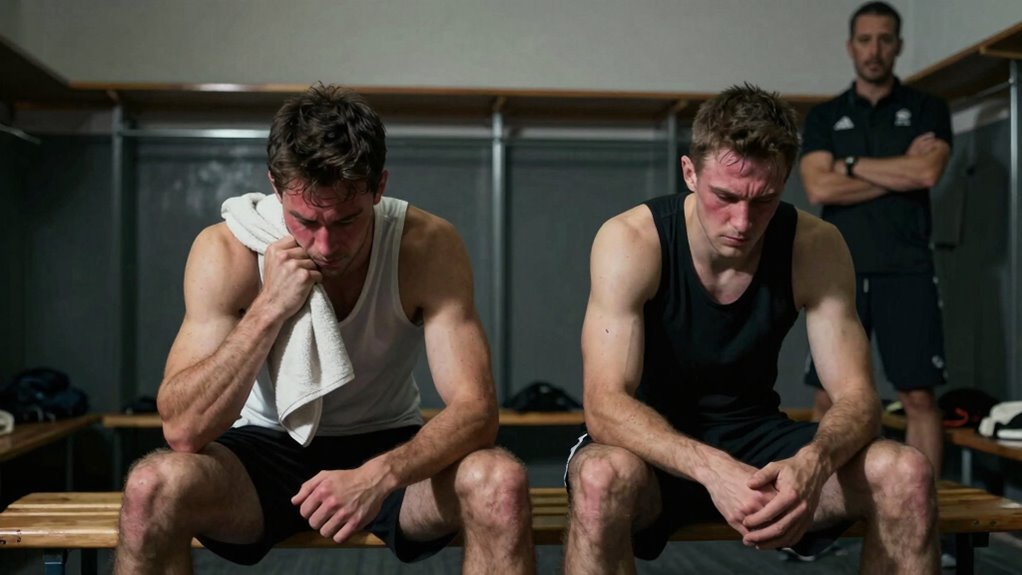
Have you ever faced conflict after a controversial loss that sparked anger or disagreement? It’s a common experience in competitive sports, and how you handle it can make a big difference in your growth as an athlete and as a person. First, it’s essential to remember the importance of sportsmanship. Maintaining respect for your opponents, officials, and even yourself shows maturity and integrity. Instead of lashing out or making excuses, focus on accepting the outcome gracefully. Acknowledge the effort you put in, and avoid blaming others or the referees. Doing so not only preserves your reputation but also sets a positive example for others. Your ability to show good sportsmanship during tough moments demonstrates strength, not weakness, and can help de-escalate conflicts before they spiral out of control.
Alongside sportsmanship, emotional resilience plays a vital role in handling conflict after a controversial loss. Emotions tend to run high, especially when you feel the game was unfair or unfairly decided. Instead of letting anger or frustration take over, take a moment to breathe and step back. Recognize your feelings without judgment, then channel that energy constructively. Emotional resilience means you can recover quickly from setbacks and maintain focus on what’s next. It helps you process disappointment without dwelling on negativity or lashing out at others. Developing this resilience involves practicing self-awareness and learning to manage your reactions, which ultimately leads to better decision-making during heated moments. Cultivating emotional resilience can also contribute to more positive interactions and reduce the likelihood of conflicts escalating. Remember that setbacks are part of the learning process and can serve as motivation to improve.
Embrace emotional resilience to recover quickly and maintain focus after setbacks.
You should also remind yourself that a controversial loss isn’t the end of the world. It’s an opportunity to learn and grow. Reflect on what you can improve, and view the experience as a stepping stone rather than a failure. Sometimes, conflicts arise because of miscommunications or misunderstandings. If you feel comfortable, calmly discuss your perspective with coaches, officials, or teammates to clear the air and gain clarity. Approach these conversations with respect and a desire to understand rather than to argue. This mindset encourages resolution rather than escalation.
Lastly, focus on your long-term goals and the bigger picture. Conflicts in the heat of the moment can cloud your judgment, but if you maintain perspective, you’ll see that setbacks are temporary. Cultivating emotional resilience and sportsmanship helps you stay grounded, no matter the outcome. Over time, your ability to handle these situations with grace will not only improve your relationships within the sport but also strengthen your character outside of it. Remember, how you respond to controversy defines you far more than the result of any game. Developing conflict management skills can be invaluable both on and off the field.
Products Worth Considering

Bowflex SelectTech 840 Adjustable Kettlebell

Therabody JetBoots Prime Wireless Compression Boots – Short (Under 29 Inseam)

YETI Tundra 105 Cooler
As an affiliate, we earn on qualifying purchases.
Frequently Asked Questions
How Can I Prevent Conflicts From Arising After a Loss?
You can prevent conflicts after a loss by practicing emotional awareness and respectful communication. Acknowledge your feelings and encourage others to do the same, which helps diffuse tension. Focus on listening actively and avoid blame or harsh language. When discussing the loss, stay respectful and constructive. Maintaining a calm, understanding attitude promotes a positive environment where conflicts are less likely to arise and everyone feels heard and respected.
What Are Effective Ways to Apologize Sincerely?
Like a knight seeking to restore honor, you should express sincere remorse by clearly acknowledging your mistake. Show genuine accountability by taking responsibility without excuses, and avoid deflecting blame. Use honest language, maintain eye contact, and offer a heartfelt apology. Your sincerity will resonate more powerfully than words alone, helping rebuild trust and mend the relationship after a conflict or mistake.
How Do I Rebuild Trust After a Heated Dispute?
To rebuild trust after a heated dispute, start with emotional acknowledgment, genuinely recognizing how your actions affected the other person. Practice active listening, giving them space to express their feelings without interruption or defensiveness. Show consistent, honest effort over time to demonstrate your commitment to change. By being empathetic and transparent, you can gradually restore trust, turning conflict into an opportunity for stronger understanding and connection.
When Should I Involve a Mediator or Third Party?
You should involve a mediator or third party when discussions become too emotionally charged or when neutral language isn’t enough to foster understanding. Consider cultural considerations to guarantee respectful communication, especially if differences influence perspectives. Wait until tensions settle and both sides are open to dialogue. A mediator can facilitate fair, unbiased conversations, helping you find common ground while respecting cultural nuances, ultimately promoting productive resolution.
How Can I Maintain Professionalism During Conflict Resolution?
You can maintain professionalism during conflict resolution by practicing emotion regulation, keeping your emotions in check, and staying calm. Use active listening to genuinely understand the other person’s perspective, which shows respect and helps de-escalate tension. Focus on facts rather than emotions, communicate clearly, and avoid personal attacks. Staying composed and attentive guarantees you handle disagreements constructively, preserving your professionalism and fostering a positive resolution.
Conclusion
As you navigate the aftermath of a controversial loss, remember that tension can either break you or build resilience. Stay calm, seek understanding, and keep your integrity intact. But beware—hidden beneath the surface of conflict, there’s a chance for unexpected growth or unforeseen consequences. Will you choose to confront the chaos with grace or be consumed by it? The choice is yours, and the outcome could change everything you thought you knew.