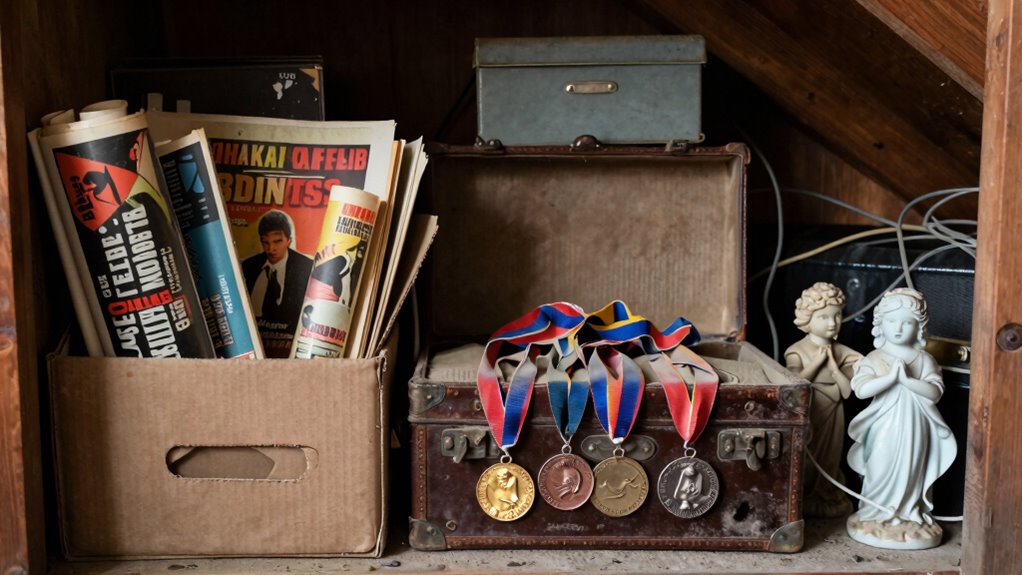
You should store valuable, fragile, or sentimental memorabilia instead of displaying them openly. Items like vintage collectibles, rare sports cards, old photographs, and delicate textiles are prone to damage from light, air, and handling. Exposure can cause fading, warping, or deterioration over time. Proper storage in acid-free containers, climate-controlled environments, and organized setups can help preserve their value and condition. Exploring further will give you more tips on how to protect your cherished items effectively.
Key Takeaways
- Highly valuable or rare items that could be damaged by frequent handling or exposure.
- Fragile items like vintage photographs, textiles, or ceramics prone to deterioration.
- Items susceptible to fading, yellowing, or warping from light and humidity exposure.
- Sentimental or irreplaceable memorabilia at risk of accidental damage or loss.
- Items best preserved in controlled environments to maintain condition and value over time.
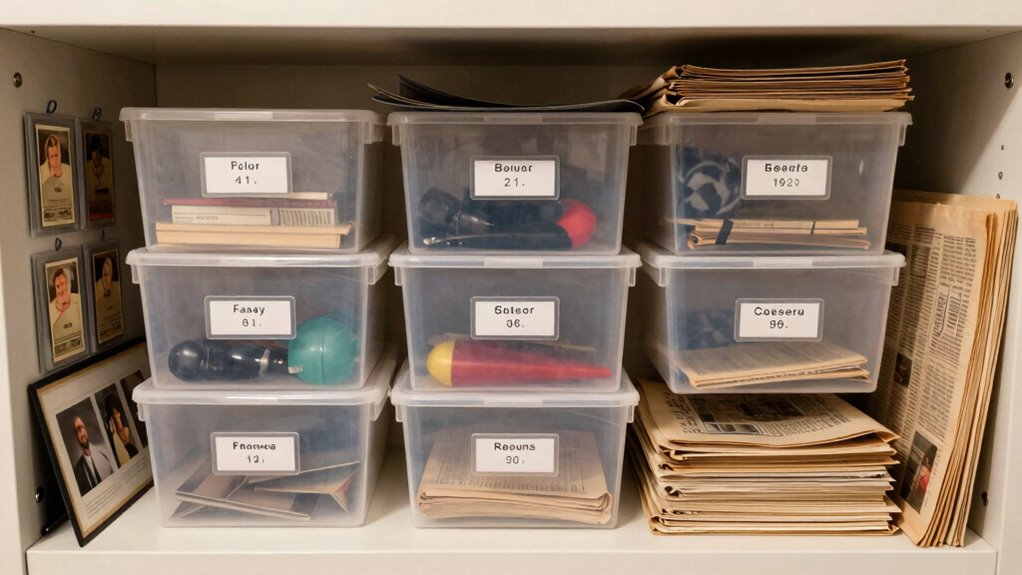
Storing memorabilia properly is essential to preserve its condition and sentimental value. While displaying certain items can be rewarding, there are pieces best kept in storage to prevent unnecessary damage. Vintage collectibles, for example, are often fragile and susceptible to deterioration from light, air, and handling. If you have items like old photographs, delicate ceramics, or antique textiles, storing them in a controlled environment helps guarantee they stay intact for years to come. Exposure to sunlight or fluctuating temperatures can fade colors or warp materials, so keeping these collectibles in a dark, cool, and stable environment is your best bet.
Rare sports cards are another category of memorabilia that benefit from being stored rather than constantly displayed. These cards can be highly valuable and easily damaged by improper handling or environmental factors. Even if you think they look great in a display case, the risk of creasing, scratching, or fading from humidity and light makes storage a safer choice. When you store rare sports cards, use acid-free sleeves or top loaders, and keep them in a sturdy, padded box to prevent bending or surface damage. Storing them flat in a climate-controlled space preserves their condition and maintains their value.
Certain memorabilia items are better kept out of sight because of their sensitivity or potential for damage. For example, autographed items, especially paper-based ones like signed photographs or letters, should be stored rather than displayed openly. Over time, exposure to light and air can cause signatures to fade. To protect these items, store them in acid-free folders or boxes, ideally in a dark, dry place. Similarly, items made from paper, such as vintage posters or comic books, are prone to yellowing or tearing if left in direct light or exposed to humidity. Storage in archival-quality containers helps safeguard their integrity. Proper storage techniques are vital for maintaining the longevity of valuable memorabilia, and choosing the right materials can significantly extend their lifespan. Using environmentally controlled storage can further help prevent damage caused by fluctuations in temperature and humidity, which are common threats to delicate collectibles.
In addition, some memorabilia pieces are simply too valuable or sentimental to risk on display. You might want to keep certain items, like rare collectibles, in climate-controlled storage units rather than constantly out in the open, where they’re vulnerable to accidents or environmental damage. Proper storage solutions, such as acid-free boxes, padded containers, or specialized archival cases, not only protect your memorabilia but also organize your collection efficiently. Proper storage methods can also help maintain their monetary and emotional value over time. To further safeguard your collection, it’s important to understand biodiversity and how environmental factors can impact delicate items. Ultimately, choosing to store rather than display certain items is a smart move to preserve their condition, value, and sentimental significance over time.
acid-free storage boxes for collectibles
As an affiliate, we earn on qualifying purchases.
As an affiliate, we earn on qualifying purchases.
Frequently Asked Questions
How Do I Identify Memorabilia That Should Be Stored Versus Displayed?
You should store memorabilia that’s fragile or prone to fading, like paper items or photos, to protect them from light and handling. Use display case tips, such as UV-protective glass, for items you want to showcase. For added safety, place delicate items in protective sleeves before displaying. This keeps your memorabilia safe when not in use, ensuring their condition stays intact while still enjoying their visual appeal.
What Materials Are Best for Storing Fragile Memorabilia?
Like a vintage vinyl, fragile memorabilia needs gentle care. Use acid-free, archival-quality materials for protection methods, ensuring they don’t degrade over time. Opt for storage containers made from acid-free cardboard, polypropylene, or polyethylene—these materials prevent corrosion and deterioration. Avoid plastic that can trap moisture. Properly storing your items safeguards their value and history, letting you enjoy their nostalgia without risking damage from unsuitable materials or environmental factors.
How Often Should Stored Memorabilia Be Inspected for Damage?
You should inspect stored memorabilia at least once a year. During inspections, use gentle cleaning techniques to remove dust and dirt, and check for signs of damage like mold or deterioration. Make sure your storage space maintains proper climate control—avoiding excessive humidity and temperature fluctuations—to prevent damage. Regular inspections help you catch issues early, preserving your memorabilia’s condition over time.
Can Digital Copies Replace the Need to Store Physical Memorabilia?
Digital copies can’t fully replace physical memorabilia, but digital preservation and virtual archiving are excellent for safekeeping and sharing. You should store physical items that have sentimental or historical value, while digital versions help preserve details and make access easier. By combining both methods, you guarantee your memorabilia remains protected and accessible, reducing the risk of damage or loss while still enjoying your collection’s significance.
What Are the Long-Term Effects of Improper Storage on Memorabilia?
Improper storage can cause memorabilia to deteriorate over time, leading to fading, mold, or structural damage. Without proper preservation techniques and environmental control, exposure to humidity, light, and temperature fluctuations accelerates degradation. You might lose valuable details or the entire item. To protect your memorabilia long-term, guarantee consistent climate control and use archival-quality storage materials, preventing irreversible damage and preserving your collection’s integrity for future generations.
Conclusion
In the end, keeping certain memorabilia tucked away isn’t just smart—it’s like safeguarding the crown jewels of your personal history. If you display everything, you risk turning your home into a chaotic museum where nothing truly shines. By storing some treasures carefully out of sight, you protect their magic and prevent your space from becoming an overwhelming chaos of nostalgia. Remember, a well-chosen storage plan keeps your memories priceless, not overwhelming!