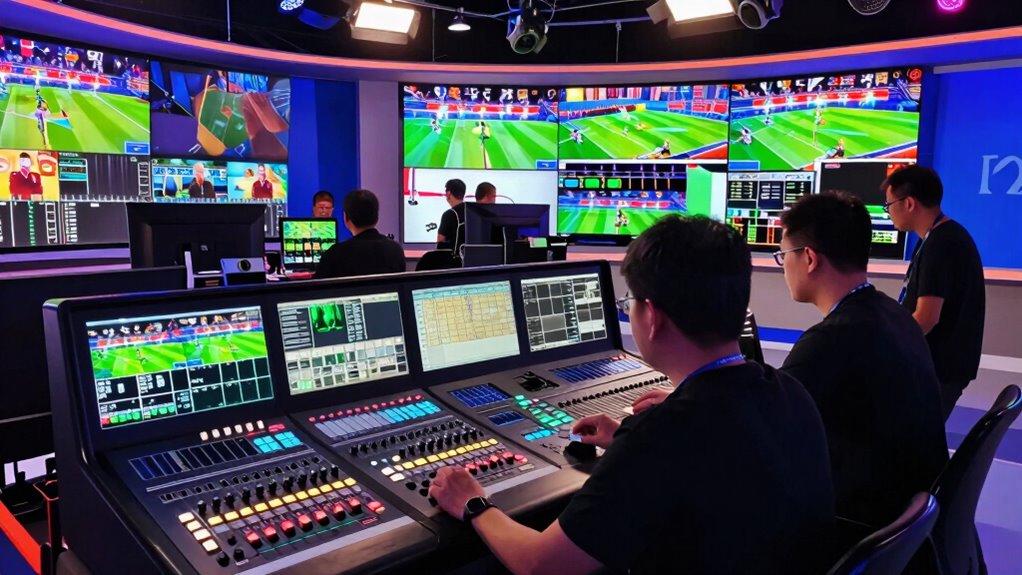

Live switching helps small sports shows look bigger by blending multiple camera angles and perspectives, creating a professional broadcast feel. It allows you to shift smoothly between wide shots, close-ups, and crowd reactions, making your production more engaging. Good audio management also guarantees clear commentary and ambient sounds, enhancing the viewer experience. Automation tools further streamline the process, reducing errors and saving time. Keep exploring how these tools can elevate your show even further.
Key Takeaways
- Live switching creates professional-looking productions with seamless camera transitions, mimicking large-scale broadcasts.
- It offers diverse camera angles and perspectives, enhancing viewer engagement and immersion.
- Automation and video switching tools streamline workflows, ensuring quick, accurate transitions and high-quality output.
- Precise audio control maintains clarity and balances commentary with ambient sounds, elevating the overall experience.
- Dynamic visuals and polished production techniques make small sports shows appear as significant and well-produced as major events.

Have you ever wondered how live sports broadcasts seamlessly switch between multiple camera angles and commentary teams? The magic behind this smooth experience lies in live switching technology, which transforms even small sports shows into professional-looking productions. When you watch a game, you might not notice the precision with which the production team shifts from wide shots capturing the entire field to close-ups of players, coaches, or specific plays. This ability to quickly and effortlessly change camera angles keeps you engaged, providing a dynamic viewing experience that feels much larger than the show’s actual size.
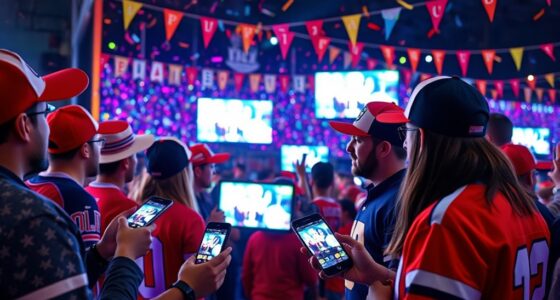
The key to making small sports shows look bigger is in the strategic use of camera angles. Instead of relying on just one or two static cameras, live switching allows for a variety of perspectives. For example, you might see a shot of the crowd, then a close-up of a player celebrating, followed by a wide shot of the field. These rapid transitions give viewers a sense of being right there in the action, creating a more immersive experience. This technique makes it possible for smaller productions to mimic the feel of major sporting events, where multiple cameras are used to capture every detail from different viewpoints. Additionally, live switching systems often include features that help streamline the production process, making it easier for smaller teams to produce high-quality broadcasts. Proper planning and coordination are essential to maximize the benefits of live switching and ensure a smooth broadcast. Utilizing video switching technology can further enhance the overall quality by enabling quick and precise transitions. Furthermore, the integration of automation tools can help reduce human error and speed up production workflows, ensuring a seamless experience for viewers.
Equally important to the overall quality is maintaining excellent audio clarity. When switching between commentary teams or crowd noise, the audio needs to be crisp and clear so you don’t miss critical moments or get distracted by background noise. Live switching systems help control audio feeds, ensuring that commentary is balanced and that ambient sounds don’t overpower the voices of commentators or players. This attention to audio quality makes it easier for you to follow the game and stay connected with the story unfolding on screen. Additionally, the ability to switch audio feeds seamlessly enhances the overall broadcast experience, making it feel more polished and professional.
live video switcher for sports broadcasting
As an affiliate, we earn on qualifying purchases.
As an affiliate, we earn on qualifying purchases.
Frequently Asked Questions
What Equipment Is Essential for Live Switching in Sports Broadcasts?
You need a reliable video switcher to seamlessly change camera angles during the broadcast, creating a dynamic viewing experience. An intuitive control panel helps you manage multiple sources easily. Don’t forget quality audio mixing equipment to balance sound levels and capture crowd noise, commentary, and player sounds effectively. These tools guarantee your sports show looks professional, engaging viewers with crisp visuals and clear audio, giving the illusion of a larger production.
How Does Live Switching Impact Production Costs?
Live switching lowers production costs by streamlining setups and reducing the need for multiple cameras and editors. This budget optimization allows you to produce more polished, professional broadcasts without breaking the bank. With fewer resources needed, you free up funds for quality content, ultimately boosting audience retention. You’ll find that smart live switching saves money while making your sports show look bigger and more engaging to viewers.
Can Small Teams Effectively Implement Live Switching?
Yes, small teams can effectively implement live switching with a remote control system and a multi-camera setup. You can easily switch between different camera angles in real-time, giving your show a professional, dynamic feel. This setup requires minimal equipment and training, making it accessible for smaller crews. With practice, you’ll find it enhances production quality without considerably increasing costs, helping your sports show look bigger and more polished.
What Training Is Needed for Operators Handling Live Switches?
Think of live switching as conducting an orchestra—you need sharp operator skills and technical proficiency to keep everything harmonious. You should undergo hands-on training that covers camera handoffs, graphics, and audio mixing. Practice under real-world conditions, learn to troubleshoot quickly, and understand the equipment inside out. With dedicated training, you’ll develop the reflexes and confidence needed to switch seamlessly, making your small sports show feel as polished as the big leagues.
How Does Live Switching Affect Viewer Engagement?
Live switching enhances viewer engagement by boosting audience immersion and elevating visual storytelling. As you seamlessly shift between cameras and angles, viewers feel more involved, experiencing the action as if they’re part of the game. This dynamic approach keeps the energy high and maintains interest throughout the broadcast. Your quick decisions and creative changes create a compelling narrative, making the small show feel larger and more exciting for the audience.
Conclusion
By mastering live switching, you transform your small sports show into a grand stage, where every frame is a brushstroke painting a vivid, dynamic picture. It’s like conducting an orchestra—each cut and shift adds harmony and energy, making your production feel larger than life. With this technique, you’re not just broadcasting; you’re creating a visual symphony that captivates your audience and elevates your show to new heights of professionalism and excitement.