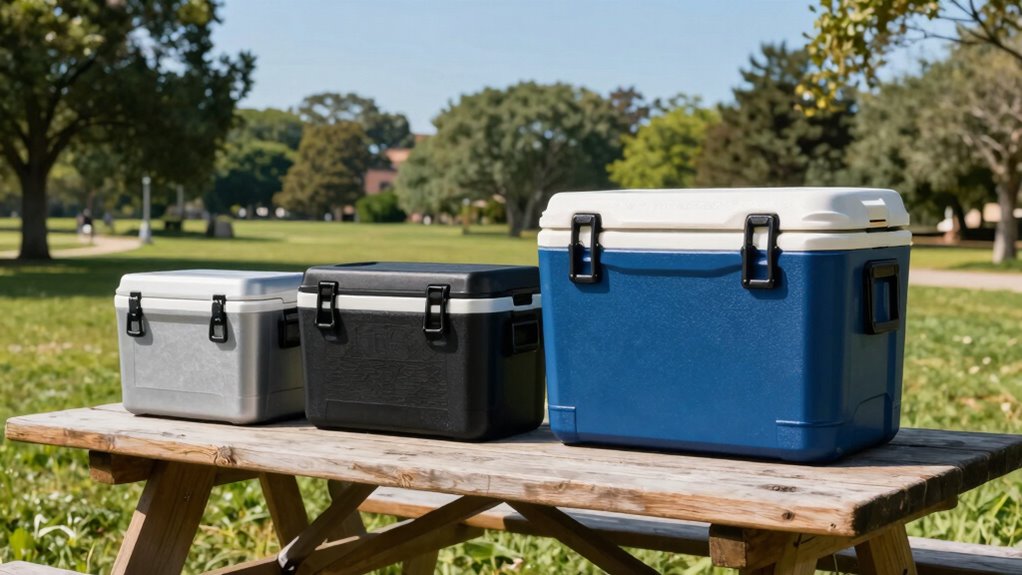

Choosing the right cooler size depends on your group size and how long you need to keep things cold. For solo trips or short outings, a small or personal-sized cooler works best because it’s portable and easy to carry. For families or small groups, a medium-sized cooler offers enough space for food and drinks while remaining manageable. If you’re planning longer trips or larger parties, a large cooler provides ample room but may require more effort to transport. Want to find out more?

Get sports gear delivered free with Prime
- Fast, free delivery on millions of items
- Prime Video, Amazon Music and more included
- Member-only deals all year
Key Takeaways
- Small coolers are ideal for solo trips or small groups, offering portability and quick access.
- Personal-sized coolers suit short hikes or minimal needs with lightweight, compact design.
- Medium coolers are best for families or groups of 4-6, balancing capacity and ease of transport.
- Large coolers are suitable for extended outings or parties with 8+ people, providing ample storage.
- Match cooler size to trip duration and group size to ensure proper ice retention and manageable weight.
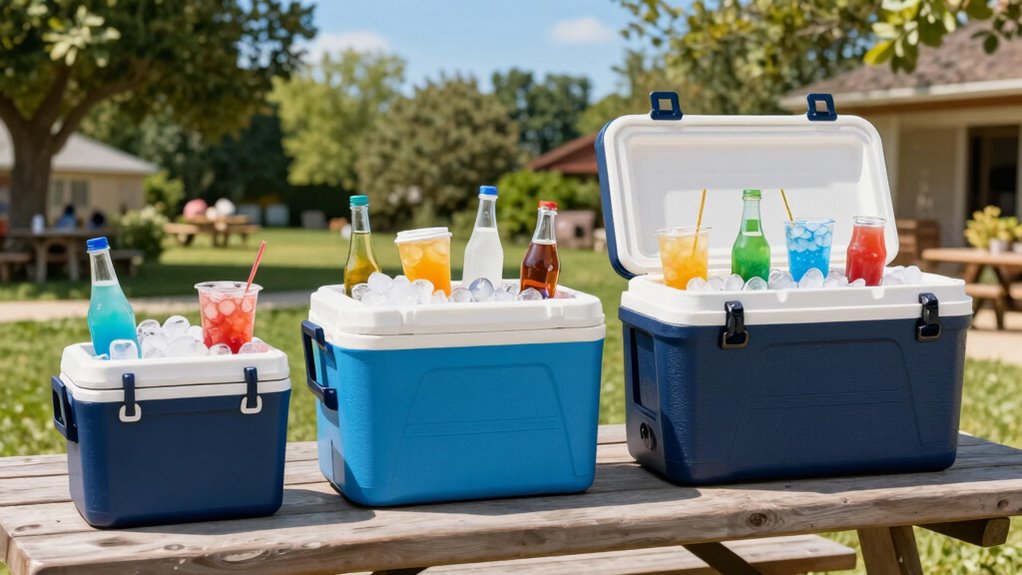
Choosing the right cooler size is essential to guarantee you have enough space to keep your drinks and food cold without overloading or underestimating your needs. When selecting a cooler, you need to consider how much ice retention you require and how portability concerns will influence your choice. For small groups or day trips, a compact cooler typically suffices because it’s easier to carry and fits comfortably in your vehicle or on a picnic table. These smaller coolers tend to have less insulation, which can affect ice retention, but their portability makes them perfect for quick outings or solo adventures. If you’re planning a short hike, a personal-sized cooler allows you to bring enough essentials without the bulk, ensuring you stay mobile and comfortable.
As group size increases, so does the need for a larger cooler. For family outings or camping trips with 4 to 6 people, a medium-sized cooler offers a good balance. It provides ample space for food and drinks and generally maintains ice longer due to increased insulation volume. In these cases, ice retention becomes crucial because you want your perishables to stay cold for several hours without frequent ice replacements. Portability remains important but can be somewhat sacrificed for increased capacity. Handles, wheels, or shoulder straps are helpful features to consider, especially if you’ll need to haul the cooler over uneven terrain or longer distances. Proper insulation plays a significant role in maintaining cold temperatures over time, especially for medium-sized coolers.
For larger groups, such as parties, tailgating events, or extended camping trips with 8 or more people, a large cooler is often necessary. These coolers provide enough room for bulk supplies and multiple days’ worth of perishables. However, ice retention can become more challenging as the cooler size increases, so you’ll want models with superior insulation and perhaps even supplementary ice packs. Portability concerns grow with size—wheeled coolers or those with sturdy carrying handles become vital to prevent fatigue and strain. Keep in mind that a larger cooler will be heavier and less convenient to transport, so plan accordingly. If you’re moving a large cooler frequently, consider a model with wheels or a sturdy trolley system. Additionally, understanding the insulation quality of your cooler can significantly impact its ability to retain ice over extended periods.
Ultimately, matching the cooler size to your group size involves balancing ice retention needs with portability concerns. Smaller coolers are easy to carry but may not keep things cold as long, while larger units offer more space but require extra effort to transport. Think about how long your food and drinks need to stay cold, how many people you’re serving, and how you’ll be moving the cooler. This way, you can select the perfect size that keeps your items cold, stays manageable, and fits your outing’s demands.
small portable cooler for day trips
As an affiliate, we earn on qualifying purchases.
As an affiliate, we earn on qualifying purchases.
Frequently Asked Questions
How Long Can a Cooler Keep Items Cold?
A cooler can typically keep items cold for 1 to 7 days, depending on cooler lid types and insulation thickness. If your cooler has a tight-sealing lid and thick insulation, it’ll retain cold longer. To maximize cooling time, keep the lid closed as much as possible, add ice, and pre-chill your items. Properly maintained coolers with quality insulation and secure lids guarantee your food and drinks stay cold longer.
Does Cooler Material Affect Insulation Performance?
Think of a cooler like a fortress guarding your drinks; its material is the wall that keeps the cold in. Cooler material directly impacts insulation efficiency—thicker, high-quality materials like foam or roto-molded plastic offer better insulation. So, if you want your cooler to withstand a long day of adventures, choose one with sturdy, well-insulated material. It guarantees your ice lasts longer, keeping your refreshments chilled and your trip enjoyable.
Can I Use Dry Ice in Any Cooler Size?
You can use dry ice in any cooler size, but cooler compatibility is key. Smaller coolers might not hold enough dry ice or food, while larger ones can handle more dry ice and keep items colder longer. Always guarantee your cooler is well-insulated and made to withstand the cold temperature of dry ice. Proper ventilation is also important to avoid build-up of carbon dioxide gas, which can be hazardous.
How Often Should I Drain a Cooler?
You should drain your cooler whenever it becomes full of melted ice or water to prevent spoilage and maintain efficiency. Proper cooler maintenance involves regularly removing excess water, especially if you notice a buildup. Insulation types impact how quickly your cooler retains cold, so a well-insulated cooler stays drier longer, reducing how often you need to drain. Aim to drain at least once a day during extended use or when water levels rise considerably.
Are There Eco-Friendly Cooler Options Available?
Eco-friendly coolers exist, crafted from sustainable options and eco-friendly materials. You can find models made from recycled plastics, biodegradable insulations, and environmentally conscious components. These green gadgets not only guard your grub and gear but also give Mother Earth a helping hand. By choosing eco-friendly options, you’re making a mindful move towards more sustainable, environmentally respectful adventures. So, go green with your coolers and keep your outings both cool and conscious!
Conclusion
Choosing the right cooler size is like finding the perfect fit for your adventure—too small, and you’ll run out of supplies; too large, and you’re hauling unnecessary weight. By matching cooler size to your group size, you guarantee your journey stays cool and hassle-free. Think of it as tuning a guitar; the right size hits the perfect note of convenience and efficiency. So, plan wisely and keep your cool where it counts.
NFL season / tailgating Picks
team gear
As an affiliate, we earn on qualifying purchases.